








BEIJING: In the decade since Xi Jinping ascended to the helm of the Chinese Communist Party, China has witnessed a dramatic tightening of state control over nearly every facet of public and private life. From the digital sphere to religious practice, the expansion of surveillance and censorship has not only stifled dissent but also eroded the trust many Chinese citizens once held in their leadership. While official narratives tout Xi’s “New Era” as a renaissance of national strength and ideological clarity, the lived reality for millions tells a different story—one of shrinking freedoms and growing unease.
Digital Dissent and the Great Firewall Under Xi’s rule, China’s internet has become a fortress of censorship. The 2017 Cybersecurity Law and subsequent regulations have empowered authorities to monitor, suppress, and punish online expression deemed “harmful” to national security or party ideology. Social media platforms like WeChat and Weibo are now tools of surveillance, where even private messages can trigger investigations. The chilling effect is palpable: citizens self-censor, fearing that a stray comment could jeopardize their careers—or their freedom.
Ideological Indoctrination and Media Control Xi’s demand for “absolute loyalty” from state media outlets has transformed journalism into a mouthpiece for party propaganda. Independent voices—journalists, academics, feminists, and lawyers—have been silenced through arrests and intimidation. The press, once a modest forum for public discourse, now serves to amplify state narratives while suppressing inconvenient truths. According to Reporters Without Borders, China ranks near the bottom globally for press freedom, second only to North Korea.
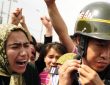
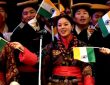
Religious Repression and Cultural Erasure The crackdown on religious freedom has intensified, with new laws requiring religious leaders to align with Communist Party ideology. Tibetan Buddhists, Uyghur Muslims, and Christian communities face surveillance, re-education, and in some cases, imprisonment. These policies not only violate universal human rights but also alienate citizens whose spiritual identities are now treated as threats to national unity.
Eroding Trust in Leadership Despite the state’s efforts to craft public opinion through propaganda and censorship, cracks in the façade are visible. The 2022 protests against COVID lockdowns—unprecedented in scale and scope—revealed a simmering frustration with Xi’s authoritarian approach. While public opinion data is tightly controlled, anecdotal evidence and diaspora voices suggest a growing disillusionment, especially among younger generations who yearn for openness and autonomy. Xi Jinping’s consolidation of power may have fortified the Party’s grip, but it has come at the cost of public trust. In a nation where freedom of expression is curtailed, and ideological conformity is enforced, the absence of genuine dialogue breeds resentment. The Chinese people deserve more than scripted loyalty—they deserve the dignity of choice, the freedom to speak, and the right to believe. Until those freedoms are restored, the silence of the Chinese public should not be mistaken for consent. It is, rather, the quiet resistance of a people who have not forgotten what it means to be free.
[The opinions expressed in this article are of the author. Europeantimes.org takes no responsibility for the same.]
Views: 255

Khedroob Thondup
Khedroob Thondup is the son of Gyalo Thondup, elder brother of the Dalai Lama. Educated at St. Stephens College Delhi University and the University of San Francisco. He was a personal assistant to the Dalai Lama and accompanied him on his first trip to the U.S. in 1979. He was sent by the Dalai Lama to Beijing from 1980 till 1993 for dialogue talks where he interacted with Xi Zhongxun and Hu Jintao. He has served as Member of the Tibetan Parliament in Exile for three terms and is the President of the Tibetan Refugee Self Help Centre Darjeeling since 1987. He has edited two books, Dalai Lama My Son and Tibet in Turmoil and presently lives in Taipei, Taiwan.


