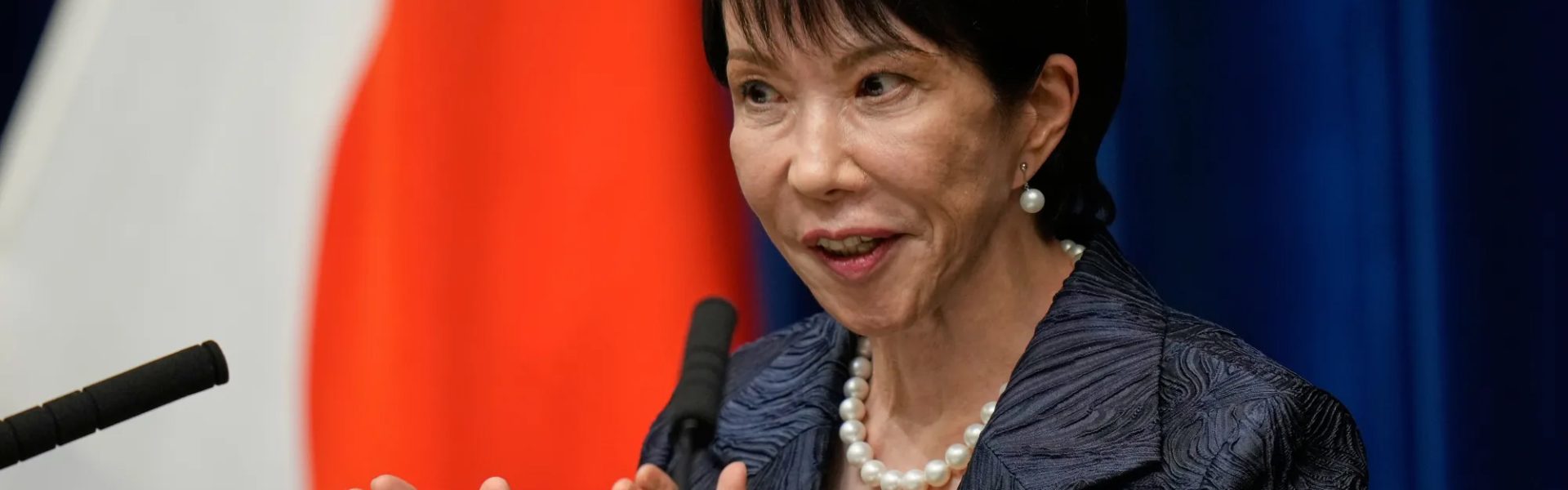







Japan’s First Female Prime Minister Embodies a New Era of Resilience, Youthful Support, and Strategic Clarity
Sanae Takaichi’s ascent to Japan’s highest political office is more than a historic milestone—it is a personal triumph forged through decades of adversity, ideological conviction, and quiet perseverance. As Japan’s first female prime minister, elected on October 21, 2025, Takaichi now stands at the helm of a nation in flux, radiating both determination and joy as she begins to implement the policies she has long envisioned.
Her journey has not been easy. Raised in modest circumstances and long marginalized within Japan’s male-dominated political establishment, Takaichi endured years of political sidelining and media skepticism. Yet she persisted, building her career through ministerial roles in economic security, communications, and territorial affairs.
This groundswell of youth support is not accidental. Many young Japanese see in Takaichi a reflection of their own struggles: economic uncertainty, generational disillusionment, and a yearning for authenticity. Her humble beginnings and refusal to conform to elite expectations have made her relatable. Crucially, she has embraced social media as her primary channel of communication, bypassing traditional television networks that often portray her in a negative light.
In doing so, she has built a direct, unfiltered relationship with the public—especially with younger voters who distrust legacy media and seek transparency. Takaichi’s policy speech following her election made clear her intention to carry forward the legacy of her mentor, former Prime Minister Shinzo Abe. Like Abe, she champions a strong national identity, economic revitalization, and assertive foreign policy.
Her admiration for Abe is not merely symbolic; it informs her strategic posture toward China and Taiwan. Unlike her predecessors—Fumio Kishida and Shigeru Ishiba—who pursued conciliatory policies toward Beijing, Takaichi has pledged to strengthen Japan’s alliance with the United States and defend Taiwan’s autonomy.
This shift is not without risk. Takaichi’s coalition is fragile, and her ultraconservative stance has drawn criticism from liberal factions and international observers. Yet her clarity of purpose and grassroots momentum suggest a new political dynamic: one where leadership is shaped not by elite consensus, but by popular conviction. In many ways, Takaichi’s premiership marks a generational and ideological turning point.
She is not just Japan’s first female prime minister—she is the first to rise on the strength of digital-era populism, youth engagement, and unapologetic nationalism. Her story is one of struggle, resilience, and transformation. And as she begins to chart Japan’s future, she does so with the confidence of someone who has already defied the odds.
Views: 20

Khedroob Thondup
Khedroob Thondup is the son of Gyalo Thondup, elder brother of the Dalai Lama. Educated at St. Stephens College Delhi University and the University of San Francisco. He was a personal assistant to the Dalai Lama and accompanied him on his first trip to the U.S. in 1979. He was sent by the Dalai Lama to Beijing from 1980 till 1993 for dialogue talks where he interacted with Xi Zhongxun and Hu Jintao. He has served as Member of the Tibetan Parliament in Exile for three terms and is the President of the Tibetan Refugee Self Help Centre Darjeeling since 1987. He has edited two books, Dalai Lama My Son and Tibet in Turmoil and presently lives in Taipei, Taiwan.