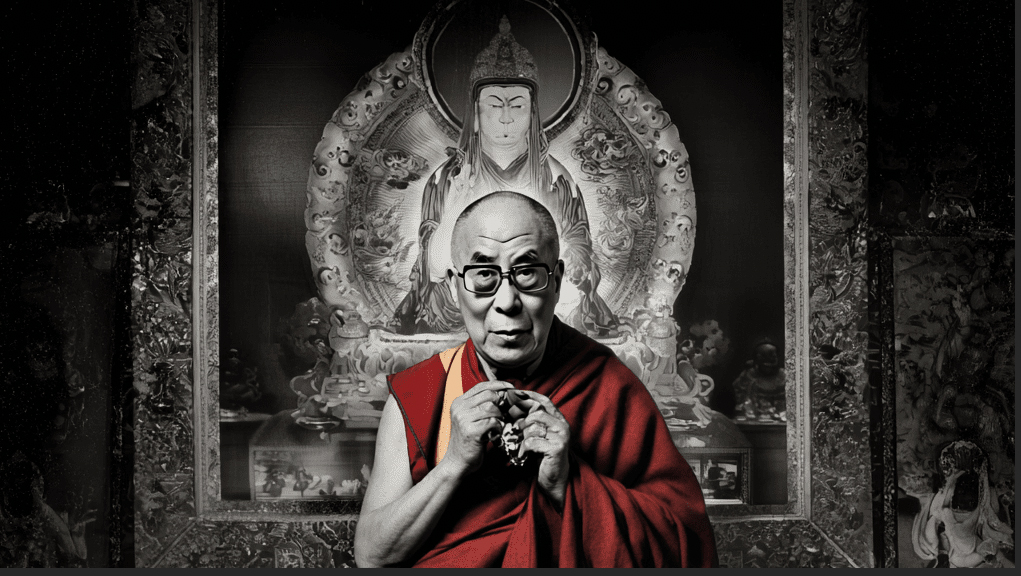







For decades, the Chinese Communist Party has tried to bend Tibetan Buddhism to its will. It ha sought to control religious institutions, installed pliant clerics, and declared itself the arbiter of reincarnation. Yet the one succession it cannot control—the next Dalai Lama—has become a source of profound unease in Beijing. The Party knows that legitimacy in Tibetan Buddhism is not manufactured in Zhongnanhai but recognized in monasteries, diaspora communities, and the hearts of millions of believers worldwide.
The precedent of the Panchen Lama looms large. In 1995, Beijing detained and disappeared from public view the boy recognized by the Dalai Lama as the 11th Panchen Lama and replaced him with its own candidate. Thirty years later, the state-appointed Panchen Lama remains a figure of ceremonial utility but little spiritual authority beyond official Chinese structures. Tibetans reject him, the global Buddhist community ignores him, and the world remembers the child who vanished. This failure haunts Beijing’s plans for the Dalai Lama’s succession.
Reincarnation in Tibetan Buddhism is not a bureaucratic process but a spiritual recognition rooted in centuries of tradition. The Dalai Lama has already declared that he will not allow the process to fall under Chinese control. That single statement strips Beijing of its leverage. No decree, no regulation, no “patriotic education” campaign can compel Tibetans to accept a Party-approved Dalai Lama. The institution itself has made clear that legitimacy flows from religious practice, not political fiat.
China’s worry is not confined to Tibet. The Dalai Lama is a global figure whose teachings resonate from Dharamsala to New York, from Tokyo to São Paulo. His successor will likely be recognized by Buddhist communities worldwide, beyond the reach of Chinese censorship. Beijing fears that the next Dalai Lama will become a rallying point for Tibetans in exile and a symbol of resistance inside Tibet. Worse, the international community may treat him as authentic, leaving China’s chosen candidate isolated and irrelevant.
The CCP’s anxiety stems from the strategic costs of failure. A contested succession would expose China’s lack of control over Tibetan religion, undermine its soft power in Buddhist Asia, and invite criticism in multilateral forums. It would also galvanize Tibetan resistance, reminding the world that Beijing’s rule in Tibet rests on coercion, not consent. For a government obsessed with stability, the reincarnation question is a destabilizing force it cannot neutralize.
China is worried because it knows the truth: the next Dalai Lama will not be born in Beijing’s shadow. He will be recognized through spiritual tradition, not Party decree. And in that recognition lies a profound challenge to the CCP’s authority. The reincarnation of the Dalai Lama is beyond its control—and that loss of control terrifies Beijing more than it dares admit.
Views: 132

Khedroob Thondup
Khedroob Thondup is the son of Gyalo Thondup, elder brother of the Dalai Lama. Educated at St. Stephens College Delhi University and the University of San Francisco. He was a personal assistant to the Dalai Lama and accompanied him on his first trip to the U.S. in 1979. He was sent by the Dalai Lama to Beijing from 1980 till 1993 for dialogue talks where he interacted with Xi Zhongxun and Hu Jintao. He has served as Member of the Tibetan Parliament in Exile for three terms and is the President of the Tibetan Refugee Self Help Centre Darjeeling since 1987. He has edited two books, Dalai Lama My Son and Tibet in Turmoil and presently lives in Taipei, Taiwan.