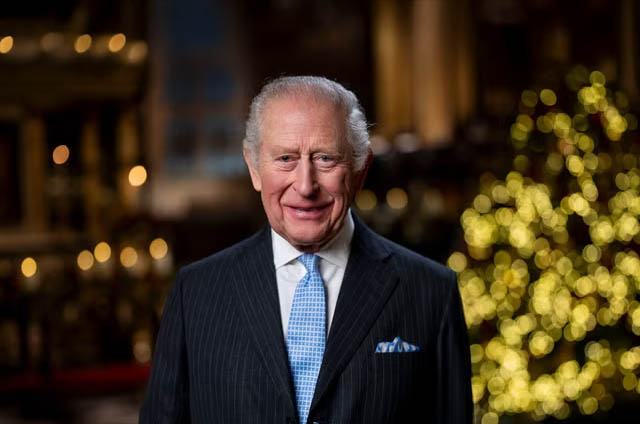







When King Charles speaks of duty, restraint, and the moral obligations of power, he does more than echo the ceremonial language of monarchy. He reminds the United States and the wider world that the Magna Carta, sealed in 1215, is not a relic but a living covenant. Its enduring relevance lies in the paradox it first embodied. Power must be visible before it can be held accountable, and responsibility must be embodied before it can be enforced.
The Magna Carta was not an abstract declaration of rights. It was a settlement that bound a sovereign to law, a recognition that authority must be tethered to accountability. King Charles’s statements on climate responsibility, interfaith respect, and global stewardship resonate because they recall this foundational principle. Liberty is safeguarded not by parchment alone but by sovereign actors willing to embody restraint.
The United States, though not a monarchy, functions as the closest thing the international order has to an anchor power. Its choices, whether to uphold alliances, defend freedom of navigation, or support international justice, determine whether the modern architecture of treaties and conventions breathes life or lies dormant. King Charles’s words remind America that responsibility is not optional. It is the condition of legitimacy.
When Charles emphasizes the moral weight of stewardship, whether of the environment or of peace, he signals that sovereignty today carries global consequences. Just as King John’s abuse of authority produced the crisis that forced Magna Carta into being, and his later attempt to escape its limits deepened the conflict, America’s abdication of responsibility emboldens authoritarian powers and erodes trust in institutions. The Magna Carta’s lesson is timeless. Unchecked sovereignty breeds chaos, while restrained sovereignty legitimizes power.
The Magna Carta endures because it is not merely about rights but about responsibility. King Charles’s statements show that restraint is not weakness but strength, that sovereignty is not license but duty. For the United States, this means recommitting to international law, upholding the protection of vulnerable peoples, and recognizing that its power is legitimized only when tethered to accountability.
King Charles’s voice is not that of a medieval monarch but of a constitutional sovereign reminding the world that liberty’s charter is alive. The Magna Carta remains relevant because it insists that power must be restrained to be legitimate. For America and the international community, the challenge is clear. To embody responsibility as the condition of freedom, lest the parchment of our age gather dust while authoritarianism thrives.
Views: 48

Khedroob Thondup
Khedroob Thondup is the son of Gyalo Thondup, elder brother of the Dalai Lama. Educated at St. Stephens College Delhi University and the University of San Francisco. He was a personal assistant to the Dalai Lama and accompanied him on his first trip to the U.S. in 1979. He was sent by the Dalai Lama to Beijing from 1980 till 1993 for dialogue talks where he interacted with Xi Zhongxun and Hu Jintao. He has served as Member of the Tibetan Parliament in Exile for three terms and is the President of the Tibetan Refugee Self Help Centre Darjeeling since 1987. He has edited two books, Dalai Lama My Son and Tibet in Turmoil and presently lives in Taipei, Taiwan.