


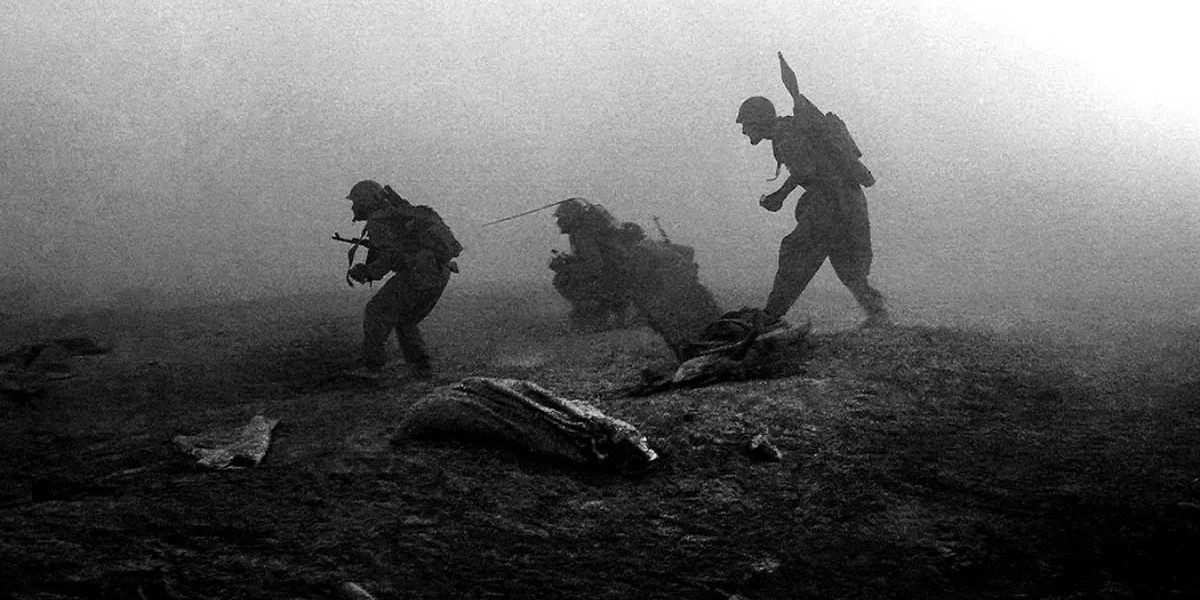







The United States’ continued military engagement in Iran is not simply a tactical miscalculation. It is a profound strategic error that undermines the very principles Washington claims to defend. Exiting the war is not a retreat; it is a recalibration rooted in history, law, and geopolitical necessity.
From Vietnam to Iraq, America’s wars of choice have demonstrated that military dominance cannot substitute for legitimacy. In both cases, the U.S. expended vast resources, lost credibility, and left behind fractured societies. Iran risks becoming the next chapter in this pattern. It risks becoming a war without clear objectives, fought against a population that views foreign occupation as existential. Even limited tactical gains in such environments often translate into long term strategic setbacks.
Under the UN Charter, the use of force is permissible only in self defense or with Security Council authorization. The U.S. war in Iran meets neither condition. Prolonging it erodes Washington’s claim to uphold a rules based order, emboldens rivals who point to hypocrisy, and weakens alliances that depend on American credibility. It also risks normalizing unilateral interventions by others. An exit would signal a recommitment to international law and restore moral authority.
Prolonged deployment in Iran strains U.S. forces already tasked with commitments in Europe and Asia, increasing strategic costs and overstretching military resources. It also contributes to domestic economic pressure. Billions spent on war could be redirected to domestic priorities, from infrastructure to innovation which is the need of the hour in the US. Allies in Europe and Asia increasingly question U.S. judgment, complicating coalition building on other fronts and introducing friction with long standing partners.
Iran is not an isolated battlefield. It is a nexus of a great power competition. Continued U.S. presence risks escalation with Russia and China, both eager to exploit American entanglement. A prolonged conflict gives both space to expand influence elsewhere. Withdrawal would free Washington to focus on the Indo Pacific, where the balance of power is most consequential for the 21st century.
Exiting the war must be accompanied by rebuilding efforts for regional diplomacy. It is necessary to engage Gulf states, Turkey, and the EU to prevent a vacuum. Any such disengagement though needs to be accompanied by humanitarian engagement which supports reconstruction efforts and provides relief to mitigate suffering. A calibrated transition, rather than abrupt withdrawal, will be key to stability. Also an effort at strategic reorientation is essential which reallocates resources to deterrence in Asia and resilience at home.
The U.S. exit from the Iran war is not capitulation; it is a recognition of reality. History, law, and strategy converge on the same lesson; endless war corrodes power. By leaving Iran, Washington can restore credibility, strengthen alliances, and focus on the theaters that truly define its future.
Views: 105

Khedroob Thondup
Khedroob Thondup is the son of Gyalo Thondup, elder brother of the Dalai Lama. Educated at St. Stephens College Delhi University and the University of San Francisco. He was a personal assistant to the Dalai Lama and accompanied him on his first trip to the U.S. in 1979. He was sent by the Dalai Lama to Beijing from 1980 till 1993 for dialogue talks where he interacted with Xi Zhongxun and Hu Jintao. He has served as Member of the Tibetan Parliament in Exile for three terms and is the President of the Tibetan Refugee Self Help Centre Darjeeling since 1987. He has edited two books, Dalai Lama My Son and Tibet in Turmoil and presently lives in Taipei, Taiwan.


