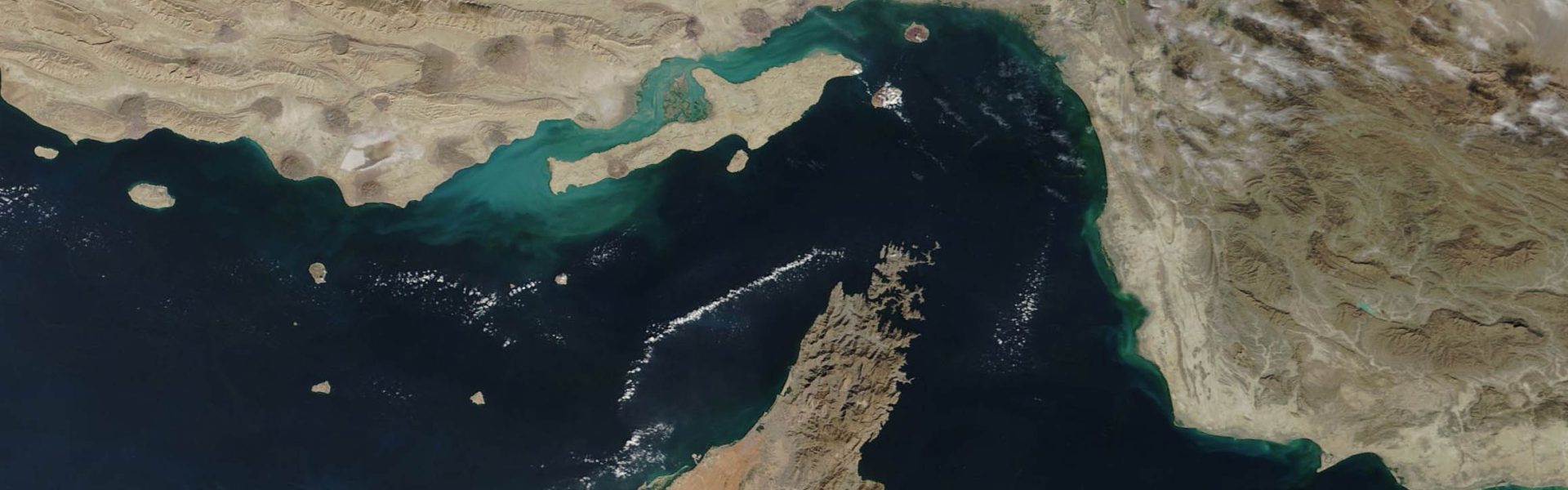







Few waterways embody the fragility of global order as starkly as the Strait of Hormuz. At its narrowest, just 21 miles across, this maritime corridor carries nearly one fifth of the world’s oil trade. Its vulnerability is not merely geographic, it is political. Iran’s repeated threats to close or restrict passage through the strait highlight the danger of allowing a single state to monopolize control over a resource artery that sustains the global economy.
The International Energy Agency estimates that roughly 20% of global petroleum flows through Hormuz, linking Gulf producers to markets in Asia, Europe, and beyond. Unlike other strategic waterways such as the Suez Canal and the Panama Canal, there is no viable alternative route. Pipelines across Saudi Arabia and the UAE provide partial relief, but they cannot replicate the scale of Hormuz. A disruption here reverberates instantly across global markets, as seen in recent price spikes above $100 per barrel following Iranian naval actions.
Iran has long treated the strait as a bargaining chip in its confrontation with the West. From the “Tanker War” of the 1980s to recent seizures of commercial vessels, Tehran has demonstrated its willingness to weaponize geography. International law is clear. Under the United Nations Convention on the Law of the Sea (UNCLOS), straits used for international navigation must remain open to transit passage. Yet Iran’s posture undermines this principle, effectively holding global commerce hostage to its regional ambitions.
The precedent is instructive. When Egypt closed the Suez Canal in 1967, the economic shock was profound, prompting international efforts to guarantee freedom of navigation. Similarly, the U.S. Navy’s long standing presence in the Gulf reflects recognition that Hormuz is not a regional matter but a global one. To allow Iran unilateral control is to invite instability, empower coercion, and erode the norms of free navigation that underpin maritime order.
The solution lies not in confrontation alone but in multilateral governance. A coalition of maritime powers, whether under UN auspices, the International Maritime Organization, or a regional security pact, must enforce the principle of free passage. Naval patrols, coordinated monitoring, and investment in alternative routes can mitigate risk, but only collective oversight can neutralize Iran’s leverage.
The Strait of Hormuz is more than a narrow waterway, it is the fulcrum of global energy security. Allowing Iran to dominate it transforms a shared artery of commerce into a geopolitical weapon. The stakes are clear. Without international oversight, the world risks economic shock and strategic instability. Preserving freedom of navigation in Hormuz is not simply a regional priority, it is a global necessity.
Views: 85

Khedroob Thondup
Khedroob Thondup is the son of Gyalo Thondup, elder brother of the Dalai Lama. Educated at St. Stephens College Delhi University and the University of San Francisco. He was a personal assistant to the Dalai Lama and accompanied him on his first trip to the U.S. in 1979. He was sent by the Dalai Lama to Beijing from 1980 till 1993 for dialogue talks where he interacted with Xi Zhongxun and Hu Jintao. He has served as Member of the Tibetan Parliament in Exile for three terms and is the President of the Tibetan Refugee Self Help Centre Darjeeling since 1987. He has edited two books, Dalai Lama My Son and Tibet in Turmoil and presently lives in Taipei, Taiwan.