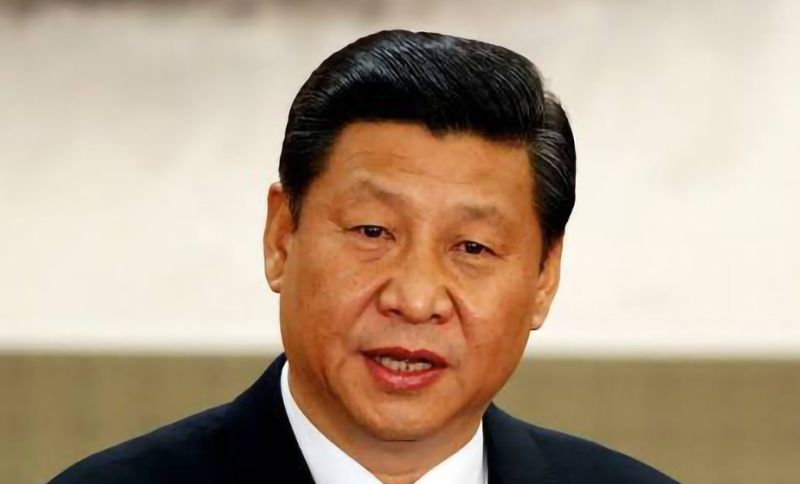







In November 1998, Jiang Zemin stood before students at Waseda University in Tokyo and reportedly declared: “Even if China develops, it will never bully other countries. It will never seek hegemony.” The words were meant to reassure Japan and the wider world that China’s rise would be peaceful, cooperative, and non-threatening. Today, under Xi Jinping, that pledge rings hollow. Beijing’s rapid nuclear armament and assertive military posture reveal a China that has moved away from Jiang’s language of restraint toward coercive power projection.
Jiang’s Era: The Rhetoric of Peaceful Rise. Diplomatic reassurance: Jiang’s statement came during his 1998 state visit to Japan, which produced the Japan–China Joint Declaration on Building a Partnership of Friendship and Cooperation for Peace and Development, designed to ease tensions after disputes over Taiwan and history. Economic priority: His leadership emphasized growth and integration into the global order, not direct confrontation. Strategic posture: China’s nuclear arsenal remained relatively modest, with a doctrine of minimum deterrence and “no first use.”
Xi’s Era: Nuclear Armament and Assertiveness. Arsenal expansion: China’s operational warheads have grown from the low 200s in 2020 to the low 600s today, with U.S. assessments projecting more than 1,000 by 2030. Technological leap: Development of hypersonic glide vehicles, MIRVed missiles and vast new missile silo fields marks a decisive break from China’s earlier restrained posture. Regional coercion: Nuclear modernization complements aggressive moves in the South China Sea, Taiwan Strait and East China Sea, where China’s military posture increasingly threatens neighbors.
Domestic legitimacy: Xi relies more heavily on nationalism and military strength to consolidate CCP authority, contrasting with Jiang’s reliance on economic growth and international integration. Geopolitical ambition: Jiang sought integration; Xi seeks to reshape the global order. Security environment: Jiang’s optimism in the post-Cold War era has given way to Xi’s perception of a multipolar, competitive world where nuclear deterrence is central.
Jiang’s pledge of “no hegemony” was a diplomatic reassurance. Xi’s nuclear buildup demonstrates that Beijing now views expanded strategic power as necessary for survival and influence. This contradiction erodes China’s credibility, fuels regional militarization and undermines trust in CCP commitments.
China’s trajectory from Jiang’s peaceful rhetoric to Xi’s nuclear assertiveness is not merely a policy shift. It is a repudiation of the principles Jiang articulated in Tokyo. The promise of a “peaceful rise” has been replaced by a strategy of deterrence and dominance. For Asia and the world, the lesson is clear: Beijing’s words cannot be taken at face value when its actions point toward hegemony.
Views: 106

Khedroob Thondup
Khedroob Thondup is the son of Gyalo Thondup, elder brother of the Dalai Lama. Educated at St. Stephens College Delhi University and the University of San Francisco. He was a personal assistant to the Dalai Lama and accompanied him on his first trip to the U.S. in 1979. He was sent by the Dalai Lama to Beijing from 1980 till 1993 for dialogue talks where he interacted with Xi Zhongxun and Hu Jintao. He has served as Member of the Tibetan Parliament in Exile for three terms and is the President of the Tibetan Refugee Self Help Centre Darjeeling since 1987. He has edited two books, Dalai Lama My Son and Tibet in Turmoil and presently lives in Taipei, Taiwan.