

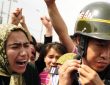






TAIPEI/OP-ED: For decades, Tibet has been at the center of China’s efforts to consolidate control over its autonomous regions. The Chinese Communist Party (CCP) has employed a range of strategies to suppress Tibetan culture, religion, and identity, effectively ruling the region with an iron fist. From forced education policies to stringent travel restrictions and religious bans, Beijing’s grip on Tibet has tightened, leaving little room for cultural preservation or self-determination.
One of the most alarming aspects of China’s rule in Tibet is its use of education as a tool for forced assimilation. Reports indicate that Tibetan children are systematically separated from their families and placed in residential schools designed to instill allegiance to the Chinese state while erasing Tibetan identity. The curriculum prioritizes Mandarin over Tibetan language, and students are taught state-approved history that downplays Tibet’s distinct cultural heritage. With over a million Tibetan children enrolled in these schools, the CCP is ensuring that future generations grow up disconnected from their roots.
Religious freedom in Tibet has been severely curtailed under Chinese rule. New regulations require religious venues to support the leadership of the CCP and promote “patriotic education” among believers. Monasteries, temples, and churches are banned from maintaining ties with overseas organizations, and religious leaders are vetted to ensure loyalty to the state. The government has also prohibited large religious statues and restricted traditional practices such as circumambulation around sacred sites. These measures are part of a broader campaign to “sinicize” Tibetan Buddhism, effectively stripping it of its spiritual essence and transforming it into a tool for state propaganda.
Tibetans face severe restrictions on foreign travel, making it nearly impossible for them to seek refuge or share their experiences with the outside world. Activists who have managed to escape describe relentless surveillance and intimidation by Chinese authorities .
Even retired Tibetan government employees are banned from engaging in religious activities, with punishments imposed on those who defy these orders. The CCP’s strategy is clear: isolate Tibetans, control their movements, and prevent any form of dissent from reaching international audiences.
China’s policies in Tibet amount to a systematic effort to erase Tibetan identity and assimilate its people into the dominant Han Chinese culture. While Beijing frames these measures as efforts to promote “national unity,” they are, in reality, a slow-motion cultural genocide. The international community must hold China accountable for its actions and advocate for the rights of Tibetans to preserve their language, religion, and traditions.
The world cannot afford to turn a blind eye to Tibet’s plight. If these policies continue unchecked, an entire culture risks being erased—one school, one monastery, and one generation at a time.
Views: 182

Khedroob Thondup
Khedroob Thondup is the son of Gyalo Thondup, elder brother of the Dalai Lama. Educated at St. Stephens College Delhi University and the University of San Francisco. He was a personal assistant to the Dalai Lama and accompanied him on his first trip to the U.S. in 1979. He was sent by the Dalai Lama to Beijing from 1980 till 1993 for dialogue talks where he interacted with Xi Zhongxun and Hu Jintao. He has served as Member of the Tibetan Parliament in Exile for three terms and is the President of the Tibetan Refugee Self Help Centre Darjeeling since 1987. He has edited two books, Dalai Lama My Son and Tibet in Turmoil and presently lives in Taipei, Taiwan.