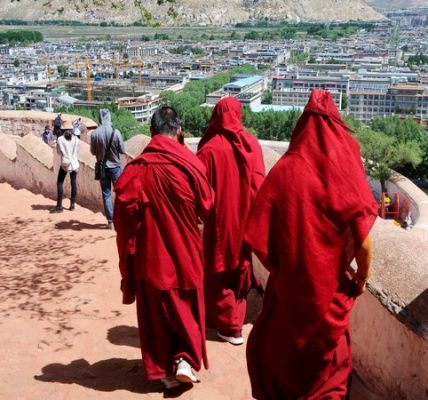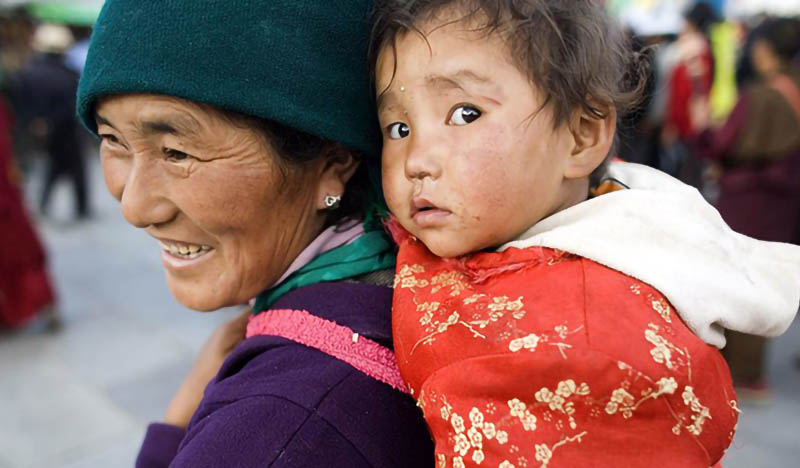







The sweep of history reminds us of a simple truth: no empire, however mighty, is permanent. Rome, the Ottomans, the British Raj; all believed their dominion eternal, only to discover that power is cyclical, not absolute. Today, the Chinese Communist Party (CCP) exercises seemingly unassailable control over the Tibetan Plateau, integrating it through modernization, surveillance, and demographic engineering.
Yet the long arc of history suggests that rigid, coercive assimilation strategies ultimately face systemic limits. The CCP’s Strategy of Assimilation.Beijing’s approach to Tibet is comprehensive and uncompromising. Tibet is cast as a national security shield, an economic resource base, and a geopolitical anchor. Infrastructure projects and military deployments reinforce its strategic role. Policies mandate the Sinicization of Tibetan Buddhism, aiming to sever religious continuity and local identity by 2049.
This strategy is designed to erase difference and enforce uniformity. Yet history shows that such rigidity often breeds fragility. Historically the Fragility of Imperial Longevity has shown that empires collapse not only from external challenge but from internal contradiction Authoritarian regimes often mistake silence for stability.
Tibet’s enforced quiet masks simmering discontent. There is also a problem of succession vulnerability. The question of the Dalai Lama’s reincarnation looms large. Any attempt by Beijing to control the process risks permanent illegitimacy in Tibetan eyes. Vulnerability echoes the historical truth. Empires falter when they overreach. It is neccesary to think of Alternative Futures for Tibet.
The trajectory of Tibet will depend on how the CCP navigates its contradictions and how history asserts its cyclical rhythm. Continued Securitization could be a mitigating factor. In the near term, Beijing will likely intensify surveillance, policing, and demographic shifts to dilute Tibetan identity. But there is resistence and resilience of identity amongst the people. The Tibetan civilization has endured centuries of external pressure. Its cultural gravity persists, even under coercion. Should the CCP weaken, Tibet’s questions of autonomy, ecological stewardship, and cultural self-determination will resurface with renewed urgency.
The CCP’s Tibet policy is a textbook case of empire-building through assimilation. But history teaches that no empire is permanent. The wax and wane of power is inexorable. Tibet’s story is not one of disappearance but of resilience; an enduring reminder that identity, faith, and culture often outlast the structures that seek to erase them.
Views: 168

Khedroob Thondup
Khedroob Thondup is the son of Gyalo Thondup, elder brother of the Dalai Lama. Educated at St. Stephens College Delhi University and the University of San Francisco. He was a personal assistant to the Dalai Lama and accompanied him on his first trip to the U.S. in 1979. He was sent by the Dalai Lama to Beijing from 1980 till 1993 for dialogue talks where he interacted with Xi Zhongxun and Hu Jintao. He has served as Member of the Tibetan Parliament in Exile for three terms and is the President of the Tibetan Refugee Self Help Centre Darjeeling since 1987. He has edited two books, Dalai Lama My Son and Tibet in Turmoil and presently lives in Taipei, Taiwan.