









For decades, Beijing has tried to erase Tibet from the global stage. Xi Jinping’s government has passed laws designed to suffocate Tibetan culture, restrict religious practice, and criminalize dissent. Yet despite these efforts, the Tibetan issue has not disappeared. In fact, it has grown stronger, more visible, and more globally supported — thanks in large part to the Tibetan diaspora in the U.S..
Diaspora as a Political Force.
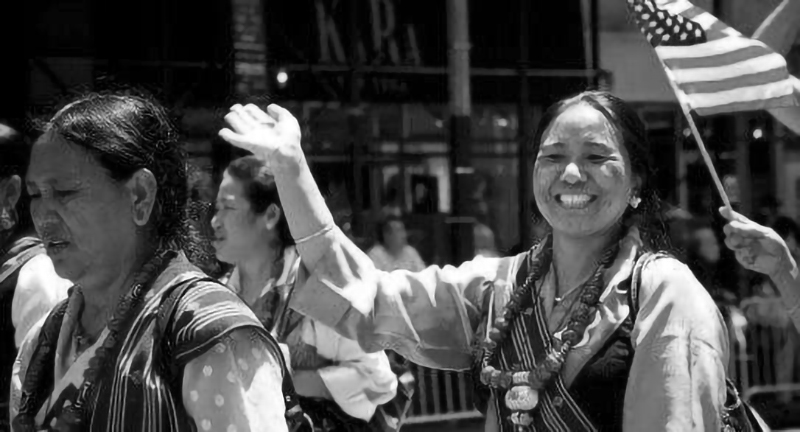
The Tibetan community in America is small compared to other immigrant groups, but its impact is outsized. From Washington, D.C. to New York, Tibetan-Americans have organized rallies, testified before Congress, and built alliances with human rights organizations. Their activism has ensured that Tibet remains on the agenda of U.S. lawmakers, even when Beijing pressures governments to stay silent. The passage of the Tibetan Policy and Support Act in 2020 was a landmark moment — a clear signal to Xi that Tibet cannot be legislated out of existence.
Global Solidarity.
Xi’s strategy has been to isolate Tibet, portraying it as an internal Chinese matter. But the diaspora has shattered that narrative. By connecting Tibet’s struggle with other oppressed peoples — Uyghurs, Hong Kongers, Mongols — Tibetans in the U.S. have reframed the issue as part of a broader fight for freedom and human dignity. This coalition-building has drawn global support, making Tibet not just a Tibetan issue, but a universal one.
Culture as Defiance.
In cities like Minneapolis, New York, and San Francisco, Tibetan-Americans have rebuilt monasteries, organized cultural festivals, and taught Tibetan language to younger generations. These acts are not just cultural preservation — they are political defiance. Every Tibetan song sung, every prayer recited, every child learning their mother tongue is a rejection of Beijing’s attempt to erase Tibetan identity. Culture becomes resistance, and resistance becomes global.
Xi Cannot Erase Tibet.
Xi Jinping may pass laws to curb freedom inside Tibet, but he cannot legislate away the voices of Tibetans abroad. The diaspora in the U.S. has shown that Tibet is not a relic of history, but a living struggle. Their activism, storytelling, and cultural resilience have ensured that Tibet remains visible in the halls of power and in the conscience of the world.
The Tibetan issue is not going to be sidelined. It is not going to vanish. It is carried by the diaspora, amplified by allies, and sustained by the moral authority of a people who refuse to be erased.
Closing Reflection.
The Tibetan diaspora in America has sent Xi a clear message: Tibet cannot be silenced by decree. Laws may restrict freedom inside Tibet, but they cannot extinguish the fire of a people determined to survive. The Tibetan issue is global, it is moral, and it is enduring.
FREE TIBET.
Views: 35

Khedroob Thondup
Khedroob Thondup is the son of Gyalo Thondup, elder brother of the Dalai Lama. Educated at St. Stephens College Delhi University and the University of San Francisco. He was a personal assistant to the Dalai Lama and accompanied him on his first trip to the U.S. in 1979. He was sent by the Dalai Lama to Beijing from 1980 till 1993 for dialogue talks where he interacted with Xi Zhongxun and Hu Jintao. He has served as Member of the Tibetan Parliament in Exile for three terms and is the President of the Tibetan Refugee Self Help Centre Darjeeling since 1987. He has edited two books, Dalai Lama My Son and Tibet in Turmoil and presently lives in Taipei, Taiwan.


