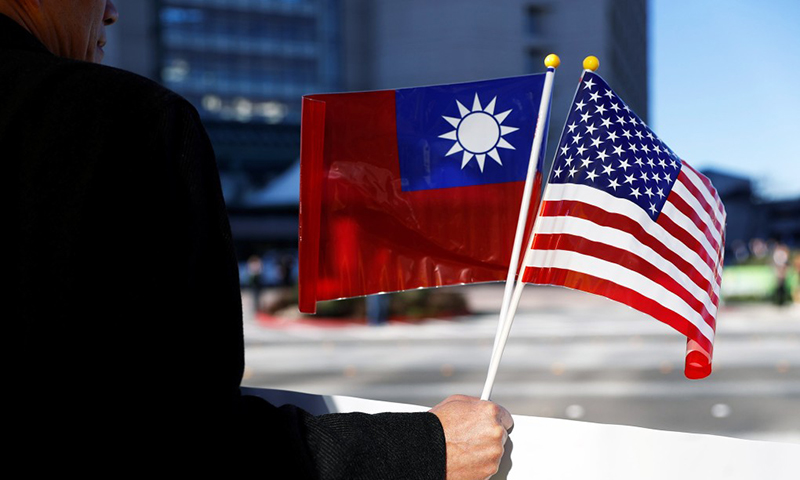







President Trump’s recent posture toward the Taiwan Strait reveals a striking inversion of responsibility: he appears more concerned about Taipei destabilizing the cross-strait dynamic than Beijing’s increasingly aggressive maneuvers. This framing may not be accidental. It could be the product of a sustained campaign by Xi Jinping to convince Trump that Taiwan is the provocateur, while China is merely the aggrieved guardian of stability.
Xi has repeatedly emphasized the One China principle, presenting it as a non-negotiable foundation of peace. By framing Taiwan’s democratic assertions; whether arms purchases, diplomatic outreach, or independence rhetoric; as reckless provocations, Xi has sought to shape the debate. Instead of seeing Beijing’s military build-up and coercive diplomacy as destabilizing, Trump appears increasingly willing to view Taiwan’s actions as the trigger for potential conflict. This is classic psychological framing; redefine the problem so the adversary appears as the source of instability.
Trump’s sensitivity to economic fallout has made him receptive to Xi’s warnings. Beijing has suggested that U.S. arms sales or overt support for Taiwan could spark “an extremely dangerous situation.” The implicit threat is not only military escalation but also economic retaliation. Xi’s narrative plays on Trump’s instinct to avoid market shocks and preserve trade gains, making Taiwan’s assertiveness seem like an unnecessary risk to U.S. interests.
China’s success in peeling away Taiwan’s diplomatic allies and blocking its participation in international forums reinforces Xi’s argument. The continued erosion of Taiwan’s diplomatic space can reinforce Beijing’s broader argument that Taiwan’s international status is limited. This isolation makes Taiwan appear marginal and destabilizing when it resists, rather than a legitimate democracy defending its sovereignty.
The danger of Trump adopting Xi’s narrative is profound. It risks turning Taiwan into a bargaining chip rather than a partner, undermining U.S. credibility in Asia. Allies like Japan and South Korea watch closely. If Washington accepts Beijing’s framing, they fear America may also compromise their security under pressure. Moreover, it erodes the moral clarity of supporting a vibrant democracy against authoritarian coercion.
Trump’s concern about Taiwan “destabilizing” the Strait is arguably influenced by Beijing’s success in shaping the broader narrative surrounding cross-strait tensions. By redefining Taiwan’s democratic actions as provocations, Xi has sought to shift the burden of stability away from Beijing’s military assertiveness and onto Taipei’s survival instincts. The result is a dangerous distortion. One that risks emboldening Beijing while leaving Taiwan more vulnerable than ever.
Views: 41

Khedroob Thondup
Khedroob Thondup is the son of Gyalo Thondup, elder brother of the Dalai Lama. Educated at St. Stephens College Delhi University and the University of San Francisco. He was a personal assistant to the Dalai Lama and accompanied him on his first trip to the U.S. in 1979. He was sent by the Dalai Lama to Beijing from 1980 till 1993 for dialogue talks where he interacted with Xi Zhongxun and Hu Jintao. He has served as Member of the Tibetan Parliament in Exile for three terms and is the President of the Tibetan Refugee Self Help Centre Darjeeling since 1987. He has edited two books, Dalai Lama My Son and Tibet in Turmoil and presently lives in Taipei, Taiwan.