


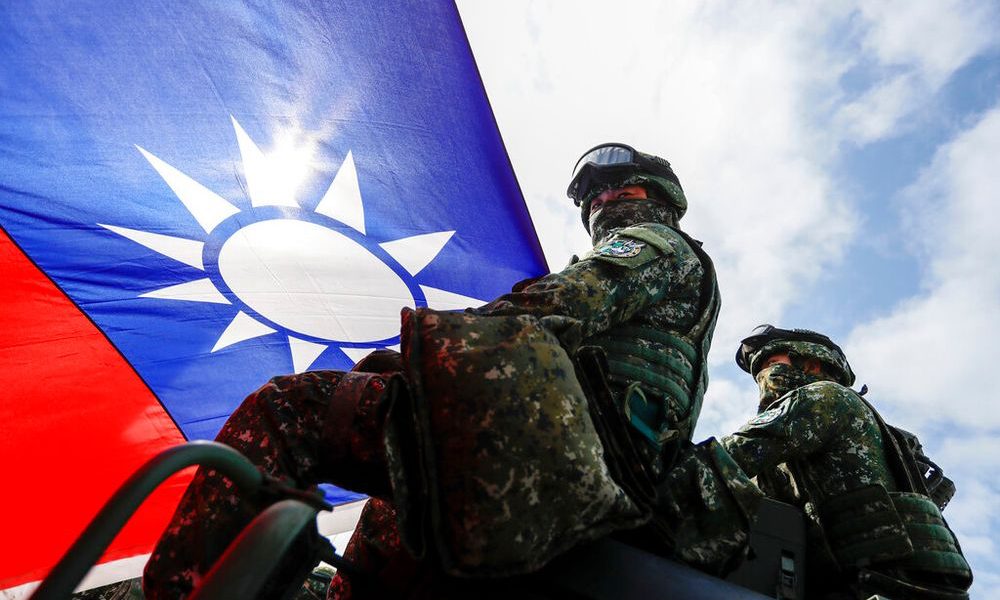







OP-ED: The recent India-Pakistan conflict, fought largely through drones, missiles, and AI-driven warfare, has reshaped military strategy in South Asia. While the battle lasted only a few days, it provided a real-world test for Chinese-made weapons, particularly those used by Pakistan.For Taiwan, which faces growing military pressure from Beijing, this conflict offers **critical lessons** in defense preparedness, technological adaptation, and strategic deterrence.
Pakistan deployed hundreds of drones in swarms, attempting to overwhelm India’s defenses. While drones have long been used for surveillance, this conflict demonstrated their offensive potential from precision strikes to disrupting enemy infrastructure. Taiwan must recognize that traditional air superiority is no longer enough, counter-drone systems, electronic warfare, and AI-driven defense mechanisms will be essential in any future conflict.
Pakistan relied heavily on Chinese-made PL-15E air-to-air missiles and HQ-9 air defense systems. While these weapons proved modern and capable, they were not invincible. India’s multi-layered air defense systems successfully intercepted several attacks, proving that **technology alone does not guarantee victory. Taiwan must study these engagements carefully, identifying weak points in Chinese missile systems and investing in countermeasures that can neutralize them.
China reportedly provided satellite intelligence to Pakistan, enhancing its ability to track Indian movements. This highlights the critical role of space-based surveillance in modern warfare. Taiwan must strengthen its satellite reconnaissance capabilities, ensuring it can monitor threats and respond swiftly. Additionally, alliances with nations that provide intelligence-sharing – such as the U.S. and Japan—will be crucial.
Unlike past conflicts, this war saw no traditional dogfights. Instead, engagements were fought beyond visual range, using long-range missiles, AI targeting, and electronic warfare. Taiwan must adapt to this new reality, ensuring its fighter jets and missile systems are optimized for long-range precision strikes rather than close-range combat.The India-Pakistan conflict was more than a regional skirmish—it was a preview of future warfare, where drones, missiles, and AI-driven strategies dominate the battlefield. Taiwan must learn from Pakistan’s successes and failures, ensuring it is prepared for high-tech, asymmetric warfare against a far larger adversary. By investing in counter-drone technology, missile defense, real-time intelligence, and long-range precision strikes, Taiwan can strengthen its deterrence and safeguard its sovereignty
[The opinions expressed in this article are of the author. Europeantimes.org takes no responsibility for the same.]
Views: 280

Khedroob Thondup
Khedroob Thondup is the son of Gyalo Thondup, elder brother of the Dalai Lama. Educated at St. Stephens College Delhi University and the University of San Francisco. He was a personal assistant to the Dalai Lama and accompanied him on his first trip to the U.S. in 1979. He was sent by the Dalai Lama to Beijing from 1980 till 1993 for dialogue talks where he interacted with Xi Zhongxun and Hu Jintao. He has served as Member of the Tibetan Parliament in Exile for three terms and is the President of the Tibetan Refugee Self Help Centre Darjeeling since 1987. He has edited two books, Dalai Lama My Son and Tibet in Turmoil and presently lives in Taipei, Taiwan.


