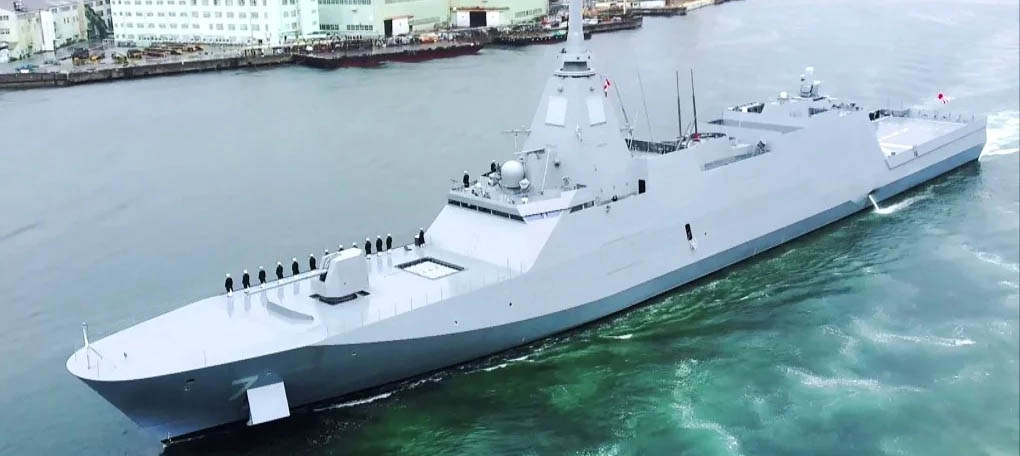







For decades, Japan’s arms export policy was a symbol of its postwar pacifism. The “Three Principles on Transfer of Defense Equipment and Technology,” adopted in 1967 and refined in later years, restricted exports to non combat categories, rescue, transport, surveillance, and minesweeping. This framework reflected Japan’s constitutional renunciation of war and its determination to remain a nation of peace.
In April 2026, Prime Minister Sanae Takaichi’s government dismantled that taboo. By revising the Three Principles and their implementation guidelines, Tokyo authorized the export of lethal weapons. The decision marks a watershed in Japan’s security identity, with implications that extend far beyond its domestic debate.
The revision is not an isolated bureaucratic adjustment, it is a response to a shifting Indo Pacific security environment. China’s military expansion, North Korea’s missile tests, and Russia’s willingness to arm revisionist partners have created a harsher strategic landscape. Japan’s leaders concluded that limiting exports to non combat equipment left the country marginalized in defense cooperation. By permitting lethal arms exports, Tokyo can now contribute directly to allied deterrence and collective defense.
Japan’s defense industry has long been constrained by narrow export rules. Without access to global markets, firms struggled to innovate and scale. The new policy opens opportunities to compete internationally, strengthen supply chains, and reduce dependence on foreign imports. In effect, Japan is betting that a robust defense industry is not only an economic asset but a strategic necessity.
The policy shift has provoked fierce opposition. Tens of thousands of protesters gathered outside the National Diet, warning that Japan is betraying its pacifist Constitution. Critics argue that exporting lethal weapons risks entangling Japan in foreign conflicts and eroding its moral authority. Yet supporters counter that pacifism without deterrence is untenable in today’s environment, and that Japan must adapt to survive.
The Indo Pacific will feel the reverberations. Allies such as the United States and Australia welcome Japan’s willingness to shoulder greater responsibility. Southeast Asian partners may see opportunities to diversify their defense suppliers. But China and South Korea are likely to interpret the move as evidence of Japanese remilitarization, fueling mistrust and potentially accelerating regional arms competition.
The revision of the Three Principles signals that Japan is redefining its postwar identity. For seventy years, Tokyo’s restraint was a moral statement, that peace was best served by limiting military entanglements. Today, the government argues that peace requires active contribution to deterrence, even through lethal arms exports. This is not a rejection of pacifism but a recalibration, an attempt to reconcile ideals with strategic realities.
Prime Minister Takaichi’s decision ends an era. Japan has crossed a threshold from symbolic pacifism to pragmatic security engagement. The export of lethal weapons will not transform Japan overnight into a major arms supplier, but it does mark a decisive break with the past. For the Indo Pacific, the message is clear, Japan intends to be more than a passive partner. It seeks to be a proactive security actor, willing to trade in the tools of deterrence as well as diplomacy.
Views: 37

Khedroob Thondup
Khedroob Thondup is the son of Gyalo Thondup, elder brother of the Dalai Lama. Educated at St. Stephens College Delhi University and the University of San Francisco. He was a personal assistant to the Dalai Lama and accompanied him on his first trip to the U.S. in 1979. He was sent by the Dalai Lama to Beijing from 1980 till 1993 for dialogue talks where he interacted with Xi Zhongxun and Hu Jintao. He has served as Member of the Tibetan Parliament in Exile for three terms and is the President of the Tibetan Refugee Self Help Centre Darjeeling since 1987. He has edited two books, Dalai Lama My Son and Tibet in Turmoil and presently lives in Taipei, Taiwan.