






For decades, Tibet’s future has been entangled in the geopolitical contest between Beijing’s claims of sovereignty and the Tibetan people’s struggle for cultural and religious survival. Yet one institution has endured across centuries of upheaval; the Ganden Phodrang, the traditional office of the Dalai Lama. As the world anticipates the eventual succession of the 15th Dalai Lama, the United States faces a critical choice. By recognizing the Ganden Phodrang as the legitimate authority to select the next Dalai Lama, Washington can safeguard Tibetan religious freedom, strengthen international norms, and enhance global recognition of Tibet’s unique civilizational identity.
The Ganden Phodrang
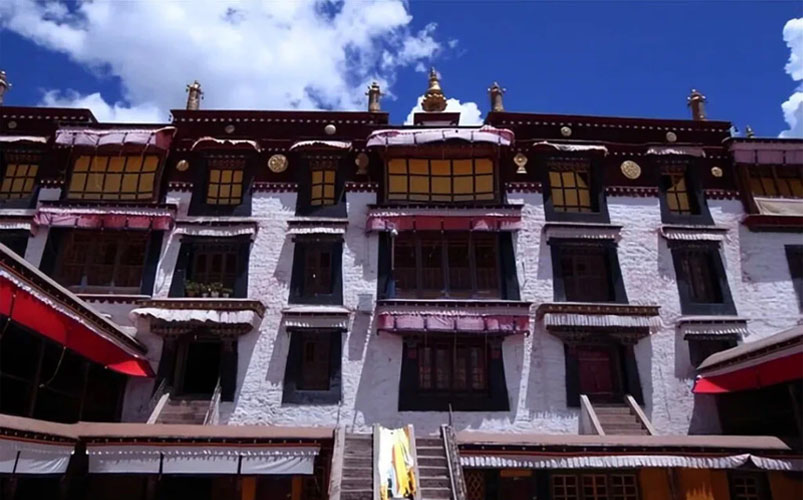
More Than a Sectarian Seat. The Ganden Phodrang, established in the 17th century, was not merely the administrative office of the Gelug school. It became the central institution of Tibetan governance, unifying diverse sects under the Dalai Lama’s spiritual and temporal leadership. The Dalai Lama’s authority has always transcended sectarian boundaries. He is not only the head of the Gelug tradition but the moral and spiritual leader of all Tibetan Buddhist schools – Nyingma, Sakya, Kagyu, and Bon alike. Recognizing the Ganden Phodrang as the legitimate office is therefore not a sectarian endorsement. It is an acknowledgment of historical continuity and the Dalai Lama’s pan‑Tibetan role.
Why U.S. Recognition Matters.
Protecting Religious Freedom. Beijing has already signaled its intent to appoint its own Dalai Lama—a political fabrication designed to control Tibetan Buddhism. Without international recognition of the Ganden Phodrang, China’s manufactured successor could gain traction. U.S. recognition would ensure that the legitimate Tibetan institution retains authority over succession, protecting the integrity of Tibetan religious practice. Strengthening International Norms
The United States has long championed religious freedom and the autonomy of spiritual institutions. Recognizing the Ganden Phodrang aligns with this tradition. It sets a precedent that governments cannot dictate the leadership of religious communities, reinforcing a principle that resonates far beyond Tibet. Enhancing Global Recognition Formal recognition by Washington would encourage other democracies to follow suit. Just as the Holy See enjoys diplomatic legitimacy as a non‑territorial sovereign subject, the Ganden Phodrang could be acknowledged as the custodian of Tibetan spiritual authority. This would elevate Tibet’s cultural survival onto the international stage, even as its territory remains under occupation.
A Diplomatic Middle Path
The Dalai Lama’s “Middle Way” approach seeks genuine autonomy within China rather than outright independence. U.S. recognition of the Ganden Phodrang mirrors this philosophy. It avoids the binary of statehood versus subordination, offering a dignified path that respects Tibetan history while sidestepping unnecessary confrontation with Beijing. Such recognition would not challenge the “One China” policy. Instead, it would affirm that Tibet’s spiritual institutions are independent of political manipulation—a subtle but powerful distinction.
Securing Tibet’s Future
The succession of the Dalai Lama will be one of the most consequential religious events of the 21st century. Beijing is preparing its own narrative. The Tibetan people, through the Ganden Phodrang, are preparing theirs. The United States must decide which path it will support.
By recognizing the Ganden Phodrang as the legitimate office to select the next Dalai Lama, Washington can ensure that Tibet’s spiritual leadership remains authentic, its cultural heritage preserved, and its global recognition enhanced. In doing so, the U.S. would not only defend Tibetan religious freedom but also reaffirm its own commitment to a rules‑based international order grounded in dignity and faith
Views: 69

Khedroob Thondup
Khedroob Thondup is the son of Gyalo Thondup, elder brother of the Dalai Lama. Educated at St. Stephens College Delhi University and the University of San Francisco. He was a personal assistant to the Dalai Lama and accompanied him on his first trip to the U.S. in 1979. He was sent by the Dalai Lama to Beijing from 1980 till 1993 for dialogue talks where he interacted with Xi Zhongxun and Hu Jintao. He has served as Member of the Tibetan Parliament in Exile for three terms and is the President of the Tibetan Refugee Self Help Centre Darjeeling since 1987. He has edited two books, Dalai Lama My Son and Tibet in Turmoil and presently lives in Taipei, Taiwan.