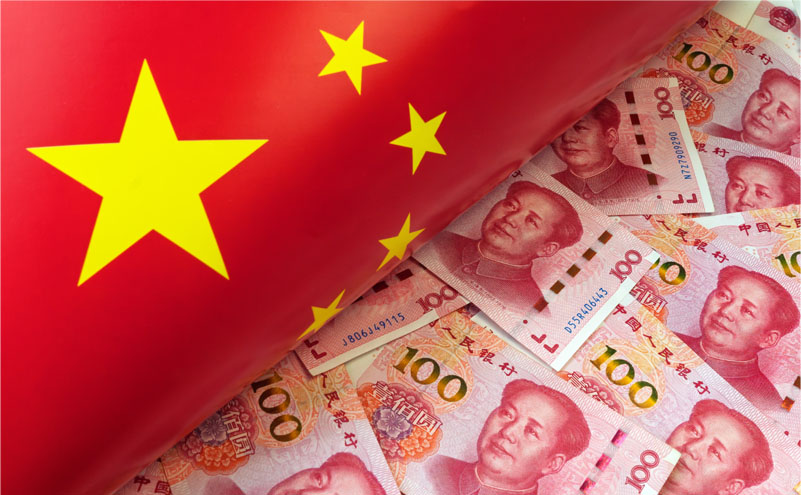







China is no longer content with incremental industrial policy. It is pursuing an ambitious and increasingly assertive economic security agenda—one that redefines the relationship between state and market. The tightening of entry and exit regulations in mid-2026, particularly for executives in critical industries such as semiconductors and artificial intelligence, is emblematic of this shift. These measures are not isolated bureaucratic tweaks; they are part of a comprehensive strategy to treat economic control as national security.
From Industrial Policy to Security Doctrine.
A new study highlights Beijing’s conviction that mastery over critical industries, supply chains, and technologies is essential to the Communist Party’s vision of self-reliant modernization. Economic security is no longer defensive. It has become offensive: sanction-proofing the economy, restricting technology outflows, and tightening legal frameworks to secure maximum space for China’s development interests abroad. This is a structural reorientation, not a policy adjustment. Beijing is building a system designed to withstand external pressure while projecting influence globally.
The 2026 Expansion of Tools.
The regulations introduced in mid-2026 mark a striking expansion of China’s economic security toolkit. They combine legal measures with coercive tactics: Exit restrictions on executives in sensitive sectors, curbing knowledge transfer abroad. Supply chain controls to insulate domestic industries from external shocks. Technology export bans to keep cutting-edge innovation within China’s borders. Sanction-proofing strategies through diversification of trade partners and stockpiling of critical resources. Together, these measures reflect Beijing’s determination to harden its economy while leveraging foreign dependencies.
Weaponizing Dependencies.
China’s model of state-directed industrial development, combined with its willingness to weaponize economic dependencies, is reshaping global markets. This approach undermines fair competition and destabilizes the rules-based trading system. Beijing has accumulated significant leverage and knowledge of foreign vulnerabilities. Not all threats are credible, but its willingness to act—by imposing penalties, restrictions, and leveraging dependencies—rises as enforcement capacity grows and geopolitical opportunity beckons.
The Choice for Major Economies.
For major economies, the challenge is stark. Dependency on Chinese supply chains and technologies risks deepening vulnerabilities in a contested geopolitical landscape. The choice is binary: Reduce dependency through diversification, domestic investment, and coordinated resilience. Protect market integrity by strengthening trade rules and resisting coercive practices. Or risk being drawn into a system where Beijing’s economic leverage dictates terms.
A Contest of Models.
China’s economic security agenda is not simply about protecting its own industries. It is about reshaping the global economic order to suit the Party’s strategic vision. The consequences are profound. If other nations fail to act decisively, they may find themselves locked into dependencies that erode sovereignty and weaken competitiveness.
Economic security has become the new frontier of geopolitical competition. Beijing is already playing a hard hand. The question is whether others will respond with equal resolve.
Views: 42

Khedroob Thondup
Khedroob Thondup is the son of Gyalo Thondup, elder brother of the Dalai Lama. Educated at St. Stephens College Delhi University and the University of San Francisco. He was a personal assistant to the Dalai Lama and accompanied him on his first trip to the U.S. in 1979. He was sent by the Dalai Lama to Beijing from 1980 till 1993 for dialogue talks where he interacted with Xi Zhongxun and Hu Jintao. He has served as Member of the Tibetan Parliament in Exile for three terms and is the President of the Tibetan Refugee Self Help Centre Darjeeling since 1987. He has edited two books, Dalai Lama My Son and Tibet in Turmoil and presently lives in Taipei, Taiwan.