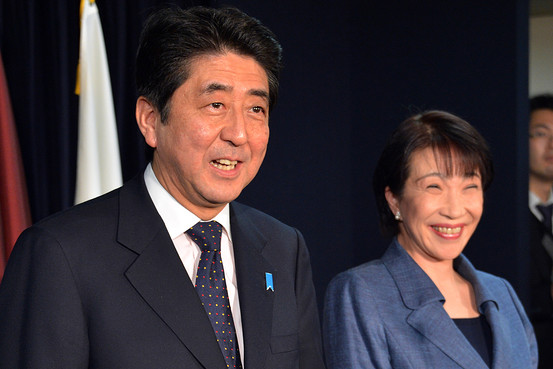







TOKYO: In a political upset that defied internal party arithmetic and external geopolitical pressure, Sanae Takaichi has emerged as Japan’s first female prime minister. Her ascent marks not only a historic moment for gender representation in Japanese politics but also a sharp ideological pivot—one that reverberates far beyond Tokyo.
Takaichi’s triumph in the Liberal Democratic Party (LDP) leadership race was anything but predictable. Despite having relatively few backers within the party’s power blocs, she outmaneuvered rivals including Shinjiro Koizumi, whose political lineage and factional support made him the presumed favorite. Persistent rumors of social media manipulation and voting irregularities surrounding Koizumi’s campaign only added intrigue to the contest.
Her win is a testament to grassroots momentum and public appeal. Takaichi remains the most popular political figure among Japanese voters, a rare feat in a system dominated by backroom deals and factional loyalty. Her success signals a shift in the LDP’s internal dynamics—one where public sentiment can override factional arithmetic.
Takaichi’s ideological compass is firmly aligned with the late Prime Minister Shinzo Abe, whose vision of a strong, self-reliant Japan she has vowed to uphold. As a member of the Abe faction, she inherits not just his policy framework—Abenomics, constitutional revisionism, and defense expansion—but also his nationalist ethos. Her reverence for Abe is not performative; it’s foundational. She has long championed visits to the controversial Yasukuni Shrine and opposed progressive reforms like same-sex marriage and maiden name retention.
This continuity matters. In a time of economic uncertainty and regional instability, Takaichi offers a familiar—if polarizing—path forward. Her “Japan First” approach echoes Abe’s vision, but with even sharper edges.
Takaichi’s victory is a diplomatic setback for China. Her hawkish stance on historical issues and her insistence on Japan’s strategic autonomy clash directly with Beijing’s regional ambitions. Reports suggest that in a previous leadership bid, she was blocked from ascending to party presidency due to Chinese interference—a claim that, if true, underscores the geopolitical stakes of her current win.
Unlike her rivals, who leaned toward pro-China or pro-U.S. alignments, Takaichi advocates for a Japan that charts its own course. Her premiership could complicate trilateral diplomacy and embolden Tokyo’s posture in the East China Sea and Taiwan Strait.
Despite her popular mandate, Takaichi faces a fragmented parliament and a weakened LDP. She will need to forge alliances across factions and possibly reach out to centrist opposition groups like Komeito to govern effectively A. All eyes are now on how she will form her cabinet—a process that will reveal whether her leadership style is conciliatory or combative.
Sanae Takaichi’s rise is more than a gender milestone—it’s a political inflection point. Her premiership promises a Japan that is more assertive, more conservative, and more independent. Whether this vision can be reconciled with the demands of coalition politics and regional diplomacy remains to be seen. But one thing is clear: Japan’s political landscape has changed, and the world is watching.
Views: 129

Khedroob Thondup
Khedroob Thondup is the son of Gyalo Thondup, elder brother of the Dalai Lama. Educated at St. Stephens College Delhi University and the University of San Francisco. He was a personal assistant to the Dalai Lama and accompanied him on his first trip to the U.S. in 1979. He was sent by the Dalai Lama to Beijing from 1980 till 1993 for dialogue talks where he interacted with Xi Zhongxun and Hu Jintao. He has served as Member of the Tibetan Parliament in Exile for three terms and is the President of the Tibetan Refugee Self Help Centre Darjeeling since 1987. He has edited two books, Dalai Lama My Son and Tibet in Turmoil and presently lives in Taipei, Taiwan.