






China’s ruling Communist Party does not believe in universal human rights or the rule of law as understood internationally. Instead, it substitutes “development rights” and Party supremacy for individual freedoms, while systematically repressing dissent, minorities, and civil society.
China’s Approach to Human Rights
Party supremacy over law: In China, the CCP stands above the constitution and courts. Laws are tools of governance, not constraints on state power. Arbitrary detention, enforced disappearances, and politically motivated trials are widespread.
Redefinition of rights: Beijing insists that economic development is the “primary human right,” dismissing civil and political rights as Western constructs. This allows the state to claim progress while ignoring freedoms of speech, religion, and association.
Control through technology: China operates one of the world’s most extensive censorship and surveillance systems, blocking foreign media, monitoring citizens online, and punishing dissent.
Evidence of Repression
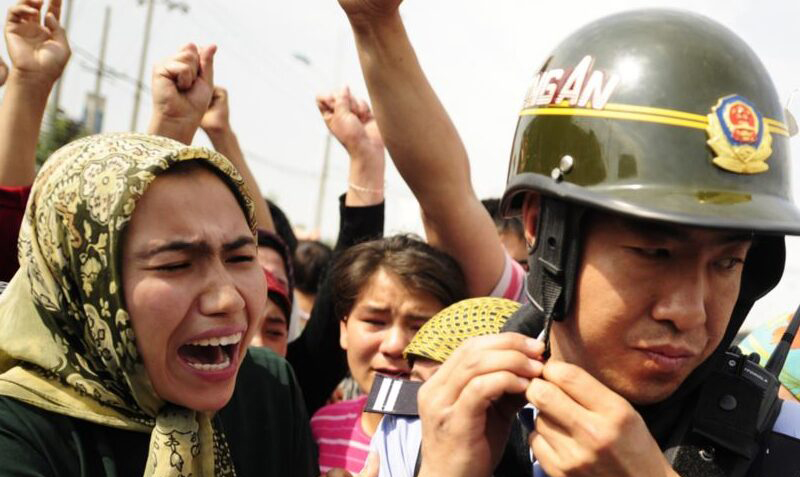
Xinjiang: Mass detentions of Uyghurs and other Muslim minorities, forced labor, and cultural erasure have been described by the U.S. State Department as crimes against humanity and genocide.
Tibet: Religious practice is tightly controlled, monasteries destroyed, and Tibetan language marginalized.
Hong Kong: The imposition of the National Security Law in 2020 gutted freedoms promised under “one country, two systems.”
Civil society: Rights lawyers, journalists, and activists are routinely harassed, detained, or disappeared.
Rule of Law vs. Rule by Party
Rule of law: In democratic systems, law constrains government and protects citizens.
Rule by law: In China, law is used as an instrument of Party control. Courts are subordinate to CCP directives, and “legal reforms” are designed to strengthen state power, not individual rights.
China’s Narrative
Beijing publishes Human Rights Action Plans claiming progress in economic, social, and cultural rights. These documents emphasize poverty reduction, healthcare, and education, but omit genuine protections for free speech, independent judiciary, or political pluralism.
Why China Rejects Universal Human Rights
Ideological control: The CCP views universal rights as threats to Party legitimacy.
National sovereignty argument: Beijing insists human rights are “internal affairs,” rejecting international scrutiny.
Fear of pluralism: Genuine rule of law would empower citizens and weaken Party dominance.
Conclusion
China’s rejection of human rights and rule of law is not accidental. It is central to CCP governance. By redefining rights as economic development and subordinating law to Party authority, Beijing ensures that freedoms remain suppressed. The world must recognize this distinction: China does not merely fail to uphold human rights; it actively denies their universality.
Views: 49

Khedroob Thondup
Khedroob Thondup is the son of Gyalo Thondup, elder brother of the Dalai Lama. Educated at St. Stephens College Delhi University and the University of San Francisco. He was a personal assistant to the Dalai Lama and accompanied him on his first trip to the U.S. in 1979. He was sent by the Dalai Lama to Beijing from 1980 till 1993 for dialogue talks where he interacted with Xi Zhongxun and Hu Jintao. He has served as Member of the Tibetan Parliament in Exile for three terms and is the President of the Tibetan Refugee Self Help Centre Darjeeling since 1987. He has edited two books, Dalai Lama My Son and Tibet in Turmoil and presently lives in Taipei, Taiwan.