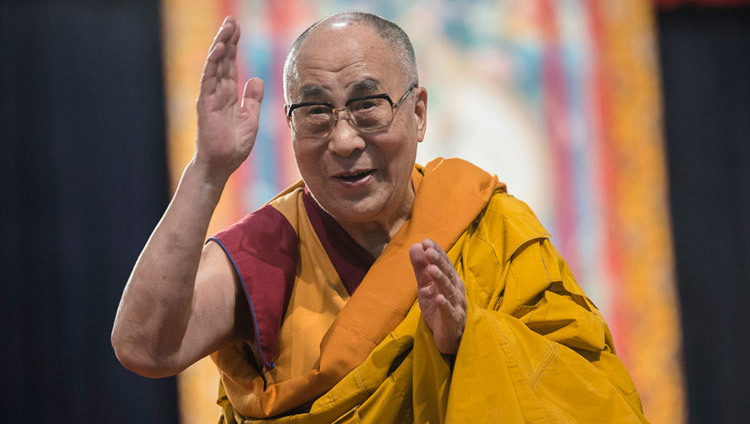







Few figures in the modern world embody peaceful resistance as profoundly as the Dalai Lama. His image—serene, wise, and unwavering—has become synonymous with Tibet’s struggle for autonomy and human rights. Yet, despite his advocacy for nonviolence and dialogue, Beijing views him as a serious threat, employing every trick in the book to undermine his influence. Why does China fear the Dalai Lama so intensely, and how does it attempt to discredit him?
At the heart of China’s concern lies the Dalai Lama’s global moral authority. Unlike political leaders, he commands influence not through military might or economic pressure, but through compassion, intellect, and spiritual leadership. Beijing knows that his teachings resonate far beyond Tibet, reaching millions of followers worldwide—including Chinese citizens themselves. This soft power challenges the legitimacy of the Communist Party’s grip on Tibet and contradicts its carefully curated narrative that Tibetans should see China as their rightful guardian.
Furthermore, Beijing recognizes that the Dalai Lama symbolizes Tibetan identity and resistance. As long as he remains a respected global voice, China’s efforts to erase Tibetan cultural distinctiveness remain incomplete. His presence reminds the world that Tibet’s struggle persists, casting a shadow over Beijing’s desire to be seen as a harmonious and stable global power.
China’s defamation campaign against the Dalai Lama is relentless. The government has labeled him a “separatist” and a “wolf in monk’s robes,” painting his push for Tibetan autonomy as dangerous and divisive rather than a legitimate quest for cultural preservation and self-governance. This framing attempts to discredit his peaceful approach and delegitimize his calls for negotiations.
Beyond rhetoric, Beijing employs censorship and propaganda to suppress positive narratives about him. Information about the Dalai Lama is tightly controlled within China, with his teachings and even images banned. Meanwhile, Chinese state media works tirelessly to portray him as deceitful, framing his exile not as the result of oppression, but as proof of his betrayal of Tibet.
More alarmingly, Beijing seeks to control Tibetan Buddhism itself. By planning to select the Dalai Lama’s successor—a move widely condemned as a blatant political intrusion—it aims to manipulate the institution that he represents, severing future Tibetan spiritual leadership from its traditional roots. This effort, if successful, would strip Tibetans of their ability to freely choose their spiritual guide, further embedding Chinese control over Tibetan identity.
Despite decades of attempts to silence him, Beijing has failed to erase the Dalai Lama’s impact. He continues to engage with world leaders, advocate for dialogue, and inspire millions. China’s aggressive approach to discrediting him only amplifies international scrutiny over its Tibet policies, drawing more attention to its human rights record.
China’s fear of the Dalai Lama is rooted in the undeniable truth that his influence transcends borders. His leadership—steeped in wisdom rather than coercion—is a testament to the resilience of Tibetan culture and the enduring power of moral authority. While Beijing can attempt to rewrite history and silence voices, it cannot erase the strength of an idea—especially one carried by a leader who embodies peace in the face of adversity.
[The opinions expressed in this article are of the author. Europeantimes.org takes no responsibility for the same.]
Views: 107

Khedroob Thondup
Khedroob Thondup is the son of Gyalo Thondup, elder brother of the Dalai Lama. Educated at St. Stephens College Delhi University and the University of San Francisco. He was a personal assistant to the Dalai Lama and accompanied him on his first trip to the U.S. in 1979. He was sent by the Dalai Lama to Beijing from 1980 till 1993 for dialogue talks where he interacted with Xi Zhongxun and Hu Jintao. He has served as Member of the Tibetan Parliament in Exile for three terms and is the President of the Tibetan Refugee Self Help Centre Darjeeling since 1987. He has edited two books, Dalai Lama My Son and Tibet in Turmoil and presently lives in Taipei, Taiwan.