


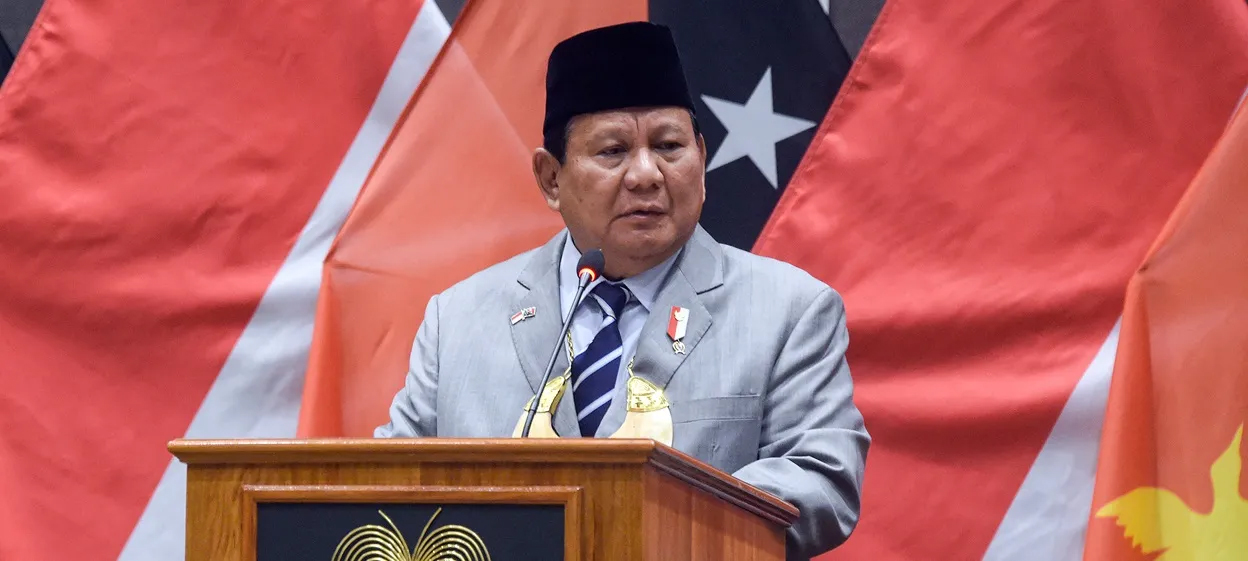







The foreign policy of Indonesia today is most effective when the domestic base is strong. But in reality, instead of strengthening the economy, President Prabowo Subianto has allowed it to seem to be going the other way. It has been reported that the currency has continued to weaken, unemployment has gone up, and the confidence of the foreign and local investors has declined sharply. With this kind of scenario, the main task of the President and his team is to put the economy on track first. Foreign policy can continue, but it must support the domestic agenda.
Prabowo’s foreign policy is characterised by much energy, much personal diplomacy, and much travelling abroad. In foreign policy, Indonesia is now presented to the world as a strong and assertive middle power. This foreign policy is based on many strategies, such as diversification, defence modernisation, and relations with major countries. Such foreign policy is meant to project confidence. However, it appears to be disconnected from current domestic challenges faced by the country and the people’s expectation that the government must first focus on stabilising the economy and solving the problems of the people in order to gain the people’s trust and support.
However, there are real pressures on Indonesia’s economy, and these cannot be brushed aside by foreign policy initiatives. A weak currency makes imports more expensive and could stoke inflation. Higher unemployment, particularly among young Indonesians and those in labour-intensive industries, would reduce household consumption and thus cut into tax revenues. Even more, investors’ growing reticence would curb the flow of capital to Indonesia and cause projects with employment-generating potential to stall. These external challenges to Indonesia’s economy cannot be resolved by the government alone and will require the coordination of all relevant ministries under the president. But given the latter’s time, repeated trips abroad could give the wrong signal: that the state is more concerned with the country’s image abroad than with resolving its economic problems at home.
Tackling these challenges requires the government to strike a balance of two political objectives: maintaining the public’s trust in the government and in its economic policies, whilst at the same time putting in place stabilisation measures. Moreover, the tasks involved in stabilization are politically intricate and require coordinated and sustained efforts from all relevant institutions, in particular from monetary authorities who are battling to defend the currency whilst at the same time battling to contain inflation, from the fiscal authorities who have to remain credible whilst at the same time protecting households and small businesses that are most vulnerable to decline in production, and from sectoral ministries who have to put in place concrete reforms to remove obstacles to production in their respective fields.
To reinforce this, there is much that can be learned from the way in which President Soeharto managed the foreign policy of Indonesia during the early years of his rule. In his first five years or so as President, Soeharto was committed to a program of domestic consolidation. This was an agricultural-based program of self-sufficiency, which involved a massive program of new infrastructure and several extremely difficult economic measures to achieve and maintain monetary and fiscal discipline. Foreign policy was by no means neglected, but it was clearly managed in the context of the President’s domestic development goals. The President travelled abroad on occasion, but it was not to any great extent. On the rare occasions when he did travel abroad, he was not accompanied by his entire cabinet, but by a small group of senior officials, who were tasked with conducting foreign policy on his behalf. Foreign policy was clearly managed in the context of the President’s wider goals for Indonesia, and was not an end in itself.
Indonesia needs to take a step back and conduct a deliberate reset. First, the government should establish an economic coordination mechanism to focus on four key indicators: currency stability, inflation, employment, and investor confidence. Second, foreign policy should be outcome-driven, where every visit by the President or senior officials must have deliverables that support the domestic economy. Third, routine foreign policy should be left to the ministers and ambassadors, while the President should travel for missions that have national benefits. Fourth, social protection and labour market programs must be strengthened by providing targeted assistance, retraining, and incentives for labour-intensive investments. Lastly, the administration must explain how foreign policy supports the recovery of the economy by using specific benchmarks to build trust and accountability.
Prioritising is needed. President Prabowo’s foreign policy does not have to disappear, but has to be recalibrated with a sense of vulnerability. Foreign policy is important. But its legitimacy comes from a strong domestic base. With the economy in such a fragile condition, the executive needs to return to prioritize in stabilizing the economy and ensuring that foreign policy supports the economy’s recovery and development. With the same effort, the administration must translate foreign policy into benefits for the people and create accountability through clear benchmarks.
Views: 37

Simon Hutagalung
Simon Hutagalung is a retired Indonesian Foreign Ministry diplomat and received his Master’s degree in Political Science and Comparative Politics from the City University of New York. He writes opinion pieces for Europeantimes and all opinions expressed in his article are his own.


