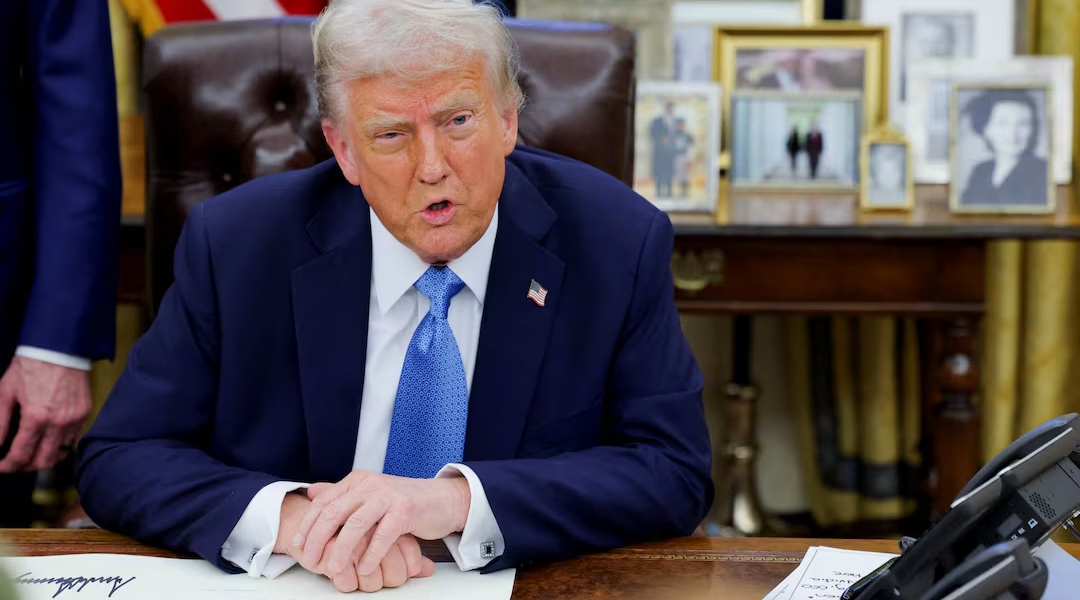







OP-ED: The inauguration of the Trump 2.0 administration in January 2025 marks a pivotal moment for transatlantic relations, potentially threatening the solidarity that underpins the North Atlantic Treaty Organization (NATO). Western countries risk undermining support for Ukraine and could reignite a protectionist trade agenda that may destabilize global markets. Emerging during a time of heightened competition, this administration’s commitment to “First America” risks deepening the Atlantic Divide. By undermining collective defense, imposing punitive tariffs on allies, and recalibrating U.S. engagement in Eastern Europe, it compels American and European partners to navigate an era marked by increased mistrust and strategic uncertainty.
NATO has relied on U.S. leadership to deter external threats, but recent strains have exposed challenges in alliance cohesion. A 2024 report by NATO reveals that twenty of the thirty-two member states will allocate at least two percent of their GDP to the defense standard ratified in 2014. Data from SIPRI shows that NATO members collectively spent $1.506 trillion in 2024, accounting for fifty-five percent of global military expenditures; however, only eighteen members exceeded the two percent threshold. Since Russia’s full-scale invasion of Ukraine in 2022, seventy percent of allies have reported year-on-year increases in defense budgets, yet only four have committed to reaching the two percent spending goal by 2028. The insistence of the Trump administration on increased European contributions, along with threats to reduce security guarantees for the South, could worsen existing shortfalls. In response, European governments are forming regional defense coalitions or pursuing independent initiatives, which may hinder interoperability and weaken deterrence on the alliance’s eastern flank.
Simultaneously, Ukraine, situated at the forefront of the confrontation with an increasingly assertive Russia, faces an uncertain future as U.S. security commitments remain in question. Since 2022, Congress has allocated approximately $182.8 billion in supplemental appropriations for Ukraine, of which $83 billion has been disbursed for military aid, humanitarian relief, and economic assistance. In the first quarter of 2025, the State Department announced an additional $4 billion in Foreign Military Financing directed to Kyiv, reflecting ongoing bipartisan support amidst a persistent stalemate. Trump 2.0’s readiness to negotiate directly with Moscow and seek reciprocal concessions raises concerns about potential reductions in military assistance and the lifting of sanctions. These changes could weaken Kyiv’s position, encourage Russian advances in the Donetsk and Kherson regions, create divisions among European allies, and make them hesitant to fill the financial and military gaps. A decline in credible U.S. support for Ukraine would not only threaten Kyiv’s sovereignty but also challenge the unity of the broader Western security framework.
Beyond security concerns, Trump 2.0’s trade agenda aims to fracture economic ties. In 2025, the average U.S. tariff on imports rose from 14% to 5%, a level not seen since the 1930s, with duties imposed on steel, aluminum, technology, and automobile products. Yale’s Budget Lab estimates that these tariffs will raise domestic price levels by 3%, resulting in an average loss of $4,900 per household and disproportionately burdening low-income families with a loss of $2,200 before adjustments. Additionally, the European Union’s bilateral trade with the United States, which reached €851 billion in 2023, is expected to incur significant costs due to supply chain disruptions and higher input prices. In retaliation, Brussels has proposed counter-tariffs of twenty-five percent on American exports, set to begin on May 16 and December 1, 2025, specifically targeting the agricultural machinery sector. The International Monetary Fund warns that these disputes could shave 0.3 percent off EU growth, jeopardizing the modest recovery forecast for 2025.
The intersection of eroding defense commitments, uncertain support for Ukraine, and intensifying trade conflicts indicates a systemic crisis in transatlantic cooperation. As NATO members negotiate their contributions, the effectiveness of deterrence against Russian aggression is at risk of degradation. Without reliable U.S. funding, Ukraine’s frontline defenses could collapse, allowing Moscow to sow discord among European states that are pressured to fill resource gaps. At the same time, reciprocal tariffs threaten integrated supply chains, elevate consumer costs, and weaken export-driven sectors. These pressures encourage European governments to seek autonomy and strategic diversification by forming security partnerships and strengthening trade links with non-Western powers. However, the transactional nature of relationships on both sides is driven by short-term interests rather than long-term strategic commitments, which weakens coordinated responses to emerging threats. This fragmentation poses a risk to shared intelligence frameworks, defense procurement harmonization, and the collective ability to project democratic norms globally. Without prompt corrective measures, the cohesion that facilitated successful crisis management in Kosovo and Libya may dissolve amid renewed power struggles and great power competition.
Through sustained cooperation and mutually adaptive, trust-building policy frameworks, the transatlantic alliance can mitigate the risks posed by Trump 2.0’s policies and uphold values critical to confronting twenty-first-century security, economic, and social challenges. European partners and the United States must engage in continuous dialogue, renegotiate burden-sharing arrangements, enhance interoperability through joint exercises and procurement, and coordinate programs and diplomatic strategies to address the rising competition among great powers. Addressing these complex challenges reinforced our commitment to collective defense spending benchmarks, strong military support for frontline states like Ukraine, and the creation of balanced trade policies that promote open markets while protecting domestic industries. Additionally, collaboration in emerging areas such as cybersecurity, climate security, and digital investment infrastructure can enhance interdependence, making decoupling less likely. Effective monitoring and oversight mechanisms are essential to ensure that policy changes do not compromise long-term strategic goals in favour of short-term negotiations.
[The opinions are solely of the author and are in no way promoted by this publication]
Views: 69

Simon Hutagalung
Simon Hutagalung is a retired Indonesian Foreign Ministry diplomat and received his Master’s degree in Political Science and Comparative Politics from the City University of New York. He writes opinion pieces for Europeantimes and all opinions expressed in his article are his own.