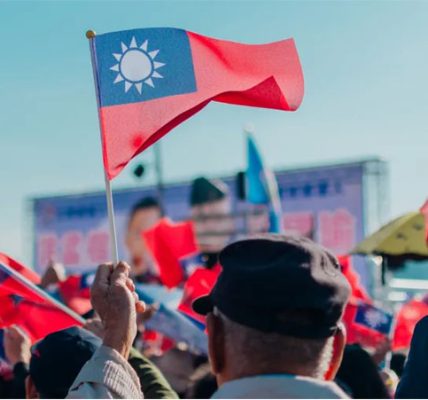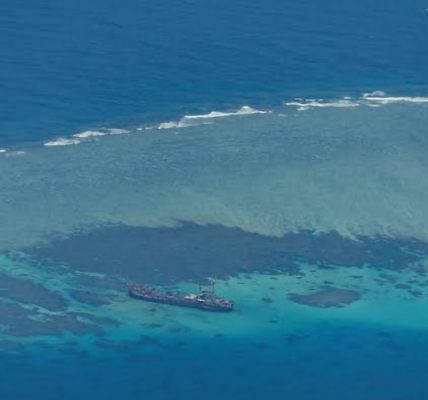






OP-ED: The strategic significance of Taiwan in the Indo-Pacific region continues to be a defining feature of global geopolitics in 2025, where military posturing, economic dependencies, and the contestation of democratic ideals converge. Taiwan is not merely a geographic entity; it has become the focal point of a complex power struggle between the assertive interests of China and the collective response of the United States, Europe, Australia, and Japan. The island’s status has come to symbolize the broader conflict between democratic self-determination and authoritarian expansionism, and it is increasingly clear that its future will have far-reaching implications for the global order.
In recent years, statistics have highlighted Taiwan’s crucial role in the global economy, particularly as the epicenter of semiconductor production. With Taiwan responsible for over 60% of advanced chip manufacturing, any disruption to its supply chain could send shockwaves through industries ranging from automotive to consumer electronics. This economic significance, reflected in a market valuation exceeding hundreds of billions of dollars, emphasizes the necessity for a strong deterrence framework to prevent coercive actions from Beijing. In response, the United States and its allies have strengthened their military and economic cooperation, launching a series of joint exercises that simulate various conflict scenarios in the Taiwan Strait. These drills have not only increased in duration but also complexity, incorporating cyber warfare simulations, anti-access/area denial (A2/AD) strategies, and real-time intelligence sharing. This enhanced interoperability, demonstrated by the large-scale exercises reported in late 2024, forms the backbone of a deterrence strategy aimed at signaling unwavering resolve while maintaining the delicate balance necessary to avoid miscalculation.
Financial measures have become increasingly sensitive to vulnerabilities in the international supply chain. In response to the over-reliance on Chinese production for critical goods, democratic nations have strategically diversified their supply networks. By 2025, projections indicate a significant 15% shift in semiconductor manufacturing investments away from China toward more resilient and diverse regions. This transition not only enhances economic resilience but also serves as an indirect countermeasure to potential economic coercion. The establishment of coordinated sanctions frameworks, where a coalition of countries is prepared to impose punitive measures on China in the event of military aggression, further strengthens strategic deterrence. These economic sanctions are carefully designed to impose tangible costs while minimizing collateral damage to global markets, highlighting the interconnectedness of regional security and international economic stability.
Diplomatic channels, despite the truth strained by competing interests, have played a crucial role in maintaining a degree of stability. Direct communication among the United States, Taiwan, and China has been preserved, even as the rhetoric intensifies. Multilateral forums, including the United Nations and the ASEAN Regional Forum, have become platforms for addressing tensions and exploring pathways to de-escalation. European countries, drawing on their long-standing traditions of diplomatic engagement, have emerged as influential mediators. Their active participation in dialogues regarding Taiwan not only broadens the strategic coalition but also introduces a level of European pragmatism into the otherwise binary conflict between East and West. Informal networks of international stakeholders, including academics, retired military officials, and independent policy analysts, have further enriched these discussions by introducing innovative ideas for crisis management and conflict prevention. The cumulative effect of these diplomatic efforts, while subtle and incremental, has contributed to a more predictable, albeit still volatile, security environment.
The interplay of military, economic, and diplomatic obligations surrounding Taiwan symbolically represents a broader ideological struggle. Taiwan, with its vibrant democratic institutions and commitment to the rule of law, exemplifies the principles of self-determination and liberal governance. This stands in stark contrast to Beijing’s authoritarian model, which seeks to assert control through a blend of nationalist rhetoric and coercive tactics. As democratic values become increasingly embedded in international norms, the ideological divide between Taiwan and China is not merely a bilateral issue; it has evolved into a litmus test for the global community’s resolve to uphold an open, rules-based order. The strategic considerations of the United States and its allies are shaped by this dual imperative: to safeguard an economically vital hub and to uphold the core values that support the international system.
In this context, the roles of nearby game enthusiasts are both impressive and mutually reinforcing. The United States, following a policy of strategic ambiguity, continues to balance deterrence with international relationships. Its military alliances in the Indo-Pacific, particularly with Japan and Australia, are being adjusted to address a range of threats, from traditional military aggression to cyber intrusions and information warfare. European countries, historically more distant from the Asia-Pacific region, have recalibrated their strategic priorities to include a more active naval presence in key maritime chokepoints. This enhanced deployment, which has increased by nearly 20% in the past year alone, serves as a tangible demonstration of their commitment to ensuring freedom of navigation and safeguarding open trade.
Australia, given its proximity to potential flashpoints, has solidified its role as a frontline nation, enhancing its security capabilities and deepening its strategic ties with both the United States and Japan. Meanwhile, Japan, facing the dual challenges of an assertive China and the need for rapid technological innovation, has implemented significant reforms to modernize its military and improve interoperability with allied forces. Each country’s approach, tailored to its unique strategic realities and capabilities, collectively reinforces a broader deterrence posture that is both resilient and adaptable.
In terms of opportunity, China’s position on Taiwan is shaped by a combination of historical narratives, nationalist sentiment, and practical financial considerations. While Beijing remains steadfast in its claim over Taiwan, it is increasingly aware of the potential domestic and international costs associated with military conflict. The possible economic fallout, including disruptions to trade and the imposition of sanctions by Western economies, poses significant risks to China’s continued growth. Additionally, internal political dynamics, characterized by rising public expectations for economic stability and technological advancement, further complicate Beijing’s strategic decision-making. As China aims to engage selectively in diplomatic dialogues that align with its interests, its actions are carefully calibrated to avoid provoking a broader conflict that could jeopardize its long-term strategic goals.
In 2025, the complex dynamics surrounding Taiwan will reflect broader tensions in the global landscape. The island’s pivotal role in the global semiconductor supply chain, along with its status as a symbol of democratic values, has elevated its significance from a regional flashpoint to a key element in the global balance of power. The multifaceted approach adopted by the United States, Europe, Australia, and Japan—including enhanced military deterrence, strategic economic diversification, and sustained diplomatic engagement—demonstrates a commitment to maintaining not only regional stability but also the rules-based international order. Meanwhile, China’s unwavering pursuit of reunification, tempered by economic pragmatism and domestic pressures, continues to fuel a high-stakes rivalry with significant implications for global security. As the region navigates rapid technological advancements, shifting alliances, and renewed great power competition, Taiwan’s future will serve as a barometer for the resilience of democratic institutions and the effectiveness of international cooperation. Ultimately, the diverse strategies employed to protect Taiwan embody the dual imperatives of safeguarding economic strength and upholding the democratic values that define the global order.
[The opinions expressed in this article are of the author. Europeantimes.org takes no responsibility for the same]
Views: 130

Simon Hutagalung
Simon Hutagalung is a retired Indonesian Foreign Ministry diplomat and received his Master’s degree in Political Science and Comparative Politics from the City University of New York. He writes opinion pieces for Europeantimes and all opinions expressed in his article are his own.