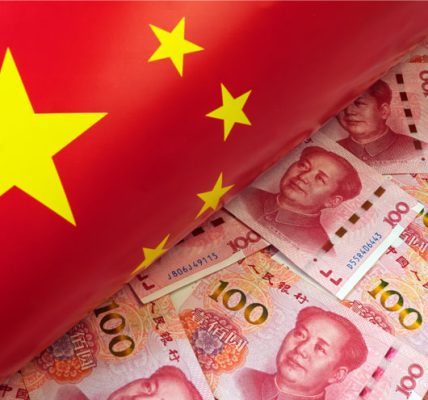






The upcoming meeting between US President Trump and China’s leader is expected to be merely a photo opportunity and a symbol of detente, without any real substance to alter the course of events for the two superpowers locked in a global rivalry. For a time, the two countries will be putting their differences on hold and engage in a struggle for supremacy in four fields: economics, technology, security, and Taiwan.
Any event, however small, in the international arena is of interest to us, as it can affect our views. Before he meets with China’s leader, Trump will be in Beijing. It is enough for him to be there for his country’s restraint to be viewed as a positive factor, at a time of rising tensions between the two powers.
All international events have their elements of symbolism, and in the context of diplomacy, it is hard to discern where the line between reality and symbolism is drawn. However, symbolism, no matter how powerful, cannot change the reality of the distribution of power on our planet, and the self-interest-driven incentives that determine the behaviour of countries and their struggle for supremacy.
As mentioned earlier, the events that are currently unfolding are a manifestation of the power transition that is now taking place on the planet. According to the provisions of the power transition theory, a power transition can only take place under specific circumstances.
First and foremost, there must be a change in the distribution of power. Second, there must be several major powers. Third, there must be a perception on the part of the global community that the power that currently holds the top position is in decline. And lastly, there must be a perception, on the part of the global community, that the power that is on the rise poses a threat to the existing dominant power. Of these circumstances, the last is the most significant, as it is this that determines the nature of the relations between the two powers, as well as between the two powers and the rest of the world.
The interdependent economies of the two countries create paradoxes in relations between them. The two countries have extremely interdependent trade relations. For many years, American consumers have bought an enormous number and variety of goods, manufactured mostly in China. At the same time, China is heavily dependent on the U.S. market for exports of goods and services. China is also heavily dependent on the United States for the licensing of high-technology.
Any relaxation of tariffs that has been recently introduced between the two countries would clearly be positive for both countries. However, this does not change the security dilemma that has recently become even more acute, for example, in issues related to the production of semiconductors and the development of artificial intelligence.
From the point of view of the administration of Trump, China’s growing power is anathema to U.S. leadership. This is why Trump’s administration is attempting to contain China in all fields. For China, the U.S. attempt to recently introduce export controls to China is a part of this attempt at containment.
A central aspect of the current security dilemma between the two countries is a struggle for leadership in the world in the development of AI. The development of AI will also determine the development of the latest generation of weapons, as well as cyber warfare, and the growth of surveillance capabilities in many areas.
A conflict over Taiwan could very quickly become a crisis for global supply chains of high-value semiconductors, made primarily by Taiwan, and thus become highly fragile for two of the world’s most interdependent economies. For the United States, such a conflict would pose a very serious test of the credibility of its deterrence in the region. The US would have to credibly threaten severe retaliation and, at the same time, reassure its allies and friends that it is equally capable of handling the resulting crisis and maintaining stability in the region.
Even if, during his meeting with Xi, Trump were to announce a temporary relief from existing tariffs on Chinese imports, the long-term development of U.S.-China relations would likely continue on a course of selective decoupling.
As the meeting of the two superpowers takes place, three countries from Southeast Asia that are part of ASEAN will also be paying close attention to the implications of the forthcoming meeting of Trump and Xi. These three countries, Indonesia, Singapore and Vietnam, have all been worried about the growing assertiveness of China as it continues to assert its territorial claims in various parts of the region.
For these three countries, a crisis in Taiwan would have the potential to draw in the Indo-Pacific as a whole and thus pose a major threat to their own security. Thus, they will be eager to see whether either Trump or Xi makes any gestures which might lead to a resumption of trade between the two countries and thus bring an end to the tensions which have been building in the region. It is, however, likely that all three countries will continue to ‘play both sides’ in a bid to balance their economic development with their security anxiety.
Their efforts at balance will be driven by their normal balance of power politics and by a fear of both superpowers attempting to dominate the region. As such, all three countries will likely adopt a policy of ‘hedging’ between both superpowers, and it is likely that this policy will be highly affected by the results of the meeting between Trump and Xi.
But the multitude of crises that are unfolding in various regions of the world, including the Middle East, particularly the Iran crisis, could draw both China and the United States into separate confrontations and thus prevent them from focusing on the other. As both China and the United States are attempting to project themselves as responsible great powers and play leading global roles in managing and resolving various regional and global crises, the ability of both great powers to manage their foreign policy agendas and contain their internal contradictions would play a critical role in determining the extent to which their various dialogue processes could deal with their respective problems.
From the perspective of Robert Putnam’s two-level game, the foreign policy processes of both China and the United States would be constrained by a host of various internal as well as external factors, while both leaders would attempt to utilise the international negotiations in order to realise their respective foreign policy objectives.
Of course, Trump’s engagement with Xi in dialogue will, in the short term, bring about several temporary gestures of relaxation in the U.S.-China conflict that will be of interest to the markets and to other global actors locked into conflict with China, as well as to the regional countries of the Indo-Pacific and South Asia. This will be in the interest of Trump, as it will project a sense of control to his allies and to the global public, who are distracted by several global crises currently in full bloom, including the Iran crisis, for example. It will be in the interest of Xi as well, for similar reasons: he too is locked into several global conflicts, and his interest in projecting an image of responsibility in the face of these various conflicts will be served by his engagement in dialogue with Trump.
In the end, however, a handshake and some temporary economic concessions are all that will be gained from a meeting between the two leaders. The conflict between the two countries is a structural one and will be fought in a variety of arenas. For now, the island of Taiwan will be the stage for much of the conflict between the two countries, as well as the conflict of technological competition that is currently underway between them.
Views: 40

Simon Hutagalung
Simon Hutagalung is a retired Indonesian Foreign Ministry diplomat and received his Master’s degree in Political Science and Comparative Politics from the City University of New York. He writes opinion pieces for Europeantimes and all opinions expressed in his article are his own.