








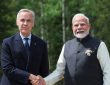

The political developments in Hungary in April 2026, with Péter Magyar becoming prime minister, fundamentally changed the European political landscape. In positive respects, greater European integration, a reduced Russian role, and the loss of one of the few remaining candidates that could have been a major Trump ally all become more likely. But there will be considerable pressure to solidify democratic gains.
Viktor Orbán, the prime minister of Hungary, lost his job on Monday, marking the end of a 16-year reign that often served as a dissenting voice within the European Union. He strongly opposed measures to punish Russia for its actions in Ukraine, refused to accept any migrants, and frequently clashed with the EU over issues of the rule of law. Orbán, who has maintained close ties with Moscow, served as a useful bridge between the Russian government and Western nationalists inspired by US President Donald Trump’s policies. Viktor Orbán, the new prime minister, is seen as a victor in the protests against Orbán’s illiberal model of governance and will likely steer Hungary in a different direction in its relationship with the EU.
Europe has just been dealt a welcome hand of cards. For years, Prime Minister Viktor Orbán has been frustrating progress at EU summits by opposing the imposition of sanctions on Russia and refusing to uphold democratic standards among member states. Now, given his unprecedented promise to repair institutions and abide by EU standards, László Magyar offers Brussels a chance to regain some of the authority it has lost. Illiberal populism in Central Europe may not be irreversible. But turning Hungary back to its democratic path will not be an overnight fix: Orbán still has a stranglehold on the country’s institutions, from the bloated bureaucracy to the courts and much of the press. It will take time, persistence, discipline, and a hard-headed strategy for Magyar to repair the country’s institutions and win back the EU’s trust.
Russia has suffered a strategic setback in Europe with the ousting of its most trusted ally in the EU, Prime Minister Viktor Orbán. Orbán played a vital role in lessening the impact of EU sanctions against Moscow, and the Kremlin is unlikely to simply accept the change quietly. Hungary’s new government will be challenged by the same range of measures that the Kremlin has used elsewhere, including threats over energy, disinformation, and covert interference in politics. However, to withstand these tactics, Budapest needs to move quickly to diversify its energy supplies, strengthen its cybersecurity, and enhance intelligence sharing with like-minded European countries.
US President Trump lost a bet with Russian President Putin when Hungarian Prime Minister Viktor Orbán lost the parliamentary elections. Orbán often used language reminiscent of Trump’s on nationalism, sovereignty, and the cultural conflict apparently brewing across the West. With the loss for Orbán and his right-wing government, the direction is expected to shift to a more mainstream, transatlantic course. While Hungary will still have to carefully navigate relations with Washington—Trump may yet win again in 2024, or at least continue to shape the foreign policy views of the Republican party—those relations should be managed from a firm position within the EU, with a view to constructive cooperation whenever possible.
There are still many battles to be fought. The Hungarian prime minister, Magyar, will have to root out corruption and patronage, ensure the independence of the judiciary and support the fragile recovery of a free press. He will also have to convince colleagues in the EU that his revolution is here to stay. Failing to do so risks allowing Hungary’s right-wing nationalist leader Victor Orbán to return to power, as well as creating opportunities for external forces to fan the flames of ethnic nationalism and xenophobia.
To defeat the anti-democratic attack, three things will be needed. First, reforms must be implemented in the judiciary, public administration and anti-corruption measures. On the other hand, Hungary must integrate more deeply into economic and political life with a view to EU priorities (green transformation, digitalisation, etc.). The state must become less vulnerable to external manipulation by diminishing, for instance, its dependence on Russian energy resources and learning how to resist Russian disinformation campaigns. Finally, an appropriate balance must be struck between unconditional loyalty to the values of NATO and the EU, and not undercutting its own vital relations with Washington.
Hungary has a new prime minister, Peter Magyar, and this marks a significant moment in European affairs. For a strong, united Europe and for decreased Russian influence, this is good news. It is also bad news for the Trump network worldwide. For Magyar and his team to turn this moment into a permanent democratic revolution will require more than words, it will require meaningful reform of Hungary’s institutions, determination to ward off provocations, and a consistent drive to put Hungary at the heart of the European mainstream, to bring back the investors, calm the nerves of Hungary’s neighbours, and show that democracy can be corrected peacefully and credibly in Central Europe.
Views: 67

Simon Hutagalung
Simon Hutagalung is a retired Indonesian Foreign Ministry diplomat and received his Master’s degree in Political Science and Comparative Politics from the City University of New York. He writes opinion pieces for Europeantimes and all opinions expressed in his article are his own.


