
Indian foreign policy in the context of the ongoing Russia-Ukraine war has become a center of attention globally, as the country is demonstrating its commitment to strategic autonomy. Prime Minister Narendra Modi’s personal intervention with Russian President Vladimir Putin to move away from what he described as “endless war” is all the more significant as it reflects the emerging global perceptions of conflict management and international peace. The key to Modi’s approach lies in the unique position that India occupies globally, being fiercely independent in its foreign policy while building strategic partnerships with the US, Europe and Ukraine while simultaneously nurturing a historic relationship with Russia.
Since its independence, India has pursued a foreign policy strategy to maintain its strategic independence. Ever since India gained independence in 1947, it has shunned the idea of joining any major power bloc, while at the same time maintaining defense and energy cooperation with Russia. Right now, the Russia-Ukraine conflict has fundamentally transformed the global security environment. The conflict has led to the deepening of existing structural tensions between Russia and the West. It has also caused a huge disruption to global energy markets, threatened global food security, and created economic uncertainty for developing countries of the world. For a country like India, which is very energy dependent and also has very deep trade linkages all over the world, it is in its interest that this conflict is brought to an end as early as possible.
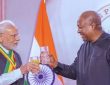
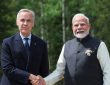
Modi, in his meeting with Putin, made it clear that while he remained a friend of the Russian President, he could never advocate for ‘endless war’. Modi was clearly outlining his growing worry that the current conflict was adversely affecting the overall global environment and needs to end for the betterment of the world at large. The key to India’s potential role as a bridge builder between Russia and Ukraine lies in several salient features. For one, India enjoys huge credibility with Moscow due to decades of defense collaboration, a high level of political engagement, and substantial trade. Importantly, unlike the West, India has not imposed any sanctions on Russia to date.
Also, through defense cooperation, increasing trade and other ties, New Delhi has developed friendly relations with Ukraine. India thus has a working relationship with both combatants and is in a position to convey its humanitarian concerns to either. Further, India’s growing relations with countries of Western Europe and the United States help to strengthen its hand as a bridge-builder between the two warring sides. Given its newly emerging strategic partnership with the US, within the framework of the Quadrilateral Dialogue with Australia and Japan, increasing defense and strategic cooperation with European countries such as France, UK, Germany etc. and others, the diplomatic reach of India is several notches higher than that of most other countries.
The Global South has more to worry about than high oil prices when there is a war being fought somewhere in the world, and that is precisely the message that India is carrying to the world. By continuing to keep channels of communication open with both Russia and Ukraine and by impressing upon both sides the human costs of war, India is demonstrating the kind of sensitivities of a developing country. A war in faraway Europe is, after all, not affecting the Indians on the street as much as it is starting to affect Europeans, and this perception can only be to India’s advantage as it tries to consolidate its stand in the Global South. In the top clubs like the G20, BRICS, the SCO and UN, India can continue to drive home the message of peace. Peace is not just the domain of politicians of powerful countries; it is a global economic necessity today.
But it would be wrong to presume that India can shape the ongoing conflict to any extent. Russia has clearly articulated its military objectives while Ukraine seeks to reclaim its sovereignty over the conquered territory. The likelihood of either side making concessions that could result in a peace settlement in the near future is virtually nil. Instead, New Delhi’s goal will be to foster an environment that could encourage both sides to engage in constructive dialogue. This will require India to play a facilitator’s role through quiet diplomacy. For now, initiatives that aim to bring about a prisoner release, establish a humanitarian corridor, or promote food security could facilitate diplomatic communication between warring parties and thereby help maintain critical lines of communication during a time of crisis.
For Europe, it is important to monitor the evolution of India’s foreign policy, especially as European governments focus on supporting Ukraine and look to rebuild the international system in the long run. As India has increasingly interesting relations with the Western world, and given its defense and energy cooperation with Russia, it is one of the few major powers that communicates with the Russian leadership and at the same time shares interests with the Europeans. Thus, as countries in the world switch sides in rival global geopolitics, countries that act as bridges and maintain relations with adversaries, in order to maintain global peace and prevent miscalculation, would increasingly become important assets to develop relations with.
It is expected that as a regional power increasingly playing a significant role at the global stage, Modi’s words “Let’s move away from endless war” would translate into India’s silent diplomacy. The country would act as a constructive intermediary, maintaining open lines of communication to help find ways of reducing the conflict and achieve a more enduring peace when the time comes. India’s foreign policy would continue to abide by two strategic imperatives enabling the country to function with strategic autonomy; and reinforcing New Delhi’s relations with all the rival powers while concurrently sustaining and strengthening ties with its historic allies, across all continents.
Views: 12

Simon Hutagalung
Simon Hutagalung is a retired Indonesian Foreign Ministry diplomat and received his Master’s degree in Political Science and Comparative Politics from the City University of New York. He writes opinion pieces for Europeantimes and all opinions expressed in his article are his own.