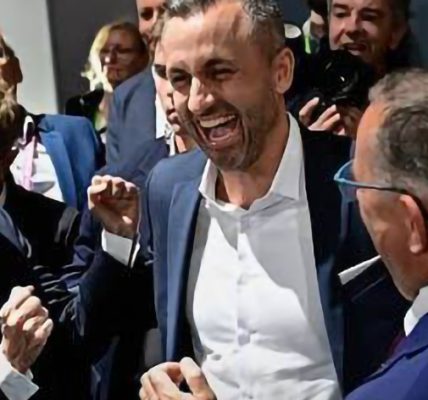






The constitutional confrontation in Hungary, which started after the end of the end of the Viktor Orbán’s premiership and the beginning of the premiership of Péter Magyar the leader of the Tisza Party, is a battle about the future of the Hungarian state. On the one hand, Magyar and his party are waging a campaign against President Tamás Sulyok, elected by a Fidesz-dominated parliament in 2024, to weaken the remnants of the Orbán institution-building and to reinstate a constitutional balance that could bring Hungary closer to the European democratic norms. But on the other hand, this very same project carries several risks, including the risk of its overreach, the risk of the destabilisation of the institutions, and also the risk of its profound and long-lasting impact on the country’s geopolitical situation.
Magyar’s victory in the general elections in May 2026 marked the end of the Fidesz-era. By removing the many loyalists from all institutions that had been put in place by Viktor Orbán to cement his power and to ensure his post-premiership legacy, the Tisza Party leader opened up a new opportunity for democratic development. But there are many obstacles on the way. One of the biggest challenges is posed by President Tamás Sulyok. Sulyok had been elected by the parliament in 2024, when it was still dominated by Fidesz. The president of Hungary is a largely ceremonial post, but he has some powers, too. He can sign laws into force. He can refer laws to the Constitutional Court for review. And he is the official symbol of national unity. For Magyar, however, the president is now a major veto point, able to obstruct all of the reforms that he wants to implement.
In his demand that Sulyok step down by May 31, 2026, the Prime Minister insisted that as long as the President remains in office, the country’s national unity will be betrayed. The President sees this demand as an attack on the dignity of his office, and an attempt to undermine the stability that has to date been preserved in the country, despite all conflicts. In response to Magyar’s declarations that he intends to start procedures to constitutionally remove the President from office, the latter said that in such a case he would have been ‘removed’ based on a simple change in the Constitution by a two-thirds majority in Parliament (which the Prime Minister and his party command), without any opposition input. Such removal of the country’s head of state would be extremely problematic, since it would create the worst of precedents for the years to come, since it would amount to the removal of the President from office by means of a constitutional amendment. This would be an extremely negative development for Hungary’s fragile constitutional system.
The deeper structural problem is that of the many loyalists that Orbán planted in all the institutions, from the judiciary to the regulatory agencies, from the media authorities to the Constitutional bodies. Magyar and his Tisza Party need to remove these people from their positions of power to implement their program of democratic reform. However, the same constitutional means that were used by Orbán in order to implement his project of democratic backsliding and to concentrate all the power in his hands are now available to Magyar in order to reverse the process and to redistribute the power more democratically. This is the paradox that the PM is facing, and this is the root of the current constitutional crisis in Hungary.
Civil society in Hungary is also divided on the way Prime Minister Péter Magyar goes about removing from office President Tamás Sulyok. While a section of actors regards his efforts as necessary to undo the damage that had been caused to democracy and the Constitution by years of erosion of institutions under the previous premiership, others fear that the rapid change of key personnel might endanger the balance of power and therefore could proceed faster than the changes in the society at large could be digested. In any case, the European Union seems to welcome Magyar’s efforts towards democracy and, following his commitment to rule-of-law reforms, Brussels has agreed to release the €16.4 billion of frozen funds. However, as was already the case with respect to the earlier events connected to Hungary’s prime minister, the EU would certainly be concerned if the present constitutional crisis were to prolong and even to intensify the existing uncertainty as to the country’s democratic developments.
The crisis now also has a geopolitical dimension. The Kremlin regards it as an internal Hungarian affair and is keeping a low profile for the time being. However, given Hungary’s previous pro-Russian stance under the leadership of Prime Minister Viktor Orbán and its subsequent shift in line with the policy of de-Orbánization pursued by Western countries, the crisis could, in the view of Russian analysts, mark the beginning of a process of erosion of Moscow’s influence in Central Europe. Therefore, the Kremlin is likely to follow a subtle line of behaviour, involving disinformation and the support of remaining pro-Orbán groups and networks, while avoiding a confrontation with Prime Minister Magyar.
This confrontation can be brought to an end only by a balance of determined drive for change and of constitutional restraint. The removal of the “old guard” of entrenched appointees must be transparent and have a firm legal basis; it must not be used as a political vendetta. Above all, it is necessary to strengthen the judiciary, to depoliticise bodies of regulatory and supervisory authorities and to appoint persons to leading positions based on their qualifications, not based on their political loyalty. A cross-party agreement on constitutional reforms to be implemented in the long term is also necessary. The decisive question is not whether or not to change the system of power created by Orbán, but also how this change is to be brought about, i.e. in what way it will differ from the system that has been destroyed.
Views: 23

Simon Hutagalung
Simon Hutagalung is a retired Indonesian Foreign Ministry diplomat and received his Master’s degree in Political Science and Comparative Politics from the City University of New York. He writes opinion pieces for Europeantimes and all opinions expressed in his article are his own.