


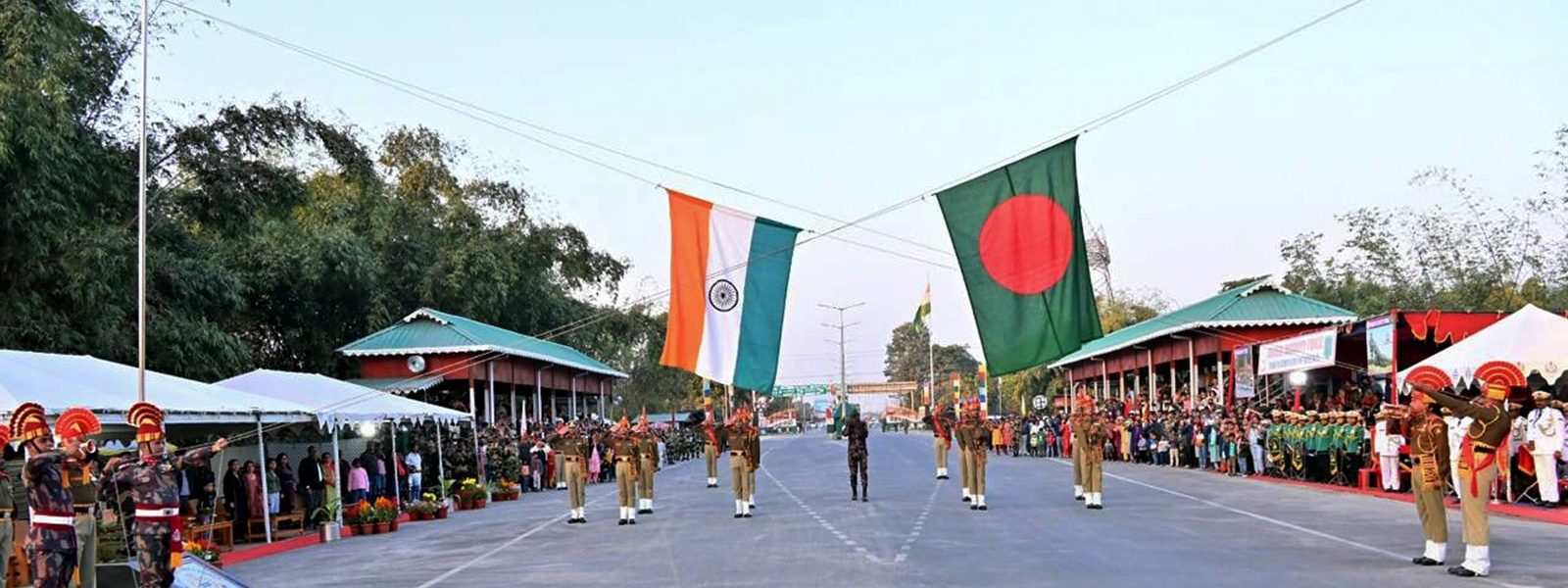







Between Partnership and Precedent: Bangladesh Faces a Defining Moment in Its Relationship with India
As New Delhi recalibrates its “neighborhood first” doctrine, Dhaka must navigate defense engagement, border tensions, and the rule of law with sovereign clarity and strategic confidence
A diplomatic meeting between India’s High Commissioner-designate to Bangladesh, Dinesh Trivedi, and Indian Army Chief General Upendra Dwivedi may, at first glance, appear to be little more than a customary exchange of courtesies between neighbouring states. Yet in the context of a bilateral relationship undergoing its most profound structural recalibration in decades, the symbolism of this encounter centered on defense cooperation, border security, and enhanced military engagement merits rigorous and dispassionate scrutiny.
Simultaneously, Bangladesh’s Home Affairs minister Salahuddin Ahmed’s carefully calibrated remarks on India’s Citizenship Amendment Act (CAA) and National Register of Citizens (NRC), alongside Dhaka’s ongoing diplomatic push to secure the extradition of former Prime Minister Sheikh Hasina, together illuminate a relationship that has arrived at a decisive crossroads one that will shape the geopolitical architecture of South Asia for years to come.
A Relationship Defined by History and Complicated by It
To appreciate the full weight of this moment, one must first situate it within the long and often turbulent arc of India-Bangladesh relations. Since Bangladesh’s independence in 1971 achieved with decisive Indian military and political support the bilateral relationship has oscillated between warm strategic partnership and uneasy friction. Under Sheikh Hasina’s extended tenure, New Delhi enjoyed what was arguably its most strategically comfortable phase with Dhaka: transit arrangements, counter-insurgency cooperation, and a broadly India-aligned foreign policy posture defined the era.
The political upheaval of 2024, which brought an interim government to power under Chief Adviser Dr. Muhammad Yunus, fundamentally altered that equation. India found itself confronting a Dhaka that was less predictable, more assertive about the boundaries of its sovereignty, and acutely conscious of domestic political sentiment in its dealings with its considerably larger neighbour. It is within this transformed context that the Trivedi-Dwivedi meeting must be understood.
Defense Cooperation: Constructive Engagement or Strategic Dependency?
On the surface, discussions aimed at strengthening defence ties and coordinating border security appear both logical and mutually beneficial. The two nations share a 4,156-kilometer land border among the longest in the world along which the security challenges are real and multifaceted. Smuggling, human trafficking, narcotics trade, and the movement of extremist elements demand coordinated bilateral responses. Military-to-military engagement, in this respect, is not merely desirable; it is necessary.
However, the deeper question is one of strategic balance and sovereign integrity. Bangladesh must ensure that enhanced defence cooperation does not gradually evolve into strategic dependency. History furnishes sobering lessons: smaller nations that permit their security architecture to become deeply intertwined with a dominant neighbour’s military apparatus frequently find their foreign policy space progressively constrained. Bangladesh’s defense establishment would be well advised to approach this engagement with clearly defined parameters cooperation on shared threats, certainly; subordination of strategic autonomy, categorically not.
Equally important is the diversification of Bangladesh’s defence partnerships. Constructive engagement with China, Turkey, the United States, and other partners would ensure that no single bilateral relationship becomes the defining pillar of the country’s national security architecture.
Border Security and the Humanitarian Dimension
The border security dimension carries its own urgent complexity. The Border Guard Bangladesh (BGB) has been placed on its highest state of alert against illegal push-ins a phenomenon that has intensified in the shadow of India’s CAA-NRC framework. Adviser Salahuddin Ahmed’s diplomatic restraint in characterising these developments as India’s “legal and administrative matters” is understandable from a protocol standpoint. Yet it risks obscuring a humanitarian reality with direct consequences for Bangladesh.
When individuals regardless of their origin or legal status are pushed across an international border without due process, the matter transcends domestic administration and enters the domain of international humanitarian norms and bilateral treaty obligations. Bangladesh retains both the right and the obligation to its own citizens, to its territorial integrity, and to the international community to raise this issue firmly through diplomatic channels, invoking the 1974 Land Boundary Agreement and the relevant conventions of international law. Quiet diplomacy has its place; however, sustained silence on systematic border violations risks being misread as tacit acceptance.
The CAA-NRC Question: Sovereignty and Its Extraterritorial Consequences
The CAA-NRC framework deserves more nuanced engagement from Dhaka than it has thus far received. While it is axiomatic that domestic legislation falls within a sovereign state’s purview, the extraterritorial consequences of such laws cannot be disregarded when they directly affect a neighbouring country’s demographic and security landscape. The NRC process in Assam alone left nearly two million people in a state of legal limbo, many of whom carry historical and familial ties to Bangladesh. The potential for mass displacement whether organic or politically engineered constitutes a legitimate and pressing concern for Dhaka.
Bangladesh’s foreign policy apparatus must develop a sophisticated, evidence-based position on this matter one that is neither confrontational in register nor dismissive in substance, but firmly grounded in international law, bilateral treaty obligations, and the fundamental rights of affected populations.
The Hasina Extradition: A Test of Democratic Principle
The question of Sheikh Hasina’s extradition adds a further layer of political and diplomatic complexity to this already intricate relationship. The interim government’s formal request for her return to face legal proceedings in Bangladesh is constitutionally and procedurally sound. How this process unfolds, however, will be observed closely both domestically and by the international community as a litmus test of whether the interim administration is guided by the rule of law or by political expedience.
India, for its part, confronts an uncomfortable dilemma. Providing refuge to a former head of government sought by her own country’s legal system establishes a troubling precedent; extraditing her risks being perceived as abandoning a long-standing strategic partner. New Delhi’s management of this issue will reveal much about the pragmatic limits of its “neighborhood first” doctrine and the sincerity of its stated commitment to respecting the democratic processes of sovereign neighbors.
The Economic Imbalance: Goodwill Is Not a Substitute for Equity
From an economic standpoint, the India-Bangladesh relationship reflects a structural asymmetry that has long been papered over by political goodwill but can no longer be responsibly ignored. Bangladesh’s trade deficit with India stands at approximately ten billion US dollars annually, rendering it one of the most lopsided bilateral trade relationships in South Asia. Indian goods flow freely into Bangladesh, while Bangladeshi exports particularly ready-made garments, pharmaceuticals, and agricultural produce continue to encounter non-tariff barriers, port restrictions, and bureaucratic delays on the Indian side.
If both countries are genuinely committed to building what analysts describe as a “mutually beneficial and pragmatic partnership,” India must take concrete and verifiable steps to address this imbalance. Preferential market access, streamlined transit protocols, and joint investment in connectivity infrastructure including the long-pending Teesta river management project would contribute far more to durable bilateral goodwill than any number of high-level military engagements.
Regional Geopolitics: The Perils of Forced Alignment
China’s expanding economic and infrastructural presence in Bangladesh through Belt and Road Initiative projects, port development, and defense supply agreements is a factor that New Delhi observes with undisguised strategic concern. Rather than exerting pressure on Dhaka to choose sides in what is increasingly framed as an India-China strategic rivalry, New Delhi would be better served by making itself a more credible, reliable, and equitable partner.
Coercive diplomacy and strategic pressure have a well-documented history of backfiring in South Asia, pushing smaller nations closer to Beijing rather than further from it. Bangladesh, for its part, must resist being instrumentalised in great-power competition. Its strategic geography is a genuine asset; the task for Dhaka is to leverage that asset to extract maximum developmental benefit from all partners, while preserving the principled non-alignment that has historically served smaller states well.
Public Opinion and Democratic Accountability
The role of civil society, independent media, and public opinion in shaping this bilateral relationship must not be underestimated. In Bangladesh, public sentiment toward India has been complicated by years of perceived one-sided arrangements the Tipaimukh dam controversy, the prolonged Teesta water-sharing impasse, and the documented killings of Bangladeshi nationals by Indian Border Security Forces along the frontier. Any government in Dhaka interim or elected must remain responsive to this public mood.
A foreign policy perceived as excessively deferential to Indian interests will face domestic political backlash, eroding the very stability that both capitals claim to prioritise. Transparent public communication regarding the terms and outcomes of bilateral negotiations is therefore not merely sound democratic practice; it is a strategic imperative.
The Path Forward: Principled Clarity Over Cautious Ambiguity
Bangladesh must approach this pivotal juncture with strategic clarity, institutional strength, and diplomatic confidence. It must engage India as an equal partner acknowledging shared interests while firmly asserting its own. It must invest in the institutional capacity of its foreign ministry, defence establishment, and economic agencies to negotiate from a position of informed strength rather than reactive accommodation. It must reinvigorate its commitment to regional multilateralism through SAARC and BIMSTEC, recognising that a rules-based regional order ultimately offers smaller nations greater protection than any bilateral arrangement, however well-intentioned.
Above all, Bangladesh must anchor its foreign policy in the aspirations of its 170 million citizens aspirations for dignity, prosperity, and a secure future in a stable region.
The meeting between Dinesh Trivedi and General Upendra Dwivedi may ultimately register as a modest diplomatic footnote in the grand narrative of South Asian geopolitics. But the questions it raises about sovereignty, security, justice, and the terms of partnership between unequal neighbors are anything but modest. How Bangladesh navigates this new strategic reality will define not only the future of its relationship with India, but its standing and credibility in the broader international community for a generation to come.
The time for cautious ambiguity has passed. What this moment demands is principled clarity, strategic courage, and the quiet confidence of a nation that knows its own worth.
Views: 69

Shahidul Alam Swapan
Shahidul Alam Swapan is aSwitzerland-based Private Banking & Financial Crime Compliance Expert, Columnist and Poet.


