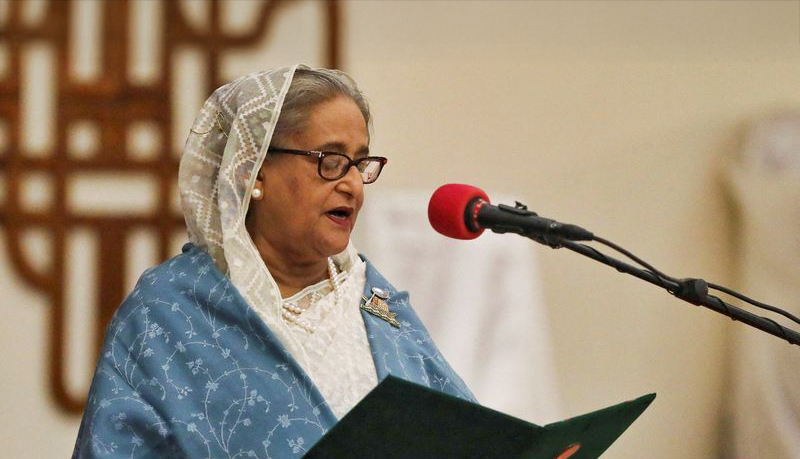







The Phoenix Gambit: Sheikh Hasina’s Calculated Bid to Rise from the Ashes of Exile or the Final Act of a Fallen Titan?
There is a particular theatre to South Asian politics that the West often struggles to decode — a theatre in which martyrdom is currency, sacrifice is strategy, and the announcement of a return can be as seismic as the return itself. Sheikh Hasina, Bangladesh’s former Prime Minister of fifteen years, former convict of a death sentence handed down in absentia, and the most polarising figure in her nation’s modern history, understands this theatre better than almost anyone alive. Her announcement to Reuters on July 10, 2026 that she intends to return to Bangladesh around December 20 and is prepared to face arrest, trial, and even death is not merely a personal declaration. It is a masterstroke of political theatre, a carefully calibrated signal fired simultaneously at multiple audiences across the subcontinent and beyond.
But is it real? And if so, what does it mean for Bangladesh a nation still reeling from the convulsions of its unfinished revolution?
The Anatomy of a Political Signal
Let us begin with the most fundamental question: why Reuters? Sheikh Hasina has spoken to Indian media before. She has addressed her party faithful in digital rallies and issued statements through Awami League channels. But Reuters is not a vehicle for preaching to the converted. It is a wire service whose dispatches land on the desks of foreign ministers, intelligence briefers, and editorial boards from Brussels to Beijing within minutes of publication. The choice of Reuters is, in itself, the message.
She was not speaking to the grieving Awami League activist hiding from BNP-aligned authorities in Dhaka. She was speaking to New Delhi, which has sheltered her for nearly two years at the cost of its own relationship with Dhaka. She was speaking to Washington, which has watched Bangladesh’s democratic transition with cautious approval. She was speaking to the BNP-led government of Tarique Rahman, which now holds a commanding two-thirds majority in parliament and has institutionalised the Awami League’s exclusion from formal politics through legislation passed as recently as April 2026. And she was speaking to the International Crimes Tribunal that sentenced her to death on November 17, 2025, for crimes against humanity committed during the July Uprising of 2024.
In one interview, Sheikh Hasina reframed herself: no longer the fugitive, no longer the exile, but the martyr-in-waiting, willing to walk into the fire.
The Sacrifice Narrative and Its South Asian Resonance
To understand the potency of this messaging, one must understand the deep cultural grammar of South Asian political sacrifice. From Gandhi’s voluntary imprisonment to Aung San Suu Kyi’s years under house arrest, the willingness to suffer for one’s people has historically functioned as a form of moral legitimacy that transcends legal verdicts. Sheikh Hasina is consciously invoking this tradition. By saying she knows she may be arrested, that her life may be in danger, and that she is returning anyway, she is attempting to transform her legal jeopardy into a political halo.
Her rare admission “Long-term rulers commit mistakes. No administration is perfect. We have made mistakes, and nobody can deny that” is equally deliberate. It is not the language of a broken woman. It is the language of a politician who has been well-advised, who understands that the electorate she needs to rebuild does not require perfection; it requires accountability. In one breath, she acknowledges the failures of her fifteen-year rule while implicitly contrasting her willingness to face consequences with the impunity of those who now govern Bangladesh.
Whether this resonates with ordinary Bangladeshis remains genuinely uncertain. The scars of the July Uprising of 2024, in which her government’s crackdown on student protesters left hundreds dead, are still raw. The BNP swept February’s elections not merely because of anti-Hasina sentiment, but because of a genuine popular desire for change. Proponents of her legacy will point to Bangladesh’s remarkable GDP growth, its infrastructure revolution, and its emergence as a global garment powerhouse. Critics will point to democratic backsliding, enforced disappearances, and elections widely condemned as fraudulent. These two Bangladeshes are not reconcilable through a single Reuters interview.
The Awami League: A Party in Ruins, Searching for a Pulse
Perhaps the most urgent domestic audience for Hasina’s announcement is not the Bangladeshi voter at large, but the Awami League itself a party that, as of mid-2026, barely exists as a functioning political organisation. Its central office on Shaheed Abrar Fahad Avenue stands abandoned, its gates broken, its walls soot-covered. Its registration was frozen by the Election Commission in May 2025. It was barred from contesting the February 2026 elections. Legislation passed in April 2026 has now institutionalised its exclusion from formal politics. Its leaders are either in prison, in hiding, or in exile.
For a party that once commanded the loyalty of tens of millions and governed Bangladesh for fifteen consecutive years, this is an almost incomprehensible collapse. And it is precisely because the collapse is so total that Hasina’s announcement carries such weight within what remains of the party structure. She is telling her activists many of whom are living in fear, many of whom have questioned whether the party has a future that she has not surrendered. That she will return. That the fight continues.
Whether this translates into actual organisational revival is another matter entirely. Many Awami League leaders, even those sympathetic to Hasina, have reportedly greeted her announcement with scepticism rather than jubilation. The party’s online sphere, to which its activities have been largely confined, buzzed with cautious commentary rather than triumphant declarations. The gap between announcement and action, in the current political environment, is vast and treacherous.
The India Factor: A Relationship at Breaking Point
No analysis of Hasina’s announcement would be complete without examining the role of India. New Delhi’s decision to shelter Hasina since August 2024 has been one of the most diplomatically costly choices in recent Indian foreign policy. Bangladesh’s interim government, and subsequently the BNP-led administration, have demanded her extradition repeatedly. The refusal has poisoned what was once one of South Asia’s most productive bilateral relationships.
By announcing her return on her own terms voluntarily, publicly, and through an international platform Hasina may be offering India a face-saving exit. If she returns willingly, New Delhi is no longer complicit in sheltering a fugitive; it becomes the host that allowed a former leader to exercise her own sovereign choice. The diplomatic calculus is elegant, if it works. India’s patience with its houseguest may also be wearing thin, as the costs to its regional relationships continue to mount.
The Verdict of December
Will she actually return on December 20? History counsels scepticism. Political announcements of this nature in South Asia have a long tradition of postponement, reinterpretation, and quiet abandonment. The legal obstacles are formidable: she faces a death sentence, multiple murder charges, and a government that has called her a “mass murderer with no remorse.” The physical risks are real. The political environment is hostile in ways that no amount of personal courage can fully neutralise.
And yet, to dismiss this announcement as mere theatre is to misread its significance. Even if December comes and goes without her return, Sheikh Hasina has accomplished something remarkable: she has re-entered the political conversation of Bangladesh at a moment when her party was being written out of the national story entirely. She has reminded the BNP government, the international community, and her own supporters that she is not finished. That she is watching. That she intends to be counted.
In the end, the most honest assessment is this: Sheikh Hasina’s announcement is simultaneously genuine and strategic, courageous and calculated, a homecoming and a gambit. These things are not mutually exclusive. The greatest political acts in history have almost always been both. Whether this particular act leads to a phoenix rising from the ashes of exile or to a final, tragic curtain call for one of South Asia’s most consequential leaders, only the streets of Dhaka and the verdict of December will decide.
Views: 47

Shahidul Alam Swapan
Shahidul Alam Swapan is aSwitzerland-based Private Banking & Financial Crime Compliance Expert, Columnist and Poet.