






Modi’s Recent Visit to Norway and 3rd India-Nordic Summit: Emphasis on Niche Areas
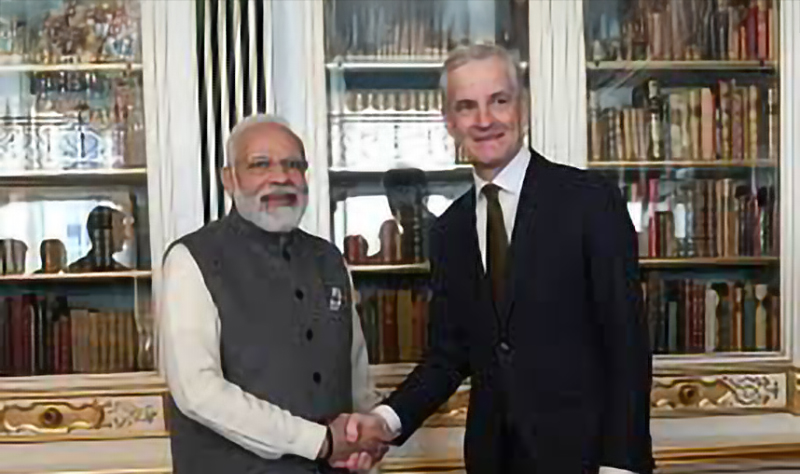
As Prime minister Narendra Modi of India concluded his state visit to Norway recently for the bilateral negotiations and after taking part in the 3rd India-Nordic Sumit, the decks are clear in preparing a framework for enhancing the bilateral relations between India and Norway at multiple levels. Oslo summit was focused on partnership on a range of areas from clean energy, Arctic scientific collaboration, to boosting bilateral business and economic ties, renewable energy, blue economy, digital public infrastructure. Whereas the 1st India-Nodic Summit (2018, Stockholm) emphasized on innovation, sustainable solutions and the 2nd India-Nordic summit (2022, Copenhagen) centered on post-pandemic recovery, climate change, the current 3rd India-Nordic summit in 2026 intends to enhance bilateral trade by eliminating tariffs significantly for a win-win proposition for both India and Norway. Trade and Economic PartnershipAgreement (TEPA) concluded in October 2025 and the January 2026 India-EU Free Trade Agreement have provided further impetus for a more vibrant and robust layer to India-Norway cooperation.
Historical Background
Both India and Norway share deep historical roots and bonding. As early as the 1600s, a Danish-Norwegian Trading station was established in Tranquebar ( Tharangambadi) in the Indian state of Tamil Nadu. Norway’s first consulates in India opened in Kolkata and Mumbai in 1845 and 1857 respectively. India and Norway established diplomatic relations in 1947. In 1952, the ‘India Fund’ was created with the aim to provide development assistance. 2019 marked the signing of MoU for comprehensive ocean cooperation. And, the India-European Free Trade Association (EFTA) and Trade andEconomic Partnership (TEPA) came into force on October 1, 2025.
Business and Financial Cooperation
India and Norway are actively exploring proactive collaboration in the retail and e-commerce sectors, through the recentlysigned Trade and Economic Partnership Agreement (TEPA) and the European Free Trade Association (EFTA). This is to reinforce bilateral trade relations and simplify the movement of goods and services between the two countries. Total bilateral trade is around USD$ 1 billion annually. The 2025 EFTA deal provides better market access for services and goods. Key areas of focus include: marine industries, ocean management, sustainable ship recycling, green maritime transport, wind energy, enhanced cooperation in pharmaceuticals, automobiles, and industrial resources. Indian – commerce platforms and technology providers can collaborate with Norwegian partners to build and scale digital market places, especially for MSMEs. Fuhermore, India’s expertise in digital payments (UPI model), fintech platforms, and financial inclusion tools can support Norway in enhancing its digital transmission ecosystem. Both Norway and India can collaborate in having Global Capability Centers(GCCs), Machine Learning (ML), Artificial Intelligence (AI), Internet of things (IoT) and Natural Language Processing and other advanced technologies. Indian GCCs are increasingly being perceived as global innovation hubs. With Increasing process efficiency, Indian GCCs are evolving as strategic centers for end-to-end product development.
In 2019, India and Norway Dialogue on Trade and Investment was signed with Norway showing interest on investment incertain core areas such as maritime industry, shipping, oil and gas, clean energy, environment and information communication technology. Foreign Direct Investment from Norway to India is quite significant. Norway ranks as India’s 33rd largest foreign direct investor. Cumulative FDI from Norway to India amounted to around USD $880 million during 2000-2024 period. More than 140 Norwegian companies operate in India in areas ranging from ship building, sub-sea drilling equipment, hydropower, clean energy and IT services. Major Norwegian investors in India include: Statkraft, Norfund, Jotun, DNB Nor, Kongsberg, Yara, operating in various core sectors. From the Indian side, high profile companies such as ONGC, Reliance Industries, TCS, Infosys, HCL, L & T, Infotech, Cognizant, Tech Mahindra, do invest significantly in Norway. India can collaborate with Norway with initiatives like Pradhan Mantri Kaushal Vikas Yojana, Pradhan Mantri Kaushal Kendras, Skilled Development, Vocational Training, etc. Norway Pension Fund Global is one of India’s largest single foreign pension investors. In 2025, its investments amounted to over USD $ 10 billion. This volume is expected to increase in the coming years. As part of ‘Team Norway’, The Norwegian Business Association, Norway-India Chambers of Commerce and Industry, Innovation Norway, were established to promote bilateral business ventures between India and Norway. Another area where India and Norway can collaborate is in developing battery electric vehicles (BEV) and related ecosystems. Indian EV companies could source batteries from Norway for production of their EVs. In turn, this would make the value chain of Indian EV companies more sustainable and can facilitate technology transfer. Given the high adoptionand use of electric vehicles in Norway, Indian BEV companies could commence operations in Norway for the Norwegian market.
Synergy on Health Mission
Norway prioritizes tele medicine, e-health and welfare technologies to address aging demography, chronic diseases, and rising healthcare costs. The focus on integrated healthcare reform creates strong opportunities for Indian companies in personalized health solutions, and in integrating with National Health Information Network. India’s healthcare sector is a major economic driver and a rapidly growing market expected to reach USD$ 650 billion by 2026. Medical tourism, pharmaceuticals, tele medicines and initiatives like the Ayushman Bharat Yojna can be viable partners for Norway.
Climate, Wind Sector and Environment
Norway and India support Paris Agreement of the SDG-agenda in developing global policies for reducing and mitigating climate change and environmental degradation, deforestation, plastic pollution, waste management, river rejuvenation, energy efficiency, greenhouse gas emissions reduction. Norway presents immense opportunities to invest in wind sector to support the construction of better renewable infrastructure. There is scope for collaborative opportunities in areas like green hydrogen, solar and wind projects, geo-thermal energy, green shipping, etc. NHPC Ltd India, has signed a MoU with Ocean Sun, a Norwegian company, which provides technology, clean and affordable energy to the solar industry. Renewable energy is a pivotal sector in Norway’s economy. Owing to its topography, geography and vantage location, Norway has the greatest hydro power resources in Europe. Hydropower and wind power account for 98% of electricity production in Norway. Norway has set ambitious targets for reducing greenhouse gas (GHG)emissions and in achieving low emissions by 2050. As one of the world’s fastest growing economies, India has set bold targets to secure its energy future, safeguard the environment and uphold its commitments under the Paris Climate Agreement. These include adding 500 gigawatts (GW) of renewable energy capacity by 2030 and reaching net-zero carbon emissions by 2070. India aspires to emerge as a global leader in sustainable energy through these meaningful initiatives.
Blue Economy and Collaborative Investment
India and Norway cooperate with each other in the Blue Economy sector by leveraging each other’s strengths and expertise in clean hydrogen through fulfilling decarbonization objectives. Collaboration can occur for value-addedproducts like green urea, building materials, chemicals like ethanol, polymers, turbine technology, glaciology, water resource management, aquatic ecosystem, freshwater biodiversity, as well. India is having an Observer status in the Arctic Council with focus on polar scientific research, atmospheric sciences. India maintains a research station in the Arctic (Himadri) and also takes active part in scientific expeditions to the Arctic under the auspices of the National Centre for Polar and Ocean Research. Also, India has tremendous potential for sustainable fuel collaboration specially in biofuels, with 765 million cubic meters of forest area plans in agribusiness collaboration. Under the India-Norway Marine Pollution initiative, both countries can expand cooperation to include the joint manufacturing of environment-friendly ships, as well as transitioning to green hydrogen and ammonia-fueled cell-driven vessels, and for cleaner maritime transport. India and Norway aquaculture firms could similarly cooperate to establish bilateral supply chains for sea food products between both countries. This may lead to a steady supply of Norwegian seafood products like salmon cod intheIndian markets and for its consumers.
Tourism, Cultural Interactions, and Indian Diaspora
Economic potential and impact of tourism is substantial in Norway. In 2025, Norway attracted over 12 million tourists and in creating nearly 200,000 jobs directly of benefit to Norway. With the development of ports under the India-Norway Ocean Dialogue, further collaborative arrangements can be envisaged such as sustainable tourism, coastal tourism, and marine infrastructure development. Indian tourists to Norway can tap into some of the country’s highlights such as viewing NorthernLights, Midnight Sun, and visiting key spots such as Fjords, Tromso, Alta, Lofoten Islands, Aurora Borealis, Viking Museum, and in enjoying the scenic beauty of the Arctic.
Under the Cultural Agreement of 1961, both India and Norway have forged bilateral cooperation in art, culture, archives, architectural heritage, fine arts, and education. Under cultural exchange, both countries collaborate on contemporary literature, conducting literary exhibits, strengthening ties in various fora. Norwegian playwright Henrik Ibsen acts as a major tool of soft diplomacy, with his plays highlighting social issues through cultural exchange programs. As part of cultural events, performances by India and Norwegian artists take placeregularly including jazz festivals in Delhi and other major Indian cities. Under a 5-year program, exchange of experts, film makers and performing artists do take placeas well. In Education and knowledge, collaborations take place in higher education, research, academic arenas. More than 100 ongoing projects are ongoing between India and Norway with environment, climate change and clean energy, marine research being the major thematic research areas. India is also one of the six primary centers identified by Norway for cooperation in higher education under the Panorama Strategy. Under the ‘Asia in Transition’ focus area, both Norway and India have dedicatedresearch units specializing in international relations, foreign policy, area study and related fields under Liberal Arts. Indian diaspora population in Norway is close to 30,000 with most of them being professionalsworking in various companies and institutions of higher learning. Norway was included in the E-Visa Scheme by the Government of India in 2014.
Conclusion: Future Directions
Amidst fast changing geopolitical churning around the world including in Europe, a stable, matured, sustainable partnership between India and Norway is highly imperative as the globe is undergoing profound transition in multifaceted ways. Both India and Norway can contribute significantly to each other’s core national interests as well as in expandingrespective spheres of economic cooperation and collaborations to much higher levels in the short to medium terms.
Views: 39

Mohammed Badrul Alam
Dr. Mohammed Badrul Alam is Formerly, Director of Research; Professor and Head, Department of Political Science, Retd; Faculty of Social Sciences, Jamia Millia Islamia University, New Delhi. Prof. Alam is a a well regarded expert in International Relations and area studies with over four decades of teaching and research experience. He writes regularly on issues related to global and regional geopolitics.