






The Cockroach Janta Party (CJP) not only challenged a government that had failed its students. It quietly refused the dominant idea of what a man is allowed to be in public places.
Masculinity is a set of practices, like any other social role, which young boys and men learn and perform every day to be seen as a ‘man’. It is not a natural phenomenon but something that is constantly made and remade, and therefore, it exists in many different forms. Besides the dominant version of manhood that a society rewards, alternative masculinities also exist. There are different ways of being a man, which are usually quiet until something brings them to the surface. This summer, one such alternative stepped into view.
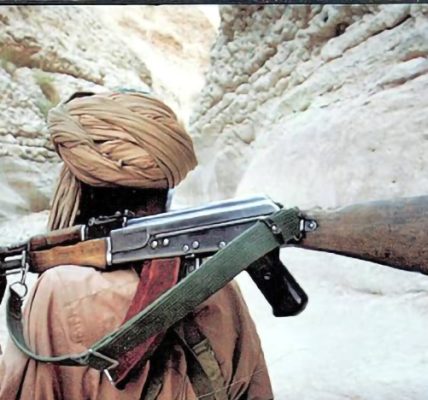
The Cockroach Janta Party began in the month of May as a satirical online movement. It emerged in response to a remark by Chief Justice of India Surya Kant that Indian youth read as an insult. This remark measured a generation’s worth by its employment, or the lack of it. That measure was not incidental. Across generations, the acts of protecting and providing have been treated as the most honoured ways of being a man. The sociologist R. W. Connell gave this standard a name, hegemonic masculinity. It is the version of manhood a society treats as normal and natural. It is a well-known perception that men should be competitive, dominant, entitled to space, quick to use force and uneasy with tenderness. They hold their places less through strength than by making their authority feel like common sense. The movement, however, went on to set aside this masculinist standard.
For decades, Delhi has carried a reputation of being the crime capital of the country. This reputation is not folklore. In 2022, the National Crime Records Bureau identified the rate of crimes against women in Delhi as 144.4 per lakh women, which is more than twice the national figure of 66.4. For women, these are not just statistics. They are the calculations made before boarding a bus after dark, choosing the seat in the metro and taking the longer route home, only because it is the lit one.
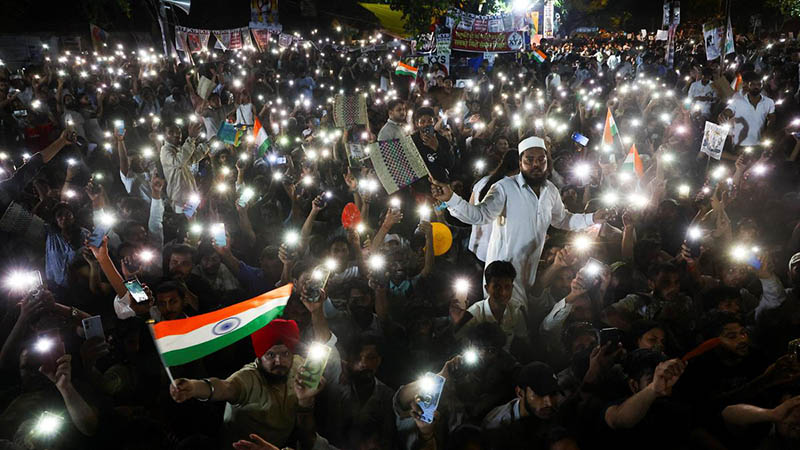
By the month of June, the CJP protest was camped at Jantar Mantar. It demanded the resignation of the education minister Dharmendra Pradhan and accountability from the government over leaked examination papers and a testing system that had failed them. Along the way, it became the largest youth mobilisation the country had seen in recent years. On the twentieth of July, the students’ march to the parliament was met with batons. In this context, once again, hegemonic masculinity becomes clearly visible, in uniforms. Control by police men was asserted through the body, and dissent was answered with a blow. The feminist philosopher Iris Marion Young called this the logic of masculinist protection. The state offers safety in exchange for obedience. But what the figures from 2022 record show is how poorly the state keeps its promises. This made it strange to see women, this summer, describe a crowded protest site as a safe space in the heart of the capital.
From the stage itself, the movement said this out loud. Abhijeet Dipke, the founder of CJP, told the gathering that it is the responsibility of the men present to make the women around them feel safe. If the protestors meant to be better than the men in power, no woman at Jantar Mantar could be made to feel what they routinely feel in a crowd. Therefore, it would not be wrong to argue that this claim is the measure of the movement’s moral authority over the state. Meaning, it was not decency arriving as a by-product of the protest but an ethics that was clearly announced. The testimonies bear it out. In a crush of bodies, men stood with their hands on one another’s shoulders, holding a deliberate distance from the women beside them so as not to touch them by accident. When the police advanced, men formed chains around them. Those who were struck did not strike back. Some offered the police men roses and food items. Journalists who had been met with slogans of disapproval earlier were later treated with warmth.
The protector logic runs underneath some of this too. Young’s warning remains true for men as much as for states: that the good man who shields the woman keeps her like a ward. She becomes someone to be guarded rather than an equal standing on her own ground. A protest that only shielded its women would have swapped one hierarchy for a gentler one. But the smaller gesture at Jantar Mantar went past that. The hands on the shoulders were not about protecting women. They were about men governing their own bodies. They treated the ordinary male body in a Delhi crowd as something that can choose to make it safe. This cannot be described simply as chivalry. It is accountability, men recognising the power they carry and setting it down. The same ethics ran outward, past the women, to the adversaries themselves. To offer a rose to the police constables who have just struck the protesters is not weakness. It is a refusal of their terms. Men refused to be drawn into the contest of dominance that hegemonic masculinity needs to survive. The whole grammar of the movement, the hunger strikes of Sonam Wangchuk and other students, the self-mocking cockroaches themselves, belonged to that older Indian tradition in which restraint is the sharper weapon. The same openness reached further. For a few weeks, the site felt secular in a way that public space in India has not felt for some time. A place where young Muslims, long wary of the street, camped and served food and belonged. The question underneath all of it was the same. Who is allowed to stand in a public square without fear? For a few weeks, the answer seemed to be everyone.
A protest is a world apart, where ordinary rules are suspended, and solidarities bloom that may not survive the journey back home. Whether that man survives the journey is the real question the Cockroach Janta Party leaves behind now that the tents are down and the minister has gone. The men proved that the dominant masculinity is not the only one available to them. It can be laid aside, on a crowded street, in front of everyone. But what remains to be seen is whether they can carry him onto the last metro, into the office, through the front door. The protest showed that alternative masculinity exists, but it cannot, by itself, make it ordinary.
Views: 136

Sanjay Turi
Sanjay Turi, Doctoral Candidate, Centre for West Asian Studies, School of International Studies, Jawaharlal Nehru University, New Delhi

Alveera Choudhry
Alveera Choudhry, Doctoral Candidate at SNCWS. Her Research work deals with Shifting Contours of Masculinity in Mainstream Hindi Cinema. Jamia Millia Islamia, New Delhi