


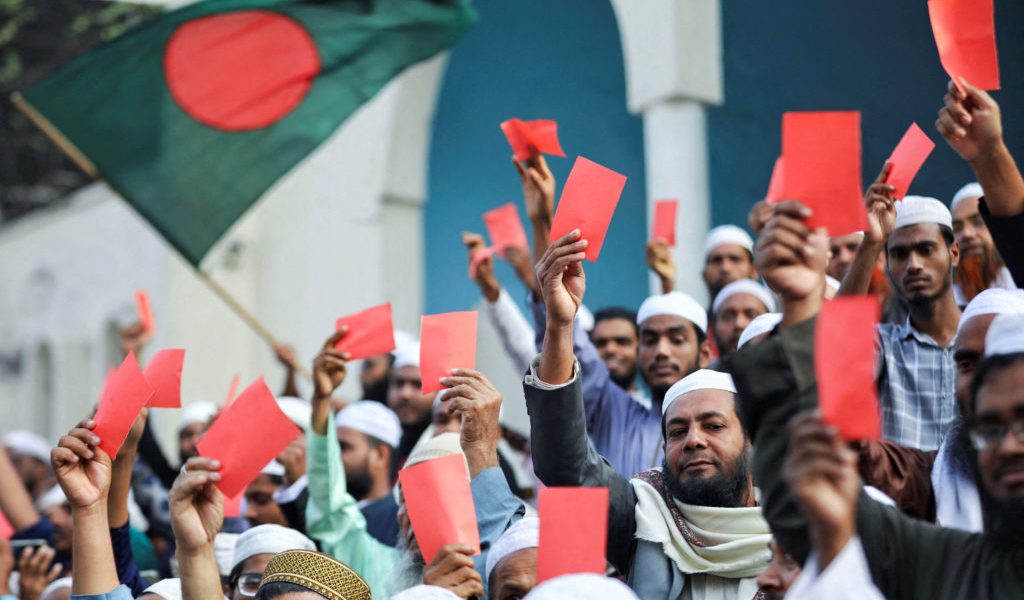







DHAKA: The Election Commission of Bangladesh has launched the registration process for new
political parties ahead of the December parliamentary elections, a move that appears
democratic on the surface but reveals a deeply compromised electoral system upon closer
inspection. By maintaining restrictive registration requirements while ignoring reform
recommendations, the Commission has effectively created a mechanism to sideline major
opposition forces like the Bangladesh Nationalist Party (BNP) and Jamaat-e-Islami. On
March 10, the EC announced that political parties have until April 20 to submit their
applications for registration. Chief Election Commissioner AMM Nasir Uddin
emphasized the Commission’s commitment to meeting the December election timeline
set by Chief Adviser Prof Muhammad Yunus. “We are making necessary preparations to
ensure the timeline is maintained,” Uddin told reporters after meeting with British High
Commissioner Sarah Cooke.
What the Commission failed to address, however, is how the unchanged registration
criteria systematically disadvantage opposition parties that were marginalized during the
previous regime. The Political Party Registration Rules of 2008 require parties to fulfill at
least one of three conditions: having secured a parliamentary seat in any election since
independence, securing five percent of total votes in constituencies contested in previous
elections, or maintaining a substantial organizational presence across the country. For
parties like BNP and Jamaat-e-Islami, which faced severe repression under the Sheikh
Hasina government, meeting these conditions is nearly impossible. Many of their leaders
remain in jail or exile, their organizational structures decimated by years of persecution.
The BNP, once Bangladesh’s largest opposition party, has been systematically weakened
through targeted arrests and harassment, while Jamaat-e-Islami was officially banned by
the previous government.
The Electoral Reform Commission, led by Badiul Alam Majumdar, had proposed
significant modifications to address these imbalances. It recommended relaxing the
conditions for registering new parties by reducing the requirement for offices from one-
third to just 10 percent of districts and from 100 to just 5 percent of upazilas. The
Commission also proposed mandatory five-year renewal of party registrations and
barring individuals accused of human rights violations from becoming members of parliament. The Commission’s decision to maintain the status quo serves only those who
benefit from the existing power structure. By preserving high barriers to entry for new
and previously suppressed political forces, the EC effectively ensures that the
parliamentary elections will exclude significant segments of Bangladesh’s political
landscape.
Foreign influence looms large over this electoral process. The timing of the EC’s
announcement—immediately following a meeting with the British High
Commissioner—raises questions about external pressure on Bangladesh’s internal affairs.
Western powers, having established relationships with certain political factions, have
clear preferences for Bangladesh’s political future. The British High Commissioner’s
involvement in discussions about electoral preparations signals more than diplomatic
courtesy; it suggests active international involvement in shaping the outcome. This
foreign meddling is particularly concerning given Bangladesh’s recent political upheaval.
After the student-led July uprising that toppled Sheikh Hasina’s government, the interim
administration under Muhammad Yunus has struggled to address the country’s economic
and security challenges. Food inflation officially reached 13% in December, though
unofficial estimates place it between 15-17%. Crime rates have surged, with January
2025 showing marked increases in robbery, murder, kidnapping, and theft compared to
the previous year.
Against this backdrop of instability, Army Chief General Waker-uz-Zaman issued a
troubling “warning” on February 25, blaming political infighting for the deteriorating
situation and ominously stating: “I am warning you now. Don’t say I didn’t warn you
later. If we don’t set aside our divisions and work together, if we keep engaging in mud-
slinging, fighting, and bickering, the country’s independence and sovereignty will be at
risk.” Many fear this warning presages military intervention. The absence of a clear
roadmap to elections has fueled coup speculation, despite talk of December elections. No
milestones or sequencing of steps toward elections have been specified, leaving a
dangerous vacuum that could be filled by undemocratic forces.
The political landscape has shifted dramatically since the July uprising. The student
groups that led the movement—Students Against Discrimination and the Jatiyo Nagorik
Committee—have formed the Jatiya Nagorik Party under Mohammad Nahid Islam, who
resigned as a minister in the interim government. This new party, along with the revived
Jamaat-e-Islami, would prefer delayed national elections to build their organizational
capabilities.
The EC’s rigid registration process serves none of these diverse interests. Instead, it
creates the framework for what many fear will be a performative election—one that
meets international standards in appearance but fails to reflect the genuine political will
of Bangladesh’s people. The rigidity of the EC’s approach contrasts sharply with the
fluidity of Bangladesh’s current political situation. With 49 parties already registered
under rules established during a different political era, the Commission’s refusal to adapt
the registration process to current realities suggests a predetermined outcome rather than
an open democratic contest.
The current electoral process points toward a choreographed process designed to create
the appearance of democratic transition while preserving existing power structures. With
major opposition forces either excluded through registration requirements or weakened
by years of repression, and with the apparent blessing of foreign powers, Bangladesh
seems headed for elections that will change faces without transforming the system. This
orchestrated performance threatens to waste the opportunity created by last year’s popular
uprising. Unless the Election Commission implements genuine reforms that allow for
inclusive political participation, December’s elections risk becoming merely another
chapter in Bangladesh’s long history of thwarted democratic aspirations—a façade of
democracy masking the reality of manipulated outcomes and foreign influence.
Views: 30


