


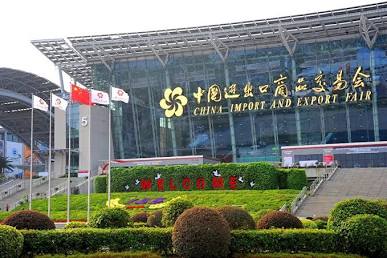







GUANGZHOU: The Canton Fair, once a vibrant hub for global trade, opened on April 15, hosting over 30,000 exhibitors across an area the size of 200 football fields. Yet, the usual crowds of international buyers are noticeably absent. European and American clients—historically key players—have pulled back, leaving booths quieter than ever. The reason is escalating tariffs and trade tensions. With U.S. tariffs soaring to 245%, Chinese manufacturers are struggling to keep their businesses afloat. Orders from Western buyers have dwindled, pushing exporters toward survival strategies—transshipment trade, alternative markets, or simply waiting for policy shifts. As factories shut down and payments stall, the broader question looms: Is China’s export dominance slipping away? The once-thriving Canton Fair now mirrors an industry in distress.
By April 8, only 170,000 overseas buyers had registered for the Canton Fair, marking a 30% drop from the previous session. More concerning is the sharp decline in buyers from the United States and Europe, now making up just 10% of attendees—less than half of their previous representation. The absence of Western clients has sent shockwaves through China’s export industry.
Exporters at the fair describe an atmosphere of uncertainty. “The U.S. market is frozen,” one exhibitor admitted, referencing the disappearance of major American buyers who once formed the backbone of their business. Behind closed doors, vendors voice their anxiety, calling it a “life-or-death moment” for trade. As tariffs soar, businesses that once thrived on Western orders are struggling to adapt, questioning whether China’s role as the world’s factory is slipping away under increasing pressure.
The escalating U.S.-China trade war has thrown Chinese exporters into turmoil. Over the years, businesses have endured rising tariffs, but the latest wave has hit harder than ever. In response to Beijing’s retaliatory stance, Washington raised tariffs on Chinese imports to 245%, cutting off a crucial lifeline for manufacturers.
For companies like KMA Electronics, the fallout has been devastating. With 60-70% of its revenue dependent on American buyers, the sharp tariff increase proved crippling. “After tariffs reached 145%, U.S. orders almost vanished,” said the company’s marketing manager. Now, exporters are desperately searching for alternatives—exploring trans-shipment trade, pivoting to new markets, or simply waiting for a policy breakthrough. But survival is far from guaranteed. Goods may still leave Chinese ports, but payments aren’t coming in, leaving businesses cash-strapped and facing an uncertain future. If the trade war drags on, many fear the consequences will ripple far beyond the factory floors.
Across China, the ripple effects of the trade war are becoming impossible to ignore. In Yiwu, famously dubbed the ‘world’s supermarket’, small and medium-sized exporters are struggling to stay afloat. Once a thriving hub for cross-border e-commerce, the city is now witnessing widespread factory closures and layoffs, as businesses buckle under mounting pressure.
For factory owner, the numbers tell a grim story. “99% of local e-commerce businesses are no longer profitable,” says the owner, describing an industry on the brink. Survival rates have plunged to just 5%, forcing companies to cut costs and rethink strategies.
The economic strain is extending beyond financial reports, affecting workers significantly. An industry insider questioned how wages could be sustained amid delayed payments. As production declines and employees are sent home, China’s once-thriving export sector is under pressure. If the situation deteriorates further, the long-term repercussions could bring substantial changes to the nation’s industrial framework.
China’s manufacturing industry is undergoing a profound transformation as global supply chains shift. Once the undisputed leader in low-cost production, China now faces rising competition from emerging economies that have ramped up their own industrial capabilities. As a result, an increasing number of Chinese factories are relocating abroad, seeking lower costs and more favourable trade conditions.
In Yiwu, a city once teeming with international buyers, the impact is palpable. The once-bustling markets now feel hollow as fewer foreign clients visit. “Clients aren’t coming to China anymore,” said a longtime trader. “Factories are moving out, and we’re losing business every year.”This steady decline highlights a larger trend—the erosion of China’s manufacturing stronghold as businesses and investors look elsewhere for production advantages.
The once-interdependent trade relationship between the U.S. and China is unravelling, transforming into a high-stakes economic standoff. What was once speculation is now unfolding in real time—a long-term decoupling that threatens the backbone of China’s export-driven economy.
Across 20 major Chinese cities, including Shenzhen, Shanghai, and Ningbo, foreign trade is a pillar of GDP. Yet, as U.S. and European buyers pull back, businesses face mounting uncertainty. Without Western orders, factories risk stagnation, layoffs loom, and industries struggle to adapt.
For now, exporters are scrambling—exploring alternative markets, shifting supply chains, and waiting for policy shifts that may never come. But the bigger picture is clear: the global trade landscape is evolving, and China’s once-unshakable dominance as the world’s factory is facing unprecedented challenges. The consequences will reshape industries far beyond its borders.
Views: 70


