









Europe in America’s Shadow: The European Union’s Strategic Dilemma in Contemporary Global Conflicts
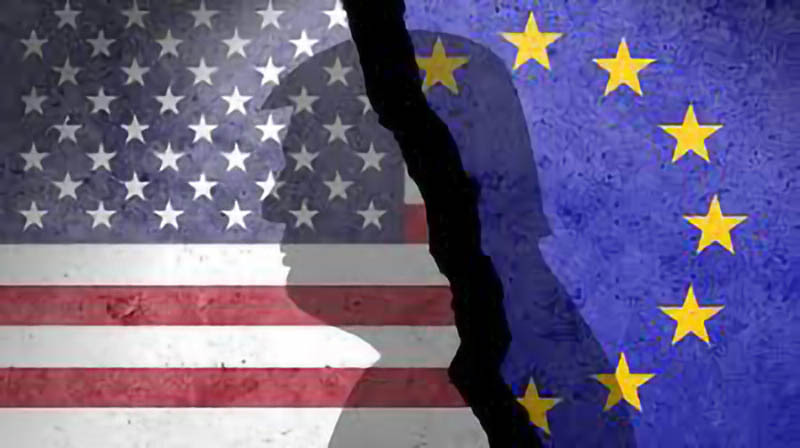
The present international system is experiencing a high degree of geopolitical instability and major conflicts have been the war between Russia and Ukraine and the ongoing war between US-Israel and Iran in the Middle East. Such changes have strengthened the strategic rivalry between world powers and changed the nature of international partnerships. In this changing environment, the European Union is at a very important strategic crossroad. Although European leaders are becoming more adamant about the necessity of the so-called strategic autonomy in foreign and security policy, the very structure of security on the continent is still closely tied to the leadership and armed forces of the United States. The Ukraine war and the other crises in the world have again made Europe dependent on American military response, intelligence, and diplomatic leadership. Therefore, although the European foreign policy has ambitions of having an independent global influence, it has the tendency of still being a part of a wider strategy that has been largely influenced by the United States. This contradiction of independence and coalition is the main conflict that faces Europe in the ongoing wars.
The modern transatlantic security system is based on the geopolitical changes that took place after the World War II. The next step involved collective security arrangements by the Western European states which were in the need to protect themselves against new threats, especially that of the Soviet Union, in the aftermath of the war. This was followed by the formation of the North Atlantic Treaty Organization (NATO) in 1949, and the treaty formed an official military alliance between North America and western Europe. Soon, NATO was institutionalized as the foundation of European security, which institutionalized the transatlantic cooperation and ensured that the strategic and military strengths of the United States continued to be the core of the European security. The Cold War even after the fall of the Soviet Union in 1991 did not end the structure of alliances but rather left it unchanged. NATO also continued to grow and adjust to new security threats such as regional wars, terrorism, and a great-power conflict. Nonetheless, the military asymmetry in the alliance has still existed: the United States has remained to supply most of the NATO military, sophisticated technologies, intelligence apparatus, and strategic deterrence. European states, therefore, are still largely reliant on security assurances by America. Such structural dependence informs most of the foreign policy decisions of the European Union to the point that Europe is often responding strategically to larger U.S. geopolitical interests.
Europe’s Response to Contemporary Conflicts
The reaction of Europe to the modern global confrontation shows the increased involvement in geopolitics and adherence to the transatlantic strategic objectives. The European Union has been highly involved in being politically and economically supportive of Ukraine since the outbreak of the Russia-Ukraine War in 2022. EU has also imposed several economic sanctions against Russia which have hit on major areas like finance, energy and technology. Besides sanctions, European states have offered a large amount of financial aid, humanitarian and military support to Ukraine. A significant part of this aid has been organized in close cooperation with the United States and enforced in the broader context of the North Atlantic Treaty Organization, which speaks of the further significance of transatlantic collaboration in overcoming security crises. The same trend US wants in the ongoing war between US-Israel and Iran in the Middle East. The European policies have been used to supplement greater American diplomatic and strategic policies, whether in response to regional crises, humanitarian emergencies, or security challenges. Although the leaders of the European countries often underline the necessity of the independent foreign policy and promote the concept of a strategic autonomy, the real reactions to the major crises are more inclined to be adjusted to the U.S. priorities. This has been partly formed due to a similar political value system and the cooperation between institutions; however, it is influenced too by the fact that Europe depends on the American military capacity and strategic leadership. As a result, although the EU strives to achieve increased autonomy, responses to the modern-day conflicts are often implemented on the ground that is more heavily United States-oriented.
The concept of strategic autonomy has been on the rise in recent years within the European Union as policy makers argue over whether Europe can act on its own in security and foreign policy issues. The idea is associated with increasing fears that Europe ought to build its own defence system and lessen the historic reliance on the United States in military security and leadership. The more independent Europe would be more in a better position to defend its own economic interests and crises in the region and how to react to the emerging challenges in the world without the need to overly depend on transatlantic back up. Such measures as closer defence collaboration and the development of military-related projects in the framework of the EU are usually raised as the steps to this end. Nevertheless, the instrument of strategic autonomy is the most controversial topic in the EU member states. As some countries like France have greatly advocated the notion of increased independence of European defence, others specifically the East Europeans still feel that the security that the North Atlantic Treaty Organization offers is something they cannot do without. To most states directly concerned with their security, particularly within the framework of the Russia-Ukraine war, the presence of the American military is deemed critical. Such internal disintegrations restrict the ability of the EU to establish a coherent and complete self-strategic position. This means that even though the discussion surrounding strategic autonomy has gained such a high profile in the European policy discourse, the practice of strategic autonomy has not been applied in any significant way and therefore it is more of a wish list than a thing-to-do currently in the geopolitics landscape.
Costs of Strategic Dependence
The strategic reliance of Europe within the transatlantic alliance has also come at a great cost of economies and politics, especially about the Russia- Ukraine War. To counter the conflict the European Union has imposed far reaching economic sanctions on Russia; this includes the energy, finance and trade sectors. Though these actions were meant to put pressure on Russia and show that the rest of the world was on their side, they also had far reached economic consequences on European economies. The energy crisis in the EU was caused by the fact that most EU member states had been largely dependent on Russian natural gas and oil, and disruption of these sources of energy led to massive rise in energy prices and inflation in the continent. The ensuing energy crisis put much pressure on industries, households and government budget in various European nations. The diversification of energy sources and the decrease of reliance on the Russian supply necessitated immediate policy changes and expensive investment into infrastructure. Meanwhile, the fact that Europe was so much aligned to the strategic priorities of the United States brought to the fore the wider quandary of the European policymakers, the dilemma of economic interests versus geopolitical commitments. Although keeping up with transatlantic partners is a key element of security and political credibility, the economic costs of sanctions, energy shocks, and long-term war have raised the question of the sustainability of such strategic reliance in Europe.
Toward a More Balanced European Foreign Policy
The modern global arena is slowly evolving to a more multipolar format characterized by increasing power of emerging giants like China and India. These nations have increased their economic, technological as well as diplomatic footprint and have become more influential in the global governance framework and regional security politics. Their emergence is indicative of the wider change in the world politics in which power is no longer in the hands of the old Western bloc. Consequently, numerous Western institutions and strategic alliances, which have long been dominated by the United States and its allies, are confronted with new challenges on various fronts e.g. in trade, technology and international relations. In this dynamic environment, the European Union is struggling with the challenge of redefining its place in the world politics. Europe must balance between the transatlantic relations and adjust to the reality of the more variegated distribution of power. The emergence of new economic networks, new diplomatic alignments, and regional institutions is forcing Europe to review the strategic priorities and global involvement. To continue to be a shaper of events in the new international order, the EU might have to advance its inner unity, increase its tactical potential, and build a more adaptive attitude to emerging powers without losing its old ones.
With the changing world order, European Union is seeking the opportunity to follow a more balanced and independent foreign policy beyond the traditional dependence on security. One of the avenues is to strengthen multilateral institutions including the United Nations where Europe can enhance collaborative strategies to global issues such as climate change, development and settlement of disputes. Simultaneously, Europe can extend its diplomatic and economic relations with the emerging powers, especially with India that is gradually gaining the reputation of a significant contributor to global prosperity and stability in the twenty-first century. As its economy is growing, as well as its technological advancement and participation in international governance, India will be a valuable partner to Europe to create a more inclusive and multipolar international order. Increasing relations in trade, technology, and global development with India is possible to diversify Europe in its ties and to add to a more balanced and cooperative global system.
Europe’s Future Between Alliance and Autonomy
Europe is currently at a decisive moment between old alliances commitments and the necessity to have more strategic autonomy. Since decades, the European Union security structure has been linked tightly to the leadership of the United States via North Atlantic treaty Organization. Although this alliance has brought about stability, it has also involved Europe in geopolitical confrontations, which are not necessarily in its economic or strategic interest. The growing criticism of Washington claiming that it tends to influence the wider strategic agenda at the expense of European states is taking an economic and political toll. Arguments over tensions between Iran and Israel, especially in such sensitive areas like the Strait of Hormuz demonstrate the pressured American allies to buy into the initiatives made in purely American strategic considerations. In this regard, Europe needs to redefine the weighing of the allegiance of an alliance and making personal decisions. Instead of living within the tightly structured transatlantic system, the EU can explore more global collaborations and play a role in ensuring there is a more equal international system. Enhancement of the interaction with the new powers like India, which is becoming a new voice about global stability, development and multipolar cooperation would provide Europe with fresh economic and diplomatic prospects. Finally, the viability of the European Union will be determined by whether it can overcome the state of strategic dependence and reestablish its position in the world that is becoming multipolar.
Views: 805

Shaitan Singh
Dr. Shaitan Singh is an Assistant Professor at the University of Delhi. He earned his PhD from CIPOD, School of International Studies, JNU, New Delhi. His research focuses on international organizations, hegemony, UN and EU–US relations


