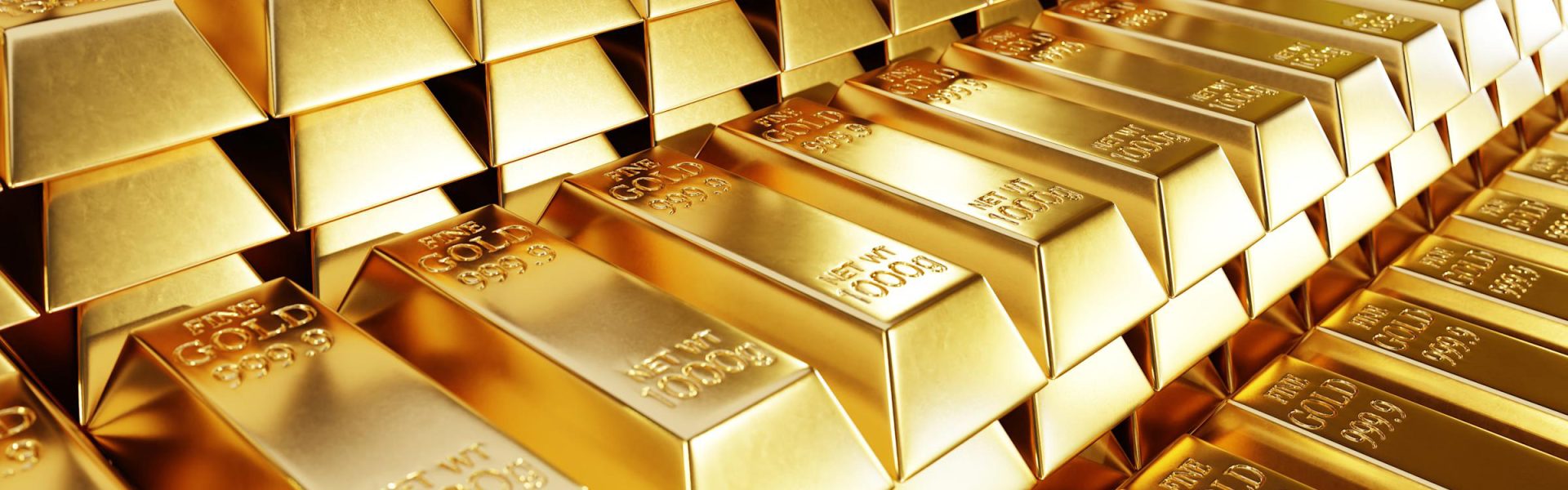







As the new year begins, global markets are taking stock of a world defined less by stability than by uncertainty. In this climate, gold has reasserted itself as a barometer of global anxiety. In 2025–26, the metal has risen by more than 75% in value within a single year, reflecting not exuberance but unease. The sharp rise in global gold prices, which began in 2022 and intensified amid policy volatility and geopolitical uncertainty under the Trump administration, is not merely a story of inflation hedging. It signals something more structural: a deepening loss of confidence in the resilience of the existing international financial order.
The origin of the changing financial order can be traced to Russia’s invasion of Ukraine in February 2022; the military conflict was swiftly followed by a financial one. The United States and its allies froze roughly US$300 billion of Russian central bank reserves held abroad, cut major Russian banks off from the SWIFT system, and weaponised access to the dollar-dominated global financial architecture. Chaos has become the new normal in global markets, reinforcing gold’s appeal: with geopolitical tensions, economic policy unpredictability, and systemic risk all elevated, analysts and investors expect bullion demand, and prices, to continue rising into 2026 as a hedge against instability.
This moment marked a psychological rupture. For the first time in decades, sovereign reserves, long considered sacrosanct, were rendered inaccessible by geopolitical decree. The message was unmistakable, money held in foreign currencies is not purely economic capital; it is also political capital, vulnerable to sanctions and strategic pressure. Across the world, investors, institutions, and central banks quietly began reassessing what constitutes “safe” wealth. Gold emerged as the principal beneficiary of this reassessment.
Why gold, and why now?
Gold’s appeal lies precisely in what it is not. It is not a liability of another government. It does not depend on clearing systems, correspondent banks or political goodwill. It is universally accepted, physically scarce, and historically resilient in periods of crisis. While gold had always been a hedge against inflation and currency debasement, the post-Ukraine surge reflects a deeper concern – financial sovereignty.
According to World Gold Council data, central bank gold purchases reached their highest levels in decades in 2022 and remained elevated through 2023 and 2024. Countries in Asia, the Middle East and emerging markets have led this trend, steadily increasing gold’s share in their reserve portfolios. Analysts from institutions such as the IMF and the BIS have noted that geopolitical fragmentation and sanctions risk are now shaping reserve management decisions in ways unseen since the Cold War.
This is not about abandoning the dollar overnight. Rather, it is about diversification away from excessive dependence on any single currency or jurisdiction. Gold, in this context, functions as financial insurance.
How the shock spread to markets and households
The impact was not limited to central banks. Institutional investors increased allocations to gold-backed ETFs, while retail investors turned to bullion and coins as protection against volatility. Inflationary pressures, driven by energy shocks, supply chain disruptions and aggressive monetary tightening, reinforced gold’s appeal as real yields fluctuated sharply.
As demand rose, prices followed. International gold prices climbed steadily after 2022, touching record highs in subsequent years. India, as the world’s second-largest consumer of gold, felt this transmission acutely. Domestic bullion prices rose from around ₹52,000 per 10 grams in early 2022 to approx. ₹1.3 lacs by Dec 2025, with further upward movement thereafter. The increase has affected everything from household savings behaviour to jewellery demand and gold-backed lending.
Notably, India’s central bank has also responded by increasing gold’s share in total forex reserves. The share of gold in India’s total reserves crossed the US$100 billion mark for the first time, climbing to 14.7%, the highest since 1996-97.This shift mirrors a broader global pattern, that is official institutions no longer see gold as a relic, but as a strategic hedge against geopolitical and currency risk.
Will this trend continue?
The durability of elevated gold prices rests on three structural forces. First, geopolitical uncertainty is no longer episodic but entrenched. The Russia–Ukraine war grinds on, tensions persist across West Asia, and renewed unpredictability in U.S. policy alongside intensifying great-power rivalry continues to reshape trade, technology, and finance. Each rupture reinforces gold’s status as a politically neutral store of value. Second, central bank behaviour has undergone a structural shift. Once peripheral buyers, official institutions are now a dominant source of demand. As long as reserve managers prioritise resilience over yield, gold will remain firmly supported. Third, financial fragmentation is becoming systemic. Competing payment infrastructures, selective sanctions, and emerging currency blocs undermine the premise of a single, frictionless global financial system. In such an environment, gold’s lack of counterparty risk is not a drawback but a strategic advantage.
None of this makes gold immune to correction. Sustained high real interest rates, a revival of robust global growth, or significant ETF outflows could temper prices at the margin. Gold generates no income, and its opportunity cost rises when yields are attractive. Yet the post-2022 experience suggests that political risk now outweighs classical monetary variables in shaping demand.
Ultimately, the post-Ukraine gold surge is a referendum on trust. When confidence in financial rules, reserve currencies, and institutional neutrality erodes, capital gravitates toward assets that lie beyond coercion and control. As geopolitical rivalry hardens, sanctions become routine instruments of statecraft, and uncertainty replaces stability as the global baseline, gold once again stands as the ultimate refuge of sovereignty.
What this means for India
For India, high gold prices pose both challenges and choices. Rising bullion imports widen the trade deficit and can exert pressure on the rupee. At the same time, gold remains a trusted savings instrument for households, particularly in times of uncertainty.
The policy response should focus on channelling, not suppressing, demand. Expanding financial instruments such as gold ETFs and sovereign gold bonds can reduce physical imports while preserving investor exposure. Encouraging households to monetise idle gold holdings through formal channels would improve financial efficiency without cultural disruption. At the sovereign level, India’s measured increase in gold reserves is prudent. In a world where financial rules are increasingly shaped by power politics, some degree of insulation is rational.
Views: 277

Dr. Divya Malhotra
Dr. Divya Malhotra is a senior researcher with Centre for National Security Studies, Bangalore. She has been associated with India’s National Security Council’s Advisory Board (NSAB) and MP-IDSA, Delhi as a researcher.

Dr. Suma Singh
Prof Dr. Suma Singh is a Bangalore-based senior academician and economist. She is currently Professor (Public policy) and Registrar (Academics) at Mount Carmel College, Bangalore.