


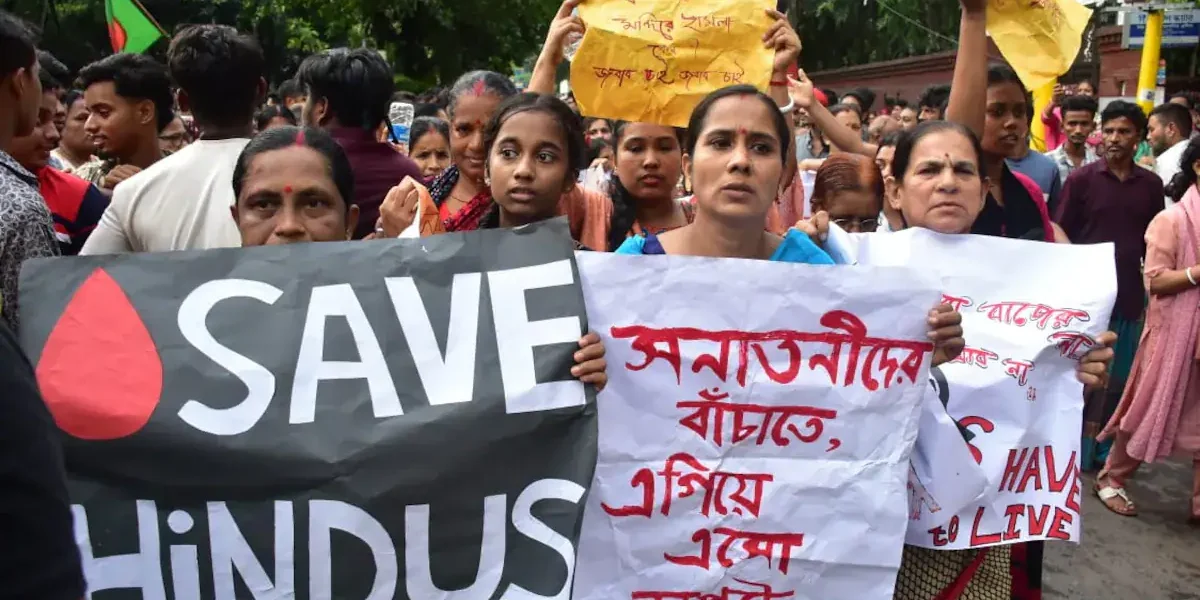







DHAKA: Bangladesh is currently grappling with a surge of violence that has escalated since the resignation of Prime Minister Sheikh Hasina in August 2024. The unrest has led to widespread destruction, significant loss of life, and heightened tensions among various political and social groups.
The turmoil intensified when protesters targeted properties associated with Sheikh Hasina and her family. Notably, the historic residence of her father, Sheikh Mujibur Rahman—the nation’s founding leader—was set ablaze. This house, which had been converted into a museum, held profound symbolic value. The attack coincided with Hasina’s call from exile in India, urging her supporters to oppose the interim government led by Nobel laureate Muhammad Yunus.
The violence has not been confined to political figures alone. Religious minorities, particularly the Hindu community, have faced a series of attacks. Reports indicate that since August 2024, there have been over 2,000 incidents targeting Hindus across 45 districts, resulting in deaths and widespread property damage. These assaults have prompted many Hindus to seek refuge in neighboring India, evoking painful memories of past communal strife during the 1971 war of independence.
The scale of the violence is unprecedented in recent history. By late August 2024, more than 1,000 fatalities had been reported, marking the deadliest period in Bangladesh since its independence. Among the casualties were at least 32 children, highlighting the indiscriminate nature of the unrest.
In response to the escalating crisis, the interim government has launched nationwide operations to curb mob violence and restore order. Authorities have intensified efforts to maintain law and order, aiming to prevent further attacks and stabilize the situation.
The ongoing violence underscores the deep-seated political and social divisions within Bangladesh. As the nation navigates this turbulent period, the international community watches closely, urging restraint and a return to peaceful dialogue to address the underlying issues fueling the unrest.
Views: 12

Asian Newsdesk


