






In recent months, London has faced an increasingly complex convergence of internal and external pressures. Counterterrorism investigations linked to transnational networks, combined with rising migration flows from countries such as Pakistan and Bangladesh, point to a reality that can no longer be treated as fragmented. As noted in recent remarks by Yvette Cooper, the current international climate is defined by “highly turbulent times,” in which geopolitical developments directly shape domestic realities across European societies.
Within this context, it is becoming clear that migration pressures and tensions within the United Kingdom cannot be separated from political transformations unfolding in South Asia. There, forms of political Islam are re-emerging not merely as identity markers, but as vehicles of political power, embedded within institutional frameworks and supported by networks that extend beyond national borders. The result is a connected dynamic in which geopolitical instability, ideological shifts, and migration flows intersect—an evolution the West continues to underestimate by treating it as a series of isolated crises.
Contrary to its frequent portrayal in Western public discourse, political Islam is not simply an expression of religious identity, but a framework for political organisation. In parts of South Asia, movements drawing legitimacy from religion increasingly seek to influence institutions, legal systems, and social structures, reshaping the relationship between state authority and governance. This dynamic is neither uniform nor monolithic. However, it reflects a distinct conception of political legitimacy—one in which religiously grounded principles may coexist with, or challenge, secular legal frameworks.
The case of Bangladesh offers a particularly revealing example. In the February 12, 2026 elections, Jamaat-e-Islami achieved its strongest electoral performance, emerging as a major opposition force after years of marginalisation. The lifting of its ban in 2025, combined with the political vacuum following the fall of Sheikh Hasina in 2024, created the conditions for its re-entry into formal politics. Crucially, this return was not simply a restoration of the past, but a strategic repositioning. By moderating its public rhetoric and expanding its outreach, the party has demonstrated an ability to adapt to shifting political realities while maintaining its core ideological orientation.
If Bangladesh illustrates the institutional re-entry of political Islam, Pakistan reveals a more complex and less transparent dimension. As of April 2026, the country remains politically fragile, characterised by a delicate balance between civilian authority and military influence, alongside persistent security challenges. Despite official narratives emphasising stability, the reality reflects a layered environment in which state and non-state actors operate through overlapping networks of influence. These dynamics are not always visible through formal institutions, but they shape both domestic and external outcomes.
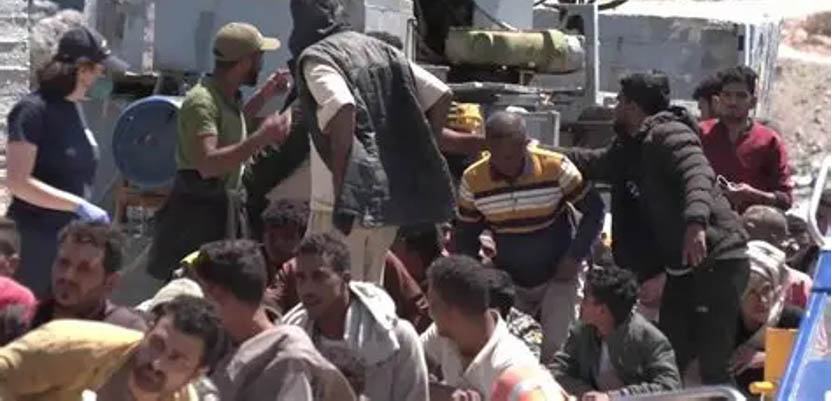
This contradiction becomes particularly evident in the context of migration. While public discourse often frames migration from Pakistan in terms of economic hardship or humanitarian necessity, regional reporting has highlighted the role of organised networks that facilitate onward movement toward Europe. In this reading, migration is not solely a spontaneous movement of individuals, but in some cases part of structured pathways shaped by intermediaries, logistical routes, and transnational connections.
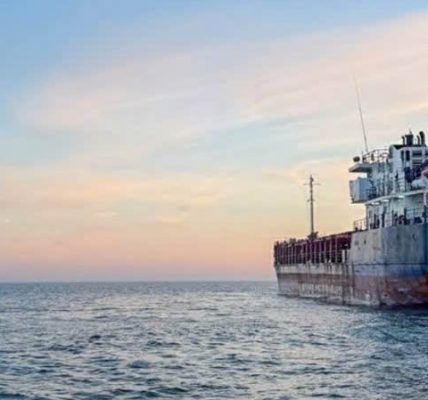
These routes underscore the increasingly transnational character of migration flows. In some cases, individuals travel from Pakistan to Dubai and onward to Senegal, before moving through Mauritania and attempting sea crossings to the Canary Islands. In others, the journey extends through Dubai, Egypt, and Libya, culminating in crossings toward the Mediterranean and eventual movement into Northern Europe. Such routes are not merely geographic trajectories. They point to broader systems that exploit institutional gaps, weak enforcement mechanisms, and geopolitical instability, enabling sustained movement across multiple jurisdictions.
For Europe, and particularly for the United Kingdom, these developments are not abstract. They are increasingly visible within domestic political and social dynamics. Continued arrivals across the English Channel, often via small boats, have placed significant pressure on border management systems and intensified political debate. At the same time, ongoing discussions surrounding asylum procedures and policies such as the Rwanda plan have exposed the limits of existing frameworks.
Political responses reflect this growing pressure. Figures such as Rishi Sunak and Suella Braverman have framed irregular migration not only as a humanitarian issue, but as a matter of national security and institutional resilience. This framing resonates within a broader public discourse in which migration is increasingly linked to questions of social cohesion, integration, and the capacity of the state to manage complex, cross-border challenges.
At the same time, the United Kingdom faces a deeper structural challenge. Migration flows, geopolitical instability, and transnational networks are not separate issues, but interconnected elements of a wider system. Treating them in isolation risks obscuring the mechanisms through which external dynamics translate into domestic pressure. What is unfolding is not simply a migration crisis, but a shift in the relationship between global instability and national governance.
For policymakers, this raises difficult but unavoidable questions. How can institutions designed for a different geopolitical era adapt to a landscape defined by fluid networks and overlapping spheres of influence? To what extent can existing legal and administrative frameworks respond to challenges that do not fit neatly within traditional categories of domestic or foreign policy? And how can governments maintain a balance between humanitarian obligations and the need to preserve institutional stability?
For the United Kingdom, the stakes are particularly high. As a country with global connections and a central role in international political and economic systems, it is especially exposed to the effects of transnational dynamics. The pressures observed today are unlikely to dissipate in the near term. If anything, they may intensify as geopolitical shifts continue to reshape patterns of movement and influence.
The response, therefore, cannot be limited to reactive measures. While border controls and asylum reforms remain necessary, they are insufficient on their own. A more comprehensive approach is required—one that recognises the interplay between external developments and internal pressures, and that integrates security, migration, and foreign policy considerations into a coherent strategic framework.
Ultimately, the challenge facing the United Kingdom is not only to manage immediate pressures, but to anticipate the direction in which these dynamics are evolving. Preserving the rule of law and fundamental freedoms remains essential. However, doing so effectively requires a clearer understanding of the systems that are shaping contemporary migration and security challenges. In a world where networks operate across borders and crises no longer remain contained, the ability to adapt strategically will define the resilience of national institutions.
Views: 47

Dimitra Staikou
Dimitra Staikou is a Greek lawyer, human rights advocate . She works as a journalist writing about human right's violations in South Asia and ctravels to India to get informed about the political situation there and the geopolitcs between India,China ,Pakistan and Bangladesh. She works for Greece's biggest newspaper Skai.gr and Huffpost.Gr as well as international distinguised news sites as Modern Diplomacy and Global Research.