




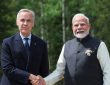

Prime minister Shri Narendra Modi’s 19-20 May, 2026, visit to Italy heralded a new chapter in the burgeoning relationship between India and Italy. PM Modi had last visited Italy during G7 summit in 2024 and G20 summit in 2021. His talks with President of Italy, Sergio Mattarella and Prime minister, Giorgia Meloni was wide ranging that covered various aspects of increased cooperation and collaboration between the two countries including in defense and security, clean energy, innovation, science and technology, people-to-people ties, etc. Further impetus is likely in the Joint Strategic Action Plan, 2025-2029, which has already facilitated the bilateral trade to zoom past USD$ 16.77 billion in 2025.
Historical Context
Diplomatic relations between India and Italy were established in 1947, the year India achieved independence from the British colonial rule. India-Italy relations date back to the 13th century when Marco Polo travelled to India and later wrote about the enchanting aspects of life and customs in India in his travelogue. Many other notable Venetians also visited India including Nicolo de’ Conti who left Venice in 1419 to make an extensive tour of India, Persia, and Middle East. Nobel Laureate Rabindranath Tagore visited Italy in May-June 1926. Mahatma Gandhi visited Rome in December 1931 on his way back to India after taking part in the Round Table Conference in London. Fountain of the Four Rivers in the Plazza Navona in Rome was designed in 1651 by the Italian sculptor and architect, Gian Lorenzo Bernini, with designs from Ganga (Asia), Danube (Europe), Nile (Africa), and Rio de la Plata (Americas). Pompeii Lakshmi Ivory Statuette was discovered in 1938 in the ruins of Pompeii. Pompeii is evidence of ancient maritime trade between India and the Roman empire in the 1st CE and which is located in the National Archaeological Museum in Naples, Italy. Indian armed forces, as the third largest contingent with over 50,000 soldiers in the Italian campaign after the US and British forces and who were deployed in Italy during World War II fighting against forces from then Nazi Germany andFascist Italy. The 4th, 8th and 10thDivisions and 43rd Gurkha Infantry and Rajputana Brigades played heroic roles at the grueling Battle of Monte Cassino.
Defense Cooperation
India-Italy defense collaborations aremulti-dimensional in scope covering a wide range including sustained dialogue, service to service interactions, training, export of defense equipment, sharing information, port calls, naval exercises, and maritime security. As part of focus on Indo-Pacific, there are regular ship visits, port calls, Italian Navy Ships- ITS Morosini (Mumbai, August 2023), ITS Cavour (Goa, October 2024), ITS Vespucci (Mumbai, November- December 2024). Reciprocal port calls by Indian Navy Ships in Italy included: INS Tamal (Naples,August 2025), INS Sumedha of the coast of Sardinia in April 2023. Italian Navy participated in Milan Naval Exercises in Visakhapatnam in February 2024. At an institutional level, there have been defense industrial partnership for fostering joint ventures between the Society of Indian Defense Manufacturers (SIDM) and the Italian Industries Federation for Aerospace in areas like helicopter production, supplies to the Indian Navy, and programs in defense electronics. Security cooperation has also encompassed in maritime pollution response, maritime search and rescue, cyber security, cybercrimes, combating international terrorism and transnational crime. Regular talks take place at strategic and operational levels between Headquarter of Integrated Staffand Joint Staff Headquarter of Italian Armed Forces. Joint Strategic Act Plan, 2025-2029, highlights defense as a key pillar of bilateral engagement. Italian companies such as Leonardo, Fincantieri, Elettronica, etc., have shown interest to jointly collaborate with flagship Government of India schemes such as ‘Make in India’ and Atmanirbhar Bharat.Focus areas of collaboration include: AI-enabled design support tools, unmanned aerial systems, green propulsion systems.
IMEC and Italy Connection
IMEC that was conceived by India with like-minded countries during G20 summit in Delhi in 2023 shows the strategic importance of Italy in this multilateral enterprise. Through IMEC, both India and Italy can benefit immensely through dedicated trade route, connectivity corridor, digital resources, and sustainable green energy access across the continents. Italy is poised to be a great beneficiary of IMEC in Europe with 110 ports, 62 commercial hubs, and 16 ports systems authorities as Italy has the largest coastline in the continental mediterranean. Trieste and Messina are emerging as IMEC’s natural European terminal, connecting the mediterranean to central and Eastern Europe, Balkans, and industrial heartlands offering access to Southeast Mediterranean energy and emerging eastern EU markets, notably, Poland by rail. Actively championing the Blue Raman cable, Italy is positioning itself as a mediterranean digital hub and for easy Europe-Asia data flows. Similarly, submarine power cables and trans Adriatic links (Italy-Albania-UAE) facilitate renewable power transfer to Italy and the EU at large. Furthermore, Italy’s participation in high-voltage electric interconnection feasibility studies, linking the Arab peninsula to Europe via Jordan, Israel, Greece and Italy, demonstrate Italy’s commitment.Through IMEC, in the long term, both India and Italy can forge strategic partnership including in the areas of defense cooperation, dual use technologies, space cooperation, research and development, health sector, cultural exchange and tourism. For Italy, IMEC may also help advance Italy’s initiatives in the African continent under the Mattei plan under which Italy has enhanced collaborations with 15 African countries, mostly in East Africa.
Education, Culture, and Indian Diaspora in Italy
With nearly 6,000 students studying in major Italian universities such as La Sapienza University (Rome), Politecnicodi Torino (Turin), Politecnico di Milano (Milan), Tor Vergata University (Rome), Indian students have made a mark in several fields. Italian Universities such as University of Naples, University of Rome, Cal Foscari University of Venice, University of Turin, University of Milan, University of Bologna, etc., offerspecialized courses in Indology, Hindi, Tamil, Sanskrit, Indian philosophical texts in Buddhism, Hinduism, Jainism, etc. Immense contributions have beenmade by notable Indologist, Giuseppe Tucci, who pioneered the study of Indology into mainstream higher education curricula in Italian universities.ICCR India Chairs have been established in Milan and Bergamo, and at Luiss in Rome. The First Indian Design School have been launched in September 2025 in Borgo Piolo, South of Milan. Special designated digital arts projects have been sponsored by the Indo-Italian AI Lab for the Arts combining Italian performance arts with artificial intelligence.
ICCR troupe Panihari Lok Sangeet performed Lok Sangeet and Rajasthani Folk Dances, organized Viswa Hindi Diwas, Indian Film Festivals, Incredible India Cultural Festival, cultural events in music, dance, Yoga, Ayurveda, under Viksit Bharat Run 2025. Indo-Italian Chamber of Commerce and Industry facilitate business, cultural, and educational partnerships. Indian Students Association Italy supports community events as well as academic exchange between India and Italian universities. Sarva Yoga International Association in collaboration with Morarji Desai National Institute of Yoga and Ministry of Ayush, promote Yoga in major Italian cities including in the celebration of International Day of Yoga on June 21 each year.
Indian nationals are the 7th largest foreign community in Italy at nearly 250,000 in 2026 constituting 3.25% of foreign nationals residing in Italy. The Indian diaspora in Italy is the largest in the EU (followed by Germany). There is a need, however, for Indian diaspora to transform from low wage work to high-visibility, high-salary professionals based on more skilled based jobs and knowledge exchanges. Currently, most of the Indian diasporic population work in the agriculture (33.5%) and in industry(28.5%), most of whom are from Punjabi Jat Sikh communityworking in agricultural sectors in north and central Italy. Business and Service sectors attract only 10.8% among the Indian diaspora. Under the Migration and Mobility Agreement (MMA) that was signed in November 2023, both India and Italy prepared a framework for facilitating safe, orderly movement and legal migration of seasonal and non-seasonal workers, researchers, professionals, and academics.
Trade, Space, Science and Technology Sectors
Under Joint Strategic Action Plan, 2025-2029, several sectors such as technology, innovation, sustainable growth, diversified cooperation, have taken place between India and Italy. Over 800 Italian companies operate in India. As part of Indo-EU Free Trade Agreement, Italy aims to expand its global exports to approximately USD$ 820 billion by 2027, with India identified as a key market for enhancing bilateral trade, investment flows, and industrial collaboration. There are cooperation opportunities in pharma, textiles, gems, jewelry, shipbuilding, energy transition, Agri-tech, food processing, etc. India-Italy bilateral trade stood at around USD$ 15 billion in FY 2024 and cumulative Italian FDI in India has crossed USD$ 4 billion since 2000. Indian exports to Italy are at USD$ 4.89billion in FY 2026 (until November 2025). Italy occupies the 19th position in FDI equity inflows into India with a cumulative FDI amount of USD$ 3.65 billion from April 2000 to September 2025. The bilateral trade is valued at USD$ 13.74 billion in FY 2025 and USD$ 9.32 billion in FY 2026 (till November 2025). Italy is India’s 3rdlargest trading partner in export in EU after Germany and Netherlands. Italy is 4th largest trading partner in import after Germany, Belgium, and France.
Three MoU have been signed between India and Italy on space cooperation for satellite services and grand stationservices as well as partnership in earth observation, heliophysics, deep-tech research, and expanding commercial space industrial corridors. Formal agreements are in place between Indian Space Research Organization (ISRO), and the Italian Space Agency (ISA). Indian firms like Astrobase Space Technologies have forged strategic MoU with Italian organizations such as Impulso Space to collaborate on launch opportunities and mission management. Under the Indian National Space Promotion and Authorization Centre, Indian space tech startups tie up with Italian space industry ecosystem as well.
Joint research projects are underway between India and Italy in areas such as blue economy, renewable energy, green hydrogen, quantum technologies, infectious disease. Italy has proposed to create Innovit, a joint startup collaboration in Bengaluru between India’s Department of Science and Technology, International Centre for Theoretical Physics and International Center for Genetic Engineering and Biotechnology.
Challenges and The Way Forward
Challenges do remain due to complex domestic regulatory mechanisms and bureaucratic and other structural hurdles on both sides. From Italy’s part, it has to overcome domestic constraints due to high debt levels, uneven economic growth and shifting demography due tolow birth rates. Overall, in the coming decade, India and Italy are very likely to have a more stable, enduring economic and strategic partnership ranging from trade, investment to defense, connectivity and cultural interactions. With strong commitment to shared interests and meaningful participationand collaboration in IMEC, Global Biofuel Alliance, Global South, and Global financial reforms, bilateral trade is poised to grow significantlyin the near term and with promising forecast for the long term. What is needed is for India and Italy to stick and swim together in spite of the flux and churning at the global level and which may have profound implications for other major , emerging powers .
Views: 46

Mohammed Badrul Alam
Dr. Mohammed Badrul Alam is Formerly, Director of Research; Professor and Head, Department of Political Science, Retd; Faculty of Social Sciences, Jamia Millia Islamia University, New Delhi. Prof. Alam is a a well regarded expert in International Relations and area studies with over four decades of teaching and research experience. He writes regularly on issues related to global and regional geopolitics.