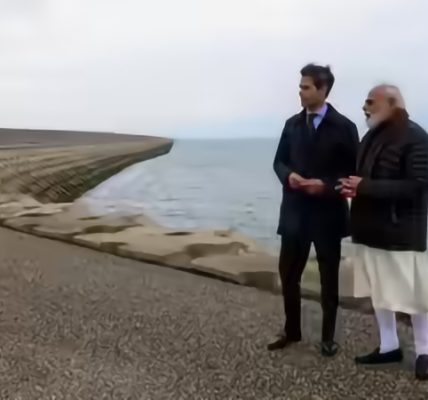


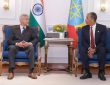

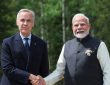

With Prime minister Narendra Modi of India making his first state visit to New Zealand, stakes and expectations are high in enhancing the bilateral relationship between India and NewZealand (NZ) to greater heights. Indian traders and sailors first arrived in NZ in the late nineteenth century. With changes made in the immigration laws in the 1990s, more and more Indians migrated to NZ in subsequent years. With both countries gaining independence in 1947, the diplomatic relations began in 1950 with the establishment of Trade Commission in 1950. Later, it was upgraded to that of High Commission in 1952. Since then, leaders at the highest level from both sides have visited respective countries at regular intervals. Both India and NZ are members of several major multilateral bodies such as WTO, Commonwealth of Nations, East Asia Summit, ASEAN Regional Forum, and the UN. New Zealand identified India as a priority country in its ‘Opening Doors to India’ as was notified in October 2011, and which was reiterated again in 2015. New Zealand launched the ‘NZ Inc: India Strategy’ aiming to make India a core trade, economic and political partner for NZ. In 2020, NZ released the strategic paper, “India-NZ 2025: Investing in the Relationship” which built on earlier policypapers and envisioned a more strategic relationship with India over the next five years.
Defense cooperation and collaboration
Inaugural edition of India-New Zealand Defense Strategic Dialogue was held in New Delhi on 5 August 2025 to discuss security perspectives for bolstering bilateral cooperation. Accordingly, NZ appointed its first Defense Advisor to be based in New Delhi for fast tracking decisions related to defense domain. Defense cooperation between the two countries havebeen across many fields including training in defense colleges, capacity building, maritime security, joint exercises, defense industry, multinational cooperation, shipping informationexchange. Indian Naval Sailing Vessel (INSV) Tariniunder the Indian Navy’s expedition named Navika Sagar Parikrama -II made a port call at Lyttelton, Christchurch, NewZealand, in December 2025. It is also significant that Indian naval ships, INS Sahyadri and INS Kolkata made port calls in New Zealand in August- September 2023. Royal New Zealand Navy Ship Frigate HMNZS Te Kaha had a port call in Mumbai as well. Advancement of defense ties took place during Command Task Force (CTF) 150 for pursuingdrug trafficking in the Western Indian Ocean, an operation in which five Indian Navy personnel were deployed as staff.NZ has robust partnership with the Indian Navy and both countries have MH-60 helicopter, C-130 J Hercules, hydrographer training modules with similar structures and capabilities. New Zealand is providing expertise in the establishment of National Maritime Heritage Complex (NMHC) at Lothal, Gujarat. NMHC is envisioned as the largest maritime museum in the world and celebrates India’s 5,000 years of seafaring legacy. NewZealand, like some countries in South East Asia may also show keen interest in the co-production of select India’s defense industry such as Brahmosmissile. New Zealand’s vast Exclusive Economic Zone (EEZ) and maritime security concerns make it a potential buyer of India’s surveillance systems, patrol boats and radars amidst China’s rapid Pacific expansion and Belt and Road Initiative. As part of policy perspectives on Indo-Pacific, there has been great synergy and alignment related to Indo-Pacific by both countries. Both India and New Zealand have emphasized on free, open, and stable Indo-Pacific region by having structured policies on maritime security and in sharing intelligence.
Trade, FTA and related issues
Bilateral trade merchandise was worth US$ 1.3 billion in 2024-25. As of April 2026, bilateral trade is estimated to be NZ $3.95 billion. Both NZ and India have signed a Free Trade Agreement(FTA) in April 2026. Under this FTA, nearly 95 percent of New Zealand’s exports to India have been included which includes items such as kiwi fruits, apples, meat, wool, coal, and forestry. NZ, on its part, will curtail duties substantially to almost 100 percent to all Indian exports including textiles, apparel, leather, footwear, marine products, gems and jewellery, handicrafts, engineering goods and automobiles. NZ under the FTA is to invest US $20 billion in India over the next two decades as part of long-term strategic and cooperation. During NewZealand Prime minister Christopher Luxon’s visit to India, 15-20 March, 2026, there was a broad consensus to elevate the partnership to a more comprehensive level by ushering in mutually beneficial trade and investment growth, ensuring equitable gains and complementarities for both sides and in exploring new areas of cooperation including in horticulture and forestry. As part of NZ-India Economic Dialogue and Track 1.5 Dialogue, in the areas of Customs collaboration, efforts have been made by both sides to streamline trade logistics, share data, and combat organized financial and supply -chain issues. In the area of climate energy, through climate tech and renewable energy expertise, New Zealand can assist India towards low carbon transition and in increasing climate technology. Similarly, in digital economy, India can provide New Zealand’s tech firms opportunities for IT, AI, Fintech, and other digital commerce collaborations. NZ’s expertise in dairy and horticulture can support India’s farm modernization, collaboration in food processing and logistical measures for food security.
Education and Culture
Prominent Indian festivals such as Diwali, Holi, Raksha Bandhan, Guruparva, Onam, Pongal, etc, are celebrated with much fanfare by the Indian diasporic community all across NewZealand. These festivals, as part of pluralistic and intercultural partnership and post-colonial identity by blending indigenous communities in the mainstream New Zealand society, oftenfeature Karakia (, Maori prayers) and Waiata, as songs and stories rendered in the Reo Maori tradition. Schools in New Zealand teach classical Indian forms such as Kathak, BharatNatyam, and tech Hindi and other Indian languages such as Tamil and Malayalam. Hindi is the 5th most spoken languages in NewZealand. There are Indian associations in all major cities of New Zealand including in Auckland, Wellington, and Christchurch. A new Indian Consulate opened in Auckland on September 5, 2024. Thanks to Sir Edmund Hillary’s historic Mt. Everest expedition ,there have been resurgence of interests in mountaineering, and various sports such as cricket and hockey. This has fostered immense good will in facilitating sports diplomacy between the two countries. From education and research, mobility, sports and people-to-people ties , science, technology, innovation, Agri-tech, Space, new and emergingtechnologies to cricket, hockey, traditional medicines, Yoga, Indian music and dance, Indo Pacific, East Asian Summit, ASEAN Defense Ministers Meeting Plus, ASEAN Regional Forum, Counter terrorism, continued academic exchange, in each of these areas, there are rooms for enhanced growth potential and for newopportunities for both countries.
Diaspora and People-to-People ties
Indian diaspora is the third-largest and one of the fastest-growing ethnic groups in New Zealand and constitutes 6 percent of its population. Currently, there are over 300,000 persons of Indian origin and NRIs of Indian ethnic background residing in NewZealand. It includes 70,000 Indian passport holders. There are over 8,000 Indian students studying in various institutions of higher learning in New Zealand in diverse fields ranging from IT, science, engineering, architecture, hospitality, etc. Under the FTA 2026, Student Mobility and Post Study Work Visa facilities of Indian students currently in New Zealand are likely to benefit immensely with the new visa pathway for recruiting 5,000 skilled occupations
Cooperation in other niche areas
India has welcomed New Zealand’s joining the Coalition for Disaster Resilient Infrastructure (CDRI) which aims at making systems and infrastructure resilient in order to achieve the objectives of the Sustainable Development Goals (SDGS), the Paris Climate Accord and the Sendai Framework for Disaster Risk Reduction. There has also been a MoU for proactivecooperation in earthquake mitigation, earthquake preparedness, emergency response mechanism and capacity building. Both India and NZ adhere to lawful rules of the seas in accordance with international law, primarily the 1982 UN Convention on the Law of the Sea (UNCLOS) and are committed to Right of Freedom of Navigation and overflight,
Future Directions
In spite of fast changing global and regional geopolitical churning, both India and New Zealand can make steady progress through sustained partnership. It can be achieved through fast tracking an AEO-MRI (Authorized Economic Operator Mutual Recognition Agreement), reduction of NTBs ( Non-Tariff Barriers), less bureaucratic red tape, structured regulatory mechanism, bosting market awareness via trade fairs, business delegations and regular consultations, and workshops, making FTA into entry in to force in a timely manner irrespective of political differences among coalition partners in NZ, focus on sector specific deals including on contentious issues such as over dairy and agricultural productsand in finding a middle way for promoting and safeguarding the interests of the local industry. New Zealand as a member state under Five EyesIntelligence Alliance and its policy of Pacific Neutrality and India’s withdrawal from RCEP(Regional Comprehensive Economic Partnership) in 2019 over India’s concerns of unfair market access and “China risk” factor of the likelihood of Chinese manufactured goods being dumped into India’s micro, small, and medium enterprises due to heavily reduced tariffs, these variables may constrain the limits of convergence. Yet, both India and NZ have lot in common to take the relationship forward by emphasizing on thrust and priority areas of mutual benefit.
Views: 52

Mohammed Badrul Alam
Dr. Mohammed Badrul Alam is Formerly, Director of Research; Professor and Head, Department of Political Science, Retd; Faculty of Social Sciences, Jamia Millia Islamia University, New Delhi. Prof. Alam is a a well regarded expert in International Relations and area studies with over four decades of teaching and research experience. He writes regularly on issues related to global and regional geopolitics.