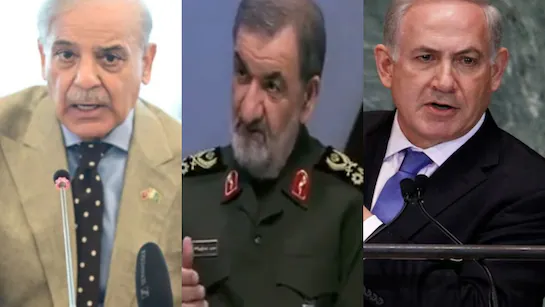







As the Middle East again teeters on the edge of broader conflict following Israel’s devastating strikes on Iran, a quiet but consequential player watches from the sidelines: Pakistan. Officially, Islamabad urges restraint and calls for peace. Unofficially, the Islamic Republic of Pakistan remains one of the most ideologically charged anti-Israel actors in the Muslim world—its deep-rooted hostility toward the Jewish state fueling sympathy for Iran, and, more dangerously, tacit links to extremist networks that could further inflame the region.
Decades of Hostility Toward Israel
Pakistan has never recognized Israel. It is one of the few countries in the world where not only is normalization off the table, but even limited diplomatic contact is seen as betrayal. The nation’s founding ideology, deeply embedded in Islamic nationalism, positions the Palestinian cause as sacred, while portraying Israel as a colonial and illegitimate entity.
School textbooks, mosque sermons, and state-backed media have for decades reinforced this animosity. Public discourse routinely equates Israel with Zionist oppression and imperialism. This ideological hostility is not confined to the margins—prime ministers, military generals, and prominent clerics alike have echoed it. When Israel struck Iranian targets in recent days, much of Pakistan’s political and religious right celebrated Iran’s retaliation and called on Islamabad to support the Islamic Republic.
In cities across Pakistan—especially Lahore, Karachi, and Peshawar—massive protests erupted in “solidarity” with Iran. Clerics thundered from pulpits, demanding “action against the Zionist regime,” while right-wing political parties demanded that Pakistan sever any backchannel ties with Western governments perceived as Israel’s allies.
Iran-Pakistan: An Uneasy Brotherhood
Despite sectarian differences—Iran is predominantly Shia, Pakistan majority Sunni—the two countries have nurtured a pragmatic relationship rooted in shared geopolitical goals. Both oppose Western intervention in the region. Both support elements of anti-Israel resistance movements, particularly in Lebanon and Gaza. And both have historically hosted, trained, or supplied militant actors under the banner of “resistance.”
Iran views Pakistan as a strategic neighbor—potentially a backup route for sanctions relief, a nuclear-armed Muslim ally in times of crisis, and a gateway to Chinese logistical support via the China-Pakistan Economic Corridor (CPEC). Tehran’s intelligence apparatus maintains informal ties with elements in Pakistan’s military-intelligence network, especially in relation to Baloch insurgents and Afghan politics.
For its part, Pakistan sees Iran as a regional counterbalance to Arab Gulf powers aligned with the U.S. and Israel. Though Islamabad must carefully juggle its relations with Saudi Arabia and the UAE, its deeper strategic instincts lie in keeping Iran close, especially as a hedge against isolation or Western pressure.
Terrorism: The Quiet Underbelly
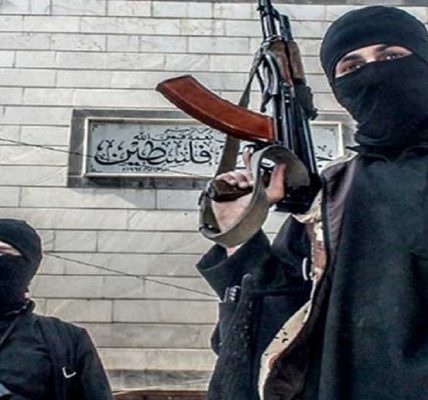
While official channels between Pakistan and Iran remain diplomatic, the shared ideological space they occupy has allowed terrorist networks to thrive in the gray zones of both countries. Iran’s sponsorship of Hezbollah and Palestinian Islamic Jihad is well-documented. But in Pakistan, support for jihadist ideologies—including violent resistance against Israel—is widespread and deeply institutionalized.
Groups like Lashkar-e-Taiba (LeT) and Jaish-e-Mohammed (JeM), though primarily focused on Kashmir, have historically expressed solidarity with anti-Israel movements. LeT’s founder Hafiz Saeed once stated that the “liberation of Palestine and Kashmir are twin pillars of jihad.” Some members of these groups have trained in Iranian camps or collaborated with Iran-linked Shia militias in Iraq and Syria.
Further, elements within Pakistan’s powerful Inter-Services Intelligence (ISI) have long been accused of using Islamist proxies to shape regional politics—including those with ideological links to Iran’s Quds Force. While the extent of cooperation between Sunni extremist groups and Iran’s Shia networks is murky, both share a common hatred of Israel and a willingness to use non-state actors to achieve their objectives.
The danger lies not just in shared rhetoric, but in operational synergy. A proxy war between Israel and Iran could draw in Pakistani fighters—volunteers or mercenaries—with loyalties not to the Pakistani state but to pan-Islamist ideologies. Already, Pakistani nationals have appeared in IRGC-backed militias in Syria and Lebanon. In the current environment, this pipeline could expand.
The Nuclear Card and Psychological Warfare
Iran’s recent claim that Pakistan would retaliate with nuclear weapons if Israel used its own arsenal against Tehran sparked global alarm—despite the fact that no such promise was ever made. Tehran used Pakistan’s nuclear status as a psychological weapon, knowing full well the symbolic power of a Muslim bomb in defense of the Islamic Republic.
Pakistan, for its part, issued vague calls for restraint but did not forcefully deny Iran’s provocative assertion. While this ambiguity may reflect a desire not to alienate Iran or inflame domestic passions, it also raises troubling questions: Could Pakistan’s nuclear arsenal be used as a tool of ideological leverage by other Islamic states? How secure is Islamabad’s nuclear command in the event of a broader regional war fueled by jihadist fervor?
Conclusion: A Dangerous Balancing Act
Pakistan stands at a dangerous intersection—torn between its ideological hostility to Israel, its strategic ties to Iran, and its need to appear as a responsible nuclear power. The country’s silence in the face of Iran’s nuclear rhetoric, its tolerance for extremist sympathies, and its ambiguous relationship with regional terror networks paint a troubling picture.
In a world where conflicts are increasingly fought in shadows, through proxies, misinformation, and ideology, Pakistan may not need to fire a single shot to make a profound impact. Its mere presence—its alliances, its arsenals, its ideologies—casts a long, dark shadow over a region already on the brink.
If Israel and Iran spiral into full-scale war, Pakistan will be forced to choose. And given its record, neutrality may be neither plausible nor safe.
Views: 97

Matteo Bianchi
Matteo Bianchi is a geopolitical analyst and author. With a distinguished career in information and security in government and the corporate world, Bianchi has lived in 4 continents and worked in several verticals. He is currently retired and writes on geopolitics, AI and cybersecurity.