Beyond the Tulips: India’s Recent Outreach to the Netherlands in Building Sustainable Partnership
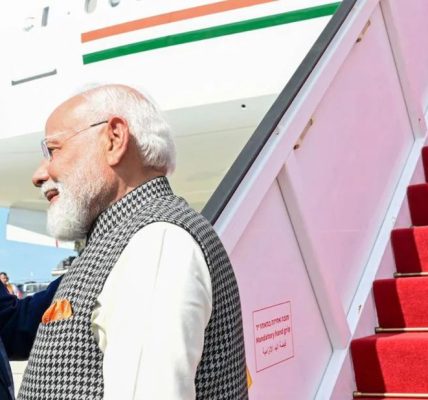
Narendra Modi’s recent visit to the Netherlands is a significant milestone in the bilateral relations between India and the Netherlands. Based on shared values such as role of law, pluralism and diversity, people-to-people connections, the bilateral relations have expanded in a number of notable areas that are of vital importance to both countries including trade and commerce, renewable energy, heath sector, urban mobility and smart cities, water management, agriculture, public health, etc.
Historical Background
Although India and the Netherlands established diplomatic relations in 1947, commercial relations between the two dates back to early 17th century when the Dutch traders set up their bases during the Mughal rule in India in Dutch Bengal and Dutch Malabar coastline primarily for trading in precious stones, indigo, and silk.
Maritime Cooperation
Government of Netherlands and Government of India’s Ministry of Port, Shipping and Waterways have formulated comprehensive policies and programs aimed at proactive maritime cooperation. Under the ‘Maritime India Vision’ (MIV), a plan of action was envisioned until 2030 under which areas of mutual interest were formulated to leverage expertise among competitive maritime nations like India and the Netherlands. Joint Working Group of both the nations also aimed at accelerated and innovative growth trajectories on various maritime sub-sectors like ports, shipping and waterways.
Sustainable Partnership in Climate, Agriculture and EnergySectors
Aimed at climate change mitigation and adaptation, India and the Netherlands have forged partnerships forlocatingsustainable climate solutions through innovation, technology transfer, accelerated investments in clean energy for an inclusive future. MoU has been signed between India’s Ministry of New and Renewable Energy and Dutch government’s Ministry of Climate Policy and Green Growth for developing cost effective technology co-development, exchange of best practices, end-to-end infrastructure development and in ensuring operational safety. These innovations have led to decarbonization of port activities and energy transitions at ports especially with green hydrogen and by paving for green corridors and climate-resilient ports.
As Netherlands has expertise in agriculture sector, India has tapped into harnessing its own agriculture sector through innovative agricultural technologies, greenhouse, and storage facilities. Netherlands, in particular, has earned a reputation in prioritizing its commitments and action plans under SDG ( Sustainable Development Goals) for innovative research on protected cultivation, dairy productivity which includes : Zero Hunger (SDG 2), Good health and well being ( SDG 3), Clean Water ( SDG 6), Economic Growth and Employment( SDG 8), Sustainable Production and Consumption ( SDG 12), and Climate Change ( SDG 13). Various Joint Agricultural Working Groups have been formed by both the countries to make agriculture and food availability more resilient in a changing climate including investment in India’s BiomassInitiative. Centers of Excellence have been established to devise innovative practices on protected cultivation and dairy technology.
Water Management, Ports, Renewable Energy
Under ‘Strategic Partnership in Water’, the Netherlands is engaged in various Indian states for implementing water related projects including in states of UP (under Namami Ganga Program), Tamil Nadu (Water as leverage, water management and conservation), and Kerala (flood management). A platform has been launched called DIWALI (Dutch India WaterAlliance Leadership) to design solutions from water challenges such as urban water management, wastewater, and pollution. With the support of DST (India) and NOW (Netherlands), the purpose of DIWALI has been to tackle complexissues such as wastewater resource recovery and nanotechnology applications as well as in focusing on key initiatives such as LOTUS-HR (Local Treatment of Urban Sewage Streams for Healthy Reuse). With active support from India’s Ministry of Jal Shakti, both India and the Netherlands have developed a Capacity Building Training module for Urban Water Infrastructure Resilience (UWIR) with focus on core areas such as water governance, finance, nature-based solutions, risk assessment)
India and the Netherlands have collaborated in Renewable Energy sector. Netherlands has signed the Framework Agreement of the International Solar Alliance (ISA), in May 2018. India is one of the convening countries of the Global Commission on Adaptation (GCA) which has it headquarter in the Netherlands.
Health Sector
India and the Netherlands are committed to work on global health challenges such as anti-Microbial Resistance, pandemic preparedness, climate change and sustainability. At various multilateral forums such as at the World Health Organizationand Global Digital Health Partnership, initiatives such as joint research, capacity building, regulatory alignment, cyber security for health care, have been undertaken. There have been institutional collaborations between major Dutch Centers such as National Institute of Public Health and Environment, Erasmus Medical Center, Leiden Bio Science Lab, Maastricht University, Radboud Medical Center and from India, National Centre of Disease Control, AIIMS, ICMR, etc. These institutions havebeen collaborating in high end research in non-communicable diseases, such as cancer, medical imaging, medical robotics, infectious disease, vaccinology, prevention programs in public health.
Trade and Investment
Between 2000 and 2025, bilateral trade volume between India and the Netherlands has been an impressive USD$ 53.30 billon. Netherlands is the 4th largest investor in India. Netherlands is India’s largest merchandise export destination in FY 2025 in Europe and the third largest in the world (after USA and UAE). Netherlands is also one of the largest investors in terms of FDI into India. Presently there are over 175 Indian companies based in Netherlands (such as Tata Steel, Hinduja Group, TCS, HCL, Wipro, Infosys, Tech Mahindra, Aurobindo Pharma, Sun Pharmaceuticals, LT Foods, United Phosphorus Limited, etc.)whereas over 300 Dutch companies operate in India which includes: Shell, Unilever, KLM, Rabobank, Philips, Signify, Akzo Nobel. India’s export items such as iron and steel, petroleum products, telecom instruments, drug formulation, organic chemicals are of immense value addition for Netherlands’s upward economic trajectory. Similarly, India also benefits by tapping into Dutch export items such as electric components, medical and scientific instruments, machinery for dairy, plastic raw materials, vegetable oils, etc.
Indian Diaspora, Educational Exchange and Cultural Interactions
Netherlands has the second largest Indian diaspora (after UK) in Europe and the largest in mainland Europe, to taking approximately 300,000 which includes Indian nationals, PIO and OCI card holders as well as Surinami-Hindustani Community of Indian origin. Netherlands is a popular education destination for Indian students and researchers, particularly in the field of Science and Technology as well as in various sub-streams of engineering. Many Dutch universities like TU Delft, Leiden University, Masstricht University, have long standing collaborations with various Indian universities and institutes of higher learning. Currently, over 3,000 Indian students are studying in the Netherlands. Under the Government of India’s New Education Policy 2020, a key focus is aimed at internationalization under which major Dutch universities are being encouraged in setting up campuses in India. On a reciprocal basis, it is likely that Indian universities might also open up their satellite campuses in the Netherlands in the coming decade.
Yoga as India’s soft power trump card is immensely popular in the Netherlands. ICCR Cultural Centre and The Gandhi Centre are at the forefront in various Dutch cities to showcase and promote distinctive traditions of India’s cultural heritage such as dance, music, languages, movies, theatre, etc. High profile projects such as ‘Cotton Trawls from Madras to Marken’ explores the cultural uniqueness of India’s cotton patterns and trade routes. Under this project, meaningful collaborations have taken place between the designers, farmers, weavers, historians, museum curators, experts of traditional costumes, from both the countries. This project aims at gaining more insights into how Indian textiles influenced the Dutch market material preferences in the 17th and 18th centuries. In another cultural project of immense value has been a 2-year enterprise on ‘Re-imagine, Re-trofit and Re-use: An Indo-Dutch Perspective’, whose focus has been on the adaptive re-use of historical buildings through creativity and innovation. The project creates an opportunity for sustainable collaboration between Dutch and Indian architects, urban planners, designers, academics and heritage institutions. Emphasis has been on knowledge exchange, creative collaborations, museum collaboration, cultural partnerships in areas of heritage importance including in Performing Arts.
The Way Forward
The relationship between India and the Netherlands is poised to evolve from a strong trade partner into a comprehensive strategic partnership. By going beyond the ‘WAH’ (water, agriculture, health), the relationship covers a wide spectrum covering enhanced trade and investment, key collaborations in education, AI, semiconductors, digital technologies, resilient supply chains, green energy, and, sustainable agriculture, etc. Amidst global geopolitical dynamics and turbulence, both the countries are committed to enter into other diverse sectors for mutual benefit in a spirt of mutual trust and interest.
Views: 32

Mohammed Badrul Alam
Dr. Mohammed Badrul Alam is Formerly, Director of Research; Professor and Head, Department of Political Science, Retd; Faculty of Social Sciences, Jamia Millia Islamia University, New Delhi. Prof. Alam is a a well regarded expert in International Relations and area studies with over four decades of teaching and research experience. He writes regularly on issues related to global and regional geopolitics.